 Pocket Botanist
Guide botanique
Gainier du Canada.
Cercis canadensis
Prononciation SUR-sis kan-uh-DEN-sis
Aussi appelée Gainier du Canada, Gainier du Canada, Arbre de Judée, Arbre de Judée, Gainier


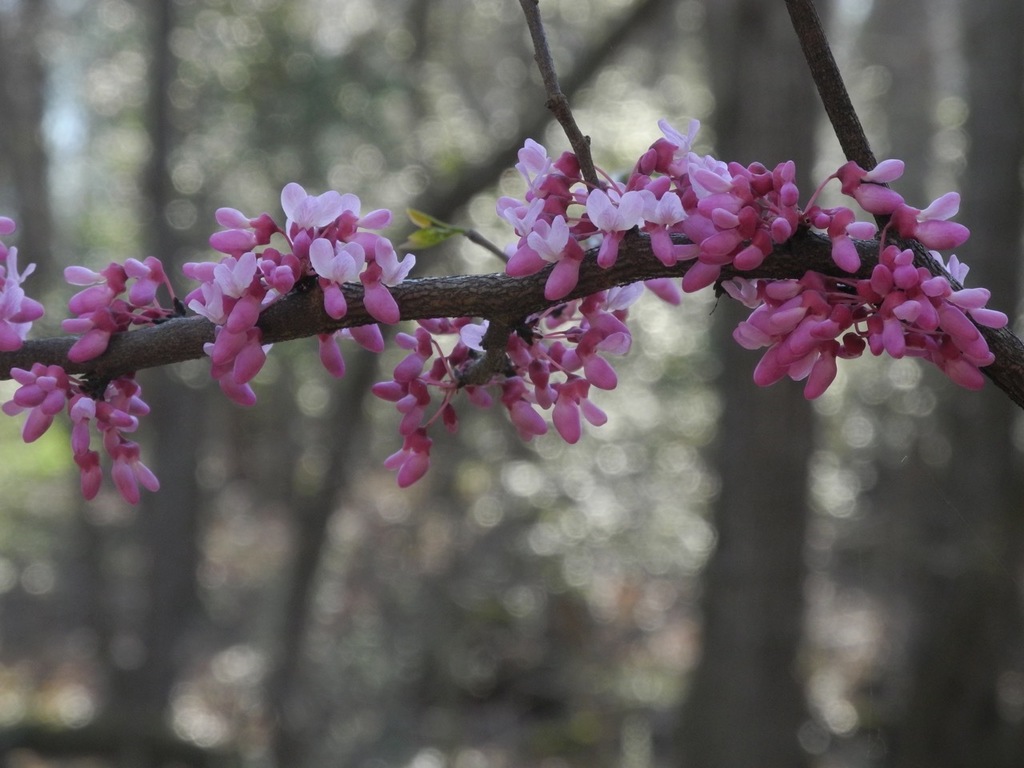
Le Gainier du Canada est un charmant arbre de sous-bois qui offre un spectacle spectaculaire au début du printemps. Il présente des feuilles en forme de cœur et des fleurs d'un rose vif à violet qui fleurissent directement sur les branches. Cet arbre indigène est un favori pour ajouter de la couleur saisonnière aux jardins forestiers.

En un coup d'œil
- Niveau d'entretien
- Facile
- Type de plante
- Arbre caduc
- Lumière
- Plein soleil à ombre partielle
- Lumière en intérieur
- Lumière vive indirecte
- Arrosage
- Tous les 7 à 14 jours
- Taille adulte
- 9 à 12 mètres
- Croissance
- Moyenne
- Rusticité
- USDA 4 à 9
- Floraison
- Début à mi-printemps
Entretien
Plantez dans un endroit avec un sol bien drainé et une protection contre le soleil dur de l'après-midi. Gardez un œil sur les taches foliaires ou les chancres par temps humide. Taillez seulement après la floraison pour maintenir une belle forme.
- Arrosage
- Arrosez profondément pendant les périodes sèches pour garder le sol constamment humide mais pas détrempé.
- Engrais
- Appliquez un engrais équilibré à libération lente au début du printemps avant que la nouvelle croissance n'apparaisse.
- Taille
- Taillez immédiatement après la disparition des fleurs pour enlever le bois mort et améliorer la structure.
- Rempotage
- Rempotez seulement si nécessaire lorsque l'arbre est jeune, car ils préfèrent rester en terre.
- Sol
- Léger, humide, bien drainé
- pH du sol
- 6.0 à 8.0
- Température
- -30 à 35°C
- Humidité
- 40 à 70%
- Résistance à la sécheresse
- Moyenne
- Durée de vie
- Plante vivace, généralement 50 à 70 ans.
- Résistance aux chevreuils et lapins
- Moyenne
Signes qu'il faut rempoter
- Racines tournant en rond au fond du pot.
- L'eau traverse directement le sol sans s'imbiber.
Sécurité
- Humains
- La plante n'est pas considérée comme toxique pour l'homme, bien qu'elle ne soit pas typiquement consommée comme source de nourriture principale.
- Animaux
- Cette plante n'est pas connue pour être toxique pour les chats ou les chiens.
- Enfants
- Les gousses plates et sèches peuvent présenter un risque d'étouffement si elles sont ingérées par de jeunes enfants.
- Allergènes de contact
- Aucun irritant cutané important n'est associé à cet arbre.
- Allergènes aéroportés
- Le pollen peut provoquer de légères allergies saisonnières chez les personnes sensibles.
- Comestibilité
- Bien que les fleurs soient comestibles, les graines et les gousses ne sont pas considérées comme de la nourriture et doivent être évitées.
Comment l'identifier
- Feuilles en forme de cœur
- Fleurs roses sur des branches nues
- Disposition en zigzag des branches
- Petites gousses brun rougeâtre
- Hauteur
- 4,5 à 9m
- Envergure
- 4,5 à 10m
- Feuilles
- vert, jaune, caduc
- Fleurs
- rose, magenta, blanc, 1 à 1,5cm
- Fruits
- brun, Fin d'été à automne
Problèmes à surveiller
- Chancre de l'arbre de JudéeCourant
- Taches foliairesCourant
- Brûlures du feuillagePeu courant
- ChlorosePeu courant
- CochenillesPeu courant
- VerticilliosePeu courant
- Chancre du Juda — Infection fongique qui provoque des lésions enfoncées sur les branches et peut entraîner le dépérissement.
- Tache foliaire — Taches fongiques apparaissant sur le feuillage pendant les périodes de forte humidité.
Par symptôme
Vérifie la santé de ta plante en photo
Pocket Botanist analyse une photo de ta plante et te dit ce qui ne va pas et quoi essayer en premier.
La cultiver
- Multiplication
- semis, bouturage
- Quand planter
- printemps, automne
- Hivernage
- Aucune protection hivernale spéciale n'est nécessaire une fois établi. Une couche de paillis autour de la base aide à maintenir l'humidité du sol et protège les racines des fluctuations extrêmes de température.
- En pot
- Il est généralement trop grand pour une culture en pot à long terme, bien que les cultivars nains puissent prospérer dans de grands pots pendant plusieurs années.
Semis
- Scarifier la coque dure de la graine avec du papier de verre.
- Faire tremper les graines dans de l'eau chaude pendant 24 heures.
- Planter dans un sol humide et fournir une période de stratification à froid.
Plantez des vivaces de sous-étage autour de la base pour garder la zone racinaire fraîche et humide.
Bonnes associations
- Amelanchier arborea — Ils partagent des exigences similaires en matière d'habitat forestier et fleurissent en même temps.
- Hosta — Ces amateurs d'ombre prospèrent sous le couvert du redbud.
Espèces similaires
- Cercis chinensis — C'est une parente plus petite, arbustive, avec des grappes de fleurs plus intenses.
Science
- Famille
- Fabaceae
- Genre
- Cercis
- Ordre
- Fabales
- Classe
- Magnoliopsida
- Région d'origine
- Est et centre de l'Amérique du Nord.
- Préservation
- Cette espèce est répandue et ne suscite aucune préoccupation en matière de conservation.
Il prospère comme arbre de sous-étage dans les bois ouverts et le long des lisières de forêts où il bénéficie de la lumière tachetée.
- Intérêt pour la faune
- source de nectar, fourrage en début de saison
- Pollinisateurs
- abeilles, papillons
- Utilisations
- spécimen ornemental, jardin de sous-bois, habitat des pollinisateurs
Au fil des saisons
Repères écologiques
- Réaction du sol
- 6/9
- Lumière
- 6/9
- Humidité
- 5/9
- Nutriments
- 5/9
- Salinité
- 2/9
- Température
- 6/9
Taxonomie vérifiée avec le GBIF.
Ce qu'on demande souvent
- A-t-il besoin de plein soleil ?
- Il préfère le plein soleil mais apprécie un peu d'ombre légère l'après-midi dans les climats plus chauds.
- À quelle vitesse pousse-t-il ?
- Il est considéré comme un arbre à croissance modérée, ajoutant généralement 30 à 60 centimètres par an.
D'où vient le nom
Le nom du genre Cercis vient du mot grec pour une navette de tisserand, faisant référence à la forme des gousses. Le nom de l'espèce canadensis fait référence à sa présence au Canada, bien que sa répartition s'étende beaucoup plus au sud.
Bon à savoir
- Les feuilles en forme de cœur deviennent d'un beau jaune doré à l'automne.
- Les Amérindiens utilisaient historiquement l'écorce pour traiter divers maux.
- C'est l'arbre d'État de l'Oklahoma.
Garde ta plante en pleine forme
Cette page est un guide général. Enregistre ta plante dans Pocket Botanist et tu reçois des rappels d'entretien adaptés à cette plante, ainsi qu'un historique d'entretien qui montre ce qui a marché.
Ce guide a été généré par IA et vérifié avec la taxonomie du GBIF. Il s'agit d'informations générales, et non de conseils horticoles ou vétérinaires. Découvre comment nous concevons ces guides.