 Pocket Botanist
Guía de plantas
Drago árbol.
Dracaena cinnabari Balf.f.
Pronunciación druh-SEE-nuh sin-nuh-BAR-ee
También se conoce como Drago árbol, Dracaena de Socotra, drago árbol, “Dragon’s Blood” Tree


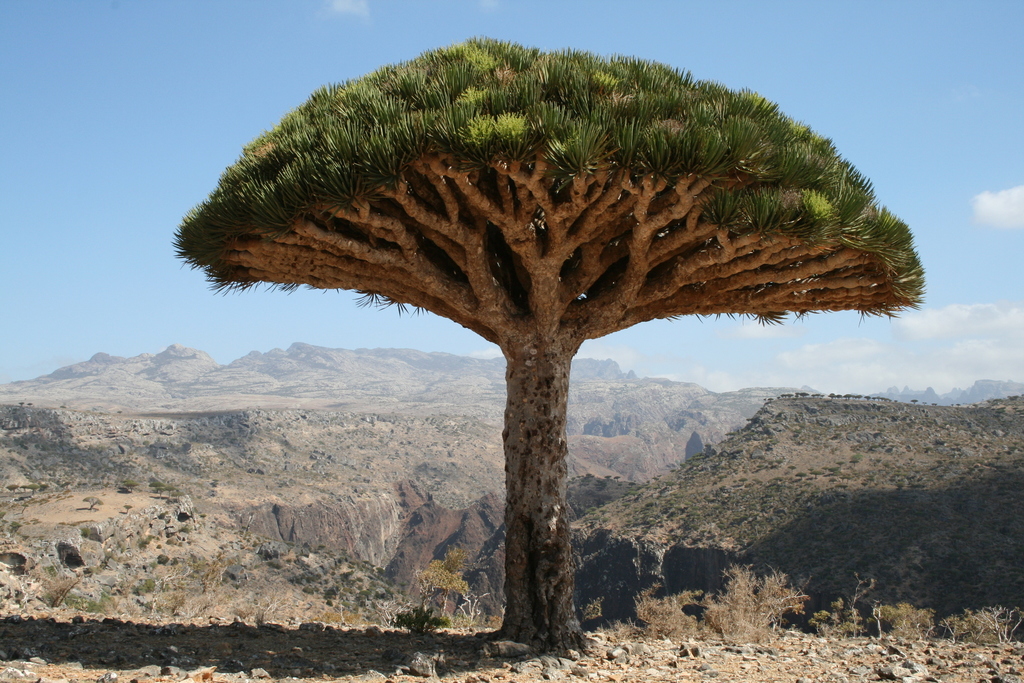
El drago árbol es una suculenta llamativa nativa del archipiélago de Socotra. Es famoso por su forma de paraguas única y la resina roja que produce. Este árbol crece lentamente y prospera en condiciones duras y áridas.

De un vistazo
- Nivel de cuidados
- Difícil
- Tipo de planta
- Árbol suculento
- Luz
- Sol pleno
- Luz en interior
- Sol directo
- Riego
- Cada 14 a 30 días
- Tamaño adulto
- 30 pies
- Ritmo de crecimiento
- Lento
- Rusticidad
- USDA 10 a 12
- Floración
- Principios a mediados de primavera
Cuidados
Proporciona mucha luz solar directa y asegúrate de que la tierra drene muy rápido para evitar la pudrición. Observa si las hojas se amarillean, lo que a menudo indica demasiada humedad en la zona de las raíces. Mantén el ambiente cálido y seco para imitar su hábitat natural.
- Riego
- Deja que la tierra se seque completamente entre riegos para evitar la pudrición de las raíces.
- Abonado
- Usa un fertilizante líquido equilibrado diluido a la mitad de su fuerza durante la temporada de crecimiento.
- Poda
- Solo poda para eliminar ramas muertas o dañadas para mantener su forma natural.
- Trasplante
- Trasplanta solo cuando la planta esté severamente limitada por las raíces, ya que prefiere los espacios ajustados.
- Suelo
- Tierra arenosa o rocosa bien drenada
- pH del suelo
- De neutro a ligeramente alcalino
- Temperatura
- 10 a 35°C
- Humedad
- 20 a 50%
- Tolerancia a la sequía
- Alta
- Longevidad
- Perenne, puede vivir cientos de años.
- Resistencia a ciervos y conejos
- Alta
Señales de que necesita trasplante
- Raíces dando vueltas en el fondo de la maceta
- El crecimiento se ha detenido por completo
- La tierra ya no absorbe agua
Seguridad
- Personas
- La planta contiene saponinas que pueden causar malestar digestivo si se ingieren.
- Mascotas
- Esta planta se considera tóxica para gatos y perros si se ingiere.
- Niños
- Mantener alejado de niños pequeños ya que las hojas rígidas y puntiagudas pueden causar rasguños.
- Alérgenos por contacto
- La resina puede causar irritación leve de la piel en personas sensibles.
- Alérgenos en el aire
- No hay evidencia significativa de alérgenos en el aire.
- Comestibilidad
- La savia y las partes de la planta no están destinadas al consumo humano.
Cómo identificarla
- Dosel distintivo y denso en forma de paraguas
- Tronco y ramas gruesos y suculentos
- Hojas perennes rígidas en forma de espada
- Produce savia resinosa de color rojo oscuro
- Flores pequeñas, blancas o verdes y fragantes
- Altura
- 6 a 10m
- Anchura
- 5 a 8m
- Hojas
- verde oscuro, verde azulado, perenne
- Flores
- blanco, verdoso, 0,5 a 1cm
- Frutos
- naranja, rojo, Finales de verano a otoño
Problemas a vigilar
- Bordes marrones en las hojasComún
- Cochinillas algodonosasComún
- Podredumbre radicularComún
- Araña rojaPoco común
- Caída de hojasPoco común
- CochinillasPoco común
- Pudrición de raíz — Decaimiento fúngico causado por condiciones de suelo demasiado húmedas.
Revisa tu drago árbol con una foto
Pocket Botanist mira una foto de tu planta y te dice qué le pasa y qué probar primero.
Cómo cultivarla
- Propagación
- semilla, esqujes
- Cuándo plantar
- primavera, principios de verano
- Cuidados en invierno
- Proteger de las temperaturas bajo cero y mantener la planta en un lugar seco y brillante durante los meses de invierno.
- En maceta
- No es muy adecuada para contenedores debido a su tamaño masivo y su lenta tasa de crecimiento.
Semilla
- 1. Remojar las semillas en agua tibia durante 24 horas.
- 2. Sembrar en una mezcla arenosa bien drenada.
- 3. Mantener caliente y ligeramente húmedo hasta la germinación.
Agrupar con otras suculentas de crecimiento lento que requieren un mínimo de agua y un drenaje excelente.
Buenas compañeras
- Aloe perryi — Comparten requisitos similares de tolerancia a la sequía y hábitats nativos.
Especies parecidas
- Dracaena draco — Comparte un hábito de crecimiento y propiedades resinosas similares.
Ciencia
- Familia
- Asparagaceae
- Género
- Dracaena
- Orden
- Asparagales
- Clase
- Liliopsida
- Distribución natural
- Archipiélago de Socotra, Yemen
- Conservación
- Esta especie está catalogada como vulnerable debido a la pérdida de hábitat y al cambio climático en su área de distribución nativa.
Sobrevive en ambientes montañosos áridos y rocosos capturando la humedad de las nubes a través de su denso dosel.
- Valor para la fauna
- proporciona hábitat para aves endémicas
- Polinizadores
- abejas, escarabajos
- Usos
- ejemplar ornamental, fuente tradicional de resina
A lo largo del año
Indicadores ecológicos
- Reacción del suelo
- 7/9
- Luz
- 8/9
- Humedad
- 2/9
- Salinidad
- 3/9
- Temperatura
- 8/9
- Nutrientes
- 2/9
Taxonomía cotejada con GBIF.
Lo que más preguntan
- ¿Puedo cultivar esto en interiores?
- Es extremadamente difícil de mantener en interiores debido a su necesidad de luz intensa y flujo de aire específico.
- ¿Con qué frecuencia debo regarla?
- Riega con moderación, dejando que la tierra se seque por completo entre riegos.
De dónde viene el nombre
El nombre Dracaena proviene de la palabra griega para dragón hembra, refiriéndose a la resina roja, mientras que cinnabari se refiere al color de esa resina.
Bueno saberlo
- La resina roja es históricamente conocida como sangre de dragón.
- Es endémica del archipiélago de Socotra en Yemen.
- El árbol está adaptado para sobrevivir de la niebla de montaña.
También en
Que tu drago árbol siga creciendo
Esta página es una guía general. Guarda tu planta en Pocket Botanist y tendrás recordatorios de cuidado pensados para esta planta, además de un historial de cuidados que muestra qué ha funcionado.
Esta guía se ha generado con IA y se ha cotejado con la taxonomía de GBIF. Es información general, no asesoramiento botánico ni veterinario. Descubre cómo elaboramos estas guías.