 Pocket Botanist
Pflanzenratgeber
Mapleleaf viburnum.
Viburnum acerifolium
Aussprache vy-BUR-num ay-ser-ih-FOH-lee-um
Auch bekannt als Arrow-wood, Dockmackie, Mapleleaf Viburnum, Possum Haw, maple-leaved arrowwood, maple-leaved viburnum, possom haw



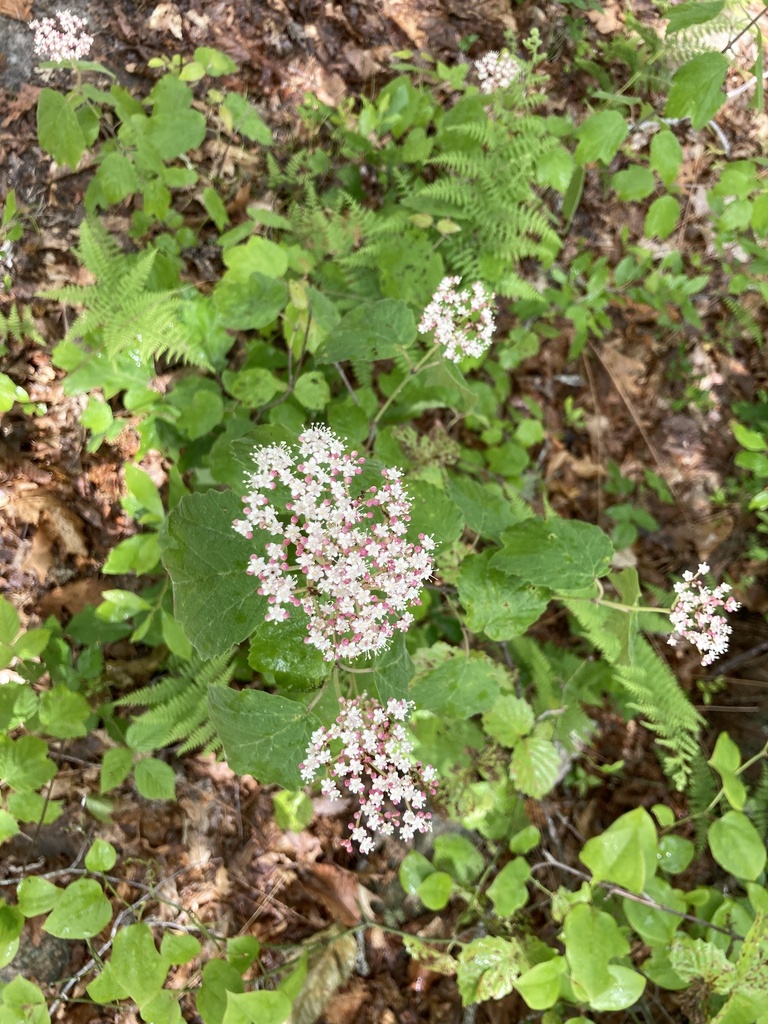
The mapleleaf viburnum is a charming native shrub that brings seasonal interest to woodland gardens. It features lovely maple shaped leaves and produces delicate white flowers in the spring. You will enjoy its vibrant fall color and dark berries that attract local birds.
Auf einen Blick
- Pflegestufe
- Einfach
- Pflanzenart
- Deciduous shrub
- Licht
- Partial shade to full shade
- Licht im Innenraum
- Mittleres Licht
- Gießen
- Alle 7 bis 14 Tage
- Endgröße
- 6 feet
- Wachstum
- Langsam
- Winterhärte
- USDA 4 bis 8
- Blütezeit
- Late spring to early summer
Pflege
This shrub thrives in well draining soil and appreciates a layer of mulch to keep its roots cool. Watch for wilting during dry spells, as it prefers consistent moisture while establishing. It is quite hardy and needs little fuss once it settles into your garden.
- Gießen
- Keep the soil consistently moist but not waterlogged during the first year.
- Düngen
- Apply a balanced organic fertilizer once in early spring.
- Schneiden
- Prune immediately after flowering if you need to shape the shrub.
- Umtopfen
- This plant is best suited for the ground rather than containers.
- Boden
- Well draining, acidic to neutral soil
- Boden-pH
- 5.5 to 7.0
- Temperatur
- -30 bis 35°C
- Luftfeuchtigkeit
- 40 bis 70%
- Trockenheitstoleranz
- Mittel
- Lebensdauer
- Perennial, typically 20 to 50 years
- Wildverbiss-Resistenz
- Mittel
Anzeichen fürs Umtopfen
- Roots growing out of drainage holes
- Stunted growth despite proper care
Sicherheit
- Menschen
- There are no significant reports of human toxicity for this species.
- Kinder
- The berries may pose a minor choking hazard to small children if ingested in large quantities.
- Kontaktallergene
- Some individuals may experience mild skin irritation from handling the foliage.
- Allergene in der Luft
- The pollen may cause mild reactions in sensitive individuals during the flowering season.
- Essbarkeit
- The berries are generally considered non-toxic but are not typically consumed by humans due to poor flavor.
So erkennst du die Pflanze
- Leaves resemble maple tree foliage
- Small white flower clusters in spring
- Dark blue to black fall berries
- Opposite leaf arrangement on stems
- Stems have fine hairs
- Höhe
- 0,9 bis 1,8m
- Breite
- 0,9 bis 1,8m
- Blätter
- green, purple, red, deciduous
- Blüten
- white, pinkish-white, 0,5 bis 1cm
- Früchte
- black, dark-blue, Late summer to early autumn
Häufige Probleme
- Viburnum leaf beetle — Small beetles can cause significant defoliation if left unchecked.
- Powdery mildew — A fungal infection that creates a white dusty coating on the leaves.
Standort und Pflege
- Vermehrung
- seed, cuttings, division
- Pflanzzeit
- spring, autumn
- Überwinterung
- Mulch the base in late autumn to protect roots from extreme temperature fluctuations. No pruning is necessary during winter.
- Im Kübel
- It is not well suited for long term container growth due to its size and root requirements.
Softwood Cuttings
- 1. Take 10cm cuttings in early summer.
- 2. Remove lower leaves.
- 3. Dip in rooting hormone.
- 4. Place in moist potting mix.
- 5. Keep humid until rooted.
Group this shrub with other woodland natives to create a self-sustaining forest floor community.
Gute Pflanzpartner
- Asarum canadense — They share similar shade and moisture requirements.
- Christmas fern — It provides a nice textural contrast in woodland settings.
Ähnliche Arten
- Mapleleaf viburnum — This is the primary species discussed.
Botanisches
- Familie
- Viburnaceae
- Gattung
- Viburnum
- Ordnung
- Dipsacales
- Klasse
- Magnoliopsida
- Ursprüngliche Heimat
- Eastern North America
- Artenschutz
- This plant is secure and widely distributed throughout its native range.
It grows as an understory shrub in deciduous forests, adapted to low light levels.
- Nutzen für Wildtiere
- nectar source, bird food source, larval host plant
- Bestäuber
- Bienen, Schmetterlinge, Käfer
- Verwendung
- ornamental shrub, woodland garden plant, wildlife hedge
Im Jahresverlauf
Ökologische Zeigerwerte
- Salzgehalt
- 1/9
- Bodenreaktion
- 5/9
- Licht
- 3/9
- Temperatur
- 5/9
- Feuchtigkeit
- 5/9
- Nährstoffe
- 4/9
Taxonomie abgeglichen mit GBIF.
Häufige Fragen
- Does it need full sun?
- No, it actually prefers partial to full shade.
- Is it deer resistant?
- It has moderate resistance to deer browsing.
Woher der Name kommt
The species name acerifolium refers to the maple-like shape of the leaves, derived from the Latin acer for maple and folium for leaf.
Gut zu wissen
- The leaves look remarkably like those of a maple tree.
- It is one of the few viburnums that thrives in deep shade.
- The berries turn from red to black as they ripen.
Auch in
Probleme mit Mapleleaf viburnum?
Diese Seite bietet allgemeine Infos. Pocket Botanist erkennt Probleme anhand eines Fotos deiner echten Pflanze, passt das Gießen an dein Licht und deinen Standort an und erinnert dich an die Pflege.
Dieser Ratgeber wurde mit KI erstellt und mit der GBIF-Taxonomie abgeglichen. Er dient zur allgemeinen Information und ersetzt keine gärtnerische oder tierärztliche Beratung. Hier erfährst du, wie wir diese Ratgeber erstellen.