 Pocket Botanist
Pflanzenratgeber
Jabuticaba.
Plinia cauliflora
Aussprache PLIN-ee-uh kaw-lih-FLOR-uh
Auch bekannt als Brazilian grapetree, jaboticaba


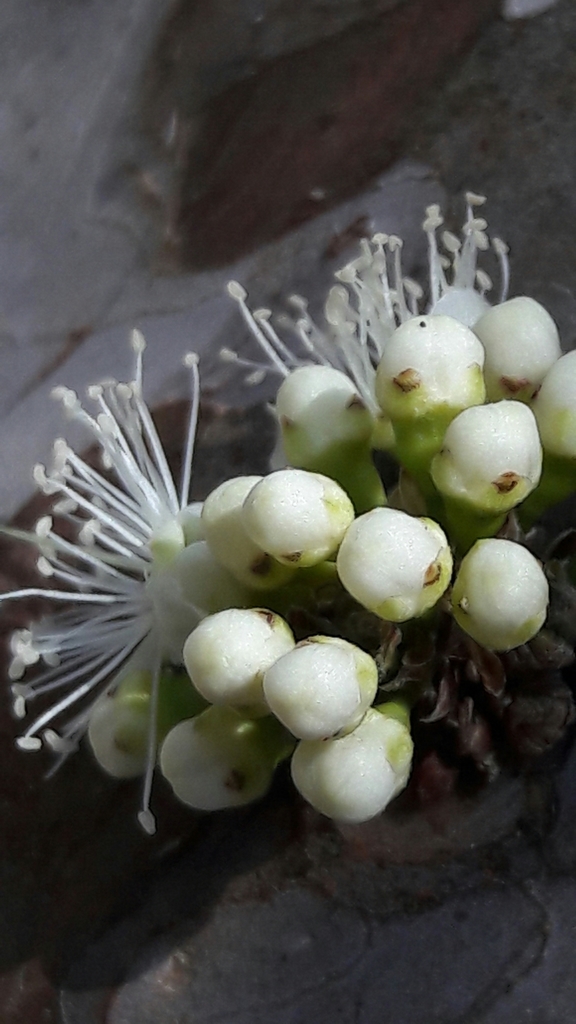
The jabuticaba is a fascinating fruit tree that grows its berries directly on its trunk and branches. It loves warm, humid climates and makes a beautiful specimen plant. You will enjoy its unique appearance and sweet, grape like fruit.
Auf einen Blick
- Pflegestufe
- Mittel
- Pflanzenart
- Fruit tree
- Licht
- Full sun to partial shade
- Licht im Innenraum
- Hell, indirekt
- Gießen
- Alle 2 bis 5 Tage
- Endgröße
- 15 to 45 feet
- Wachstum
- Langsam
- Winterhärte
- USDA 9 bis 11
- Blütezeit
- Spring to summer
Pflege
Keep the soil consistently moist but never soggy to mimic its native tropical habitat. Watch for yellowing leaves which often signal overwatering or poor drainage. Ensure it gets plenty of humidity to keep the foliage looking its best.
- Gießen
- Keep the soil evenly moist at all times.
- Düngen
- Use a balanced fertilizer during the active growing season.
- Schneiden
- Prune lightly to maintain shape and improve air circulation.
- Umtopfen
- Repot when the roots fill the container or the soil breaks down.
- Boden
- Acidic, well draining soil
- Boden-pH
- 5.5 to 6.5
- Temperatur
- 5 bis 35°C
- Luftfeuchtigkeit
- 60 bis 90%
- Trockenheitstoleranz
- Gering
- Lebensdauer
- Perennial, can live for over 100 years.
- Duft
- Leicht
- Wildverbiss-Resistenz
- Mittel
Anzeichen fürs Umtopfen
- Roots growing out of drainage holes
- Water running straight through the pot
- Stunted growth during the active season
Sicherheit
- Menschen
- The plant is not toxic to humans.
- Kinder
- The fruit is safe, but children should be supervised around the tree to avoid climbing on thin branches.
- Kontaktallergene
- No notable skin irritation is associated with this plant.
- Allergene in der Luft
- Pollen may cause mild reactions in sensitive individuals during the flowering season.
- Essbarkeit
- The fruit is delicious and safe, but the seeds should not be consumed in large quantities.
So erkennst du die Pflanze
- Dark purple fruit on trunk
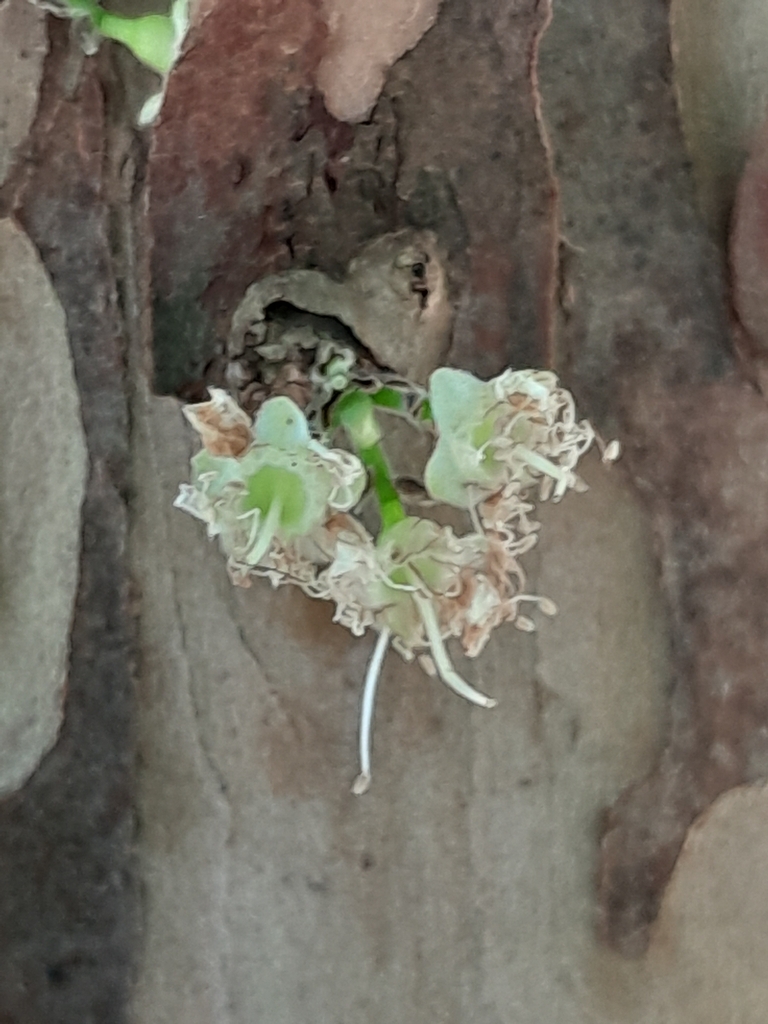
- Small white flowers on bark
- Glossy lance shaped evergreen leaves
- Peeling light brown bark
- Höhe
- 3 bis 12m
- Breite
- 2 bis 6m
- Blätter
- dark green, bronze, evergreen
- Blüten
- white, 1 bis 2cm
- Früchte
- dark purple, black, Summer to autumn
Häufige Probleme
- Rust — Fungal infection causing spots on leaves during humid weather.
- Aphids — Small insects that feed on new growth and flower buds.
Standort und Pflege
- Vermehrung
- seed, cuttings, grafting
- Pflanzzeit
- spring, early summer
- Überwinterung
- Move containers indoors or into a greenhouse before the first frost. Ensure the plant stays in a bright, humid location during the winter months.
- Im Kübel
- It grows well in large pots, requiring at least a 40 liter container for long term health.
Seed
- 1. Extract fresh seeds from ripe fruit.
- 2. Clean the pulp off the seeds.
- 3. Plant immediately in moist potting mix.
- 4. Keep warm and humid until germination.
Plant in a sheltered spot to protect the evergreen foliage from drying winds.
Gute Pflanzpartner
- Kaffeepflanze — Both enjoy similar light and moisture conditions in the understory.
- Bromelien — These epiphytes thrive in the humid environment created by the tree canopy.
Ähnliche Arten
- Plinia aureana — A smaller relative with similar growth habits and fruit.
Botanisches
- Familie
- Myrtaceae
- Gattung
- Plinia
- Ordnung
- Myrtales
- Klasse
- Magnoliopsida
- Ursprüngliche Heimat
- Southeastern Brazil
- Artenschutz
- It is not currently listed as endangered in its native range.
It thrives in the understory of tropical forests where it benefits from consistent moisture and dappled light.
- Nutzen für Wildtiere
- nectar source, fruit source for birds
- Bestäuber
- Bienen, Schmetterlinge
- Verwendung
- culinary fruit, ornamental specimen, jam making, wine production
Im Jahresverlauf
Ökologische Zeigerwerte
- Salzgehalt
- 1/9
- Bodenreaktion
- 5/9
- Licht
- 6/9
- Temperatur
- 8/9
- Feuchtigkeit
- 7/9
- Nährstoffe
- 6/9
Taxonomie abgeglichen mit GBIF.
Häufige Fragen
- How long until it fruits?
- Seed grown trees can take 8 to 15 years to fruit.
- Can I grow it in a pot?
- Yes, it adapts well to large containers if pruned regularly.
Woher der Name kommt
The name Plinia honors the Roman naturalist Pliny the Elder, while cauliflora describes its habit of flowering on the trunk.
Gut zu wissen
- The fruit is often compared to a grape in texture and flavor.
- It is a slow growing tree that can take years to bear fruit.
- The name refers to the fruit growing on the stem.
- It is a staple fruit in Brazilian markets.
Probleme mit Jabuticaba?
Diese Seite bietet allgemeine Infos. Pocket Botanist erkennt Probleme anhand eines Fotos deiner echten Pflanze, passt das Gießen an dein Licht und deinen Standort an und erinnert dich an die Pflege.
Dieser Ratgeber wurde mit KI erstellt und mit der GBIF-Taxonomie abgeglichen. Er dient zur allgemeinen Information und ersetzt keine gärtnerische oder tierärztliche Beratung. Hier erfährst du, wie wir diese Ratgeber erstellen.