 Pocket Botanist
Pflanzenratgeber
Switchgrass.
Panicum virgatum
Aussprache PAN-ih-kum ver-GAY-tum
Auch bekannt als Blackwell Switch Grass, Old Switch Panic Grass, Switch Grass, Switchgrass, old switch panicgrass, wand panicgrass


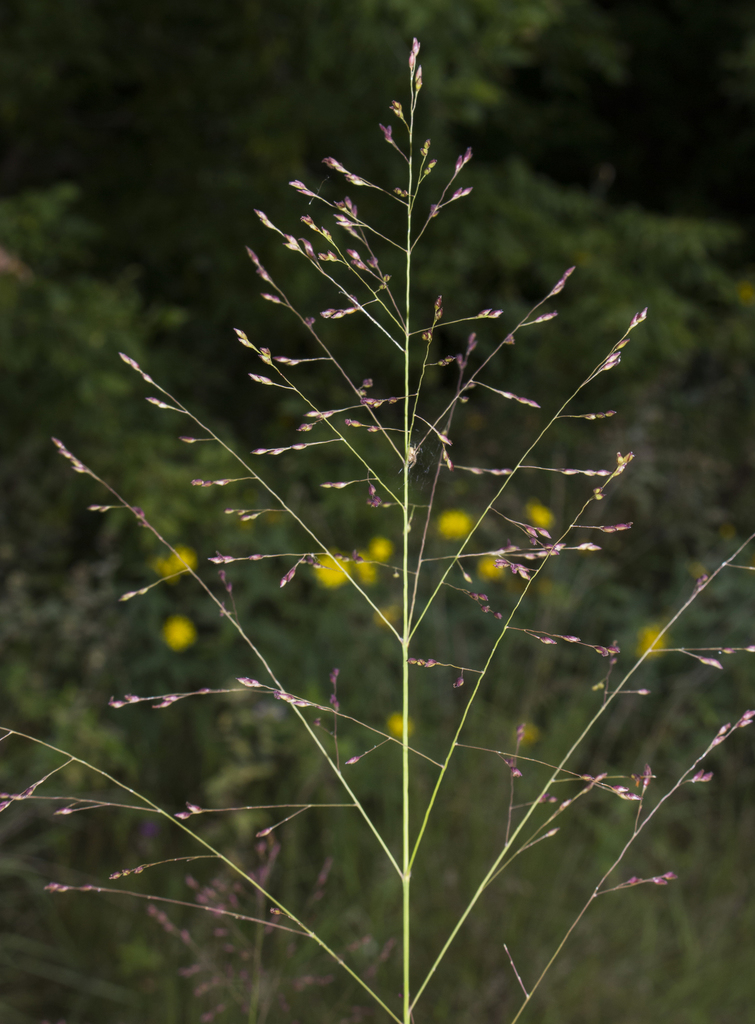
Switchgrass is a sturdy, North American prairie native that brings wonderful texture to any garden. It is a clump forming perennial grass that stands tall through the winter months. You will love how it adds movement and height to your landscape.
Auf einen Blick
- Pflegestufe
- Einfach
- Pflanzenart
- Perennial grass
- Licht
- Full sun
- Licht im Innenraum
- Direkte Sonne
- Gießen
- Alle 7 bis 14 Tage
- Endgröße
- 3 to 6 feet
- Wachstum
- Schnell
- Winterhärte
- USDA 3 bis 9
- Blütezeit
- Late summer to early autumn
Pflege
Plant this grass in a spot that gets plenty of sun to keep it from flopping over. Watch for signs of overcrowding, and trim it back once a year to keep it looking fresh. It is very adaptable to different soil types as long as it gets enough light.
- Gießen
- Keep the soil consistently moist until established, then it becomes quite drought tolerant.
- Düngen
- A light application of balanced fertilizer in early spring is plenty.
- Schneiden
- Cut the foliage back to a few inches above the ground in late winter or early spring.
- Umtopfen
- Divide the clumps every few years if the center starts to die out.
- Boden
- Well draining loam or clay
- Boden-pH
- 5.0 to 7.5
- Temperatur
- -30 bis 35°C
- Luftfeuchtigkeit
- 30 bis 70%
- Trockenheitstoleranz
- Hoch
- Lebensdauer
- Perennial, typically 10 plus years
- Wildverbiss-Resistenz
- Hoch
Anzeichen fürs Umtopfen
- Roots growing out of the drainage holes
- Water running straight through the pot
- Stunted growth
Sicherheit
- Menschen
- There are no known toxic effects to humans.
- Kinder
- The sharp leaf blades can cause paper-like cuts on children's skin.
- Kontaktallergene
- The leaf edges can be sharp and may cause minor skin abrasions.
- Allergene in der Luft
- The pollen can trigger seasonal allergies in sensitive individuals.
- Essbarkeit
- This grass is not intended for human consumption.
So erkennst du die Pflanze
- Tall upright clump forming habit
- Fine textured blue green foliage
- Airy cloud like flower panicles
- Golden yellow fall foliage color
- Höhe
- 0,9 bis 2,4m
- Breite
- 0,6 bis 0,9m
- Blätter
- green, blue-green, red-tinged, deciduous
- Blüten
- pink, copper, purple, 15 bis 45cm
- Früchte
- tan, brown, Autumn
Häufige Probleme
- Rust — Fungal spots appear on leaves during humid weather.
Standort und Pflege
- Vermehrung
- division, seed
- Pflanzzeit
- spring, autumn
- Überwinterung
- Leave the dried foliage standing through winter to provide interest and shelter for insects. Cut back to the ground in early spring.
- Im Kübel
- It can grow in large containers, but it prefers being in the ground to accommodate its extensive root system.
Division
- 1. Dig up the clump in early spring.
- 2. Use a sharp spade to divide the root ball into smaller sections.
- 3. Replant the sections immediately at the same depth.
Plant in groups of three or more to create a naturalistic meadow effect.
Gute Pflanzpartner
- Purple coneflower — They share similar moisture needs and provide a nice color contrast.
- Leuchtendes Mädchenauge — This pairing creates a classic prairie aesthetic.
- Blazing star — The vertical spikes of Liatris complement the airy plumes of the grass.
Ähnliche Arten
- Andropogon gerardii — Another tall native prairie grass with a similar growth habit.
Botanisches
- Familie
- Poaceae
- Gattung
- Panicum
- Ordnung
- Poales
- Klasse
- Liliopsida
- Ursprüngliche Heimat
- Central and North America
- Artenschutz
- It is a common native species and not of conservation concern.
It thrives in open prairies and meadows where its deep root system allows it to withstand drought and fire.
- Nutzen für Wildtiere
- larval host plant, nesting material, winter food source
- Bestäuber
- Bienen, Schmetterlinge
- Verwendung
- ornamental grass, erosion control, prairie restoration, wildlife habitat
Im Jahresverlauf
Ökologische Zeigerwerte
- Salzgehalt
- 2/9
- Bodenreaktion
- 5/9
- Licht
- 8/9
- Temperatur
- 5/9
- Feuchtigkeit
- 4/9
- Nährstoffe
- 3/9
Taxonomie abgeglichen mit GBIF.
Häufige Fragen
- When should I cut it back?
- Cut the foliage down to about 15 centimeters in late winter or early spring before new growth starts.
- Does it need fertilizer?
- No, it is adapted to poor soils and typically does not require supplemental feeding.
Woher der Name kommt
The name Panicum comes from the Latin word for millet, while virgatum means wand-like in reference to its upright habit.
Gut zu wissen
- It is a warm-season grass that grows most vigorously in the heat of summer.
- The roots can grow as deep as the plant is tall.
- It turns a beautiful golden color in the winter.
- Switchgrass is being studied as a potential biofuel source.
Auch in
Probleme mit Switchgrass?
Diese Seite bietet allgemeine Infos. Pocket Botanist erkennt Probleme anhand eines Fotos deiner echten Pflanze, passt das Gießen an dein Licht und deinen Standort an und erinnert dich an die Pflege.
Dieser Ratgeber wurde mit KI erstellt und mit der GBIF-Taxonomie abgeglichen. Er dient zur allgemeinen Information und ersetzt keine gärtnerische oder tierärztliche Beratung. Hier erfährst du, wie wir diese Ratgeber erstellen.