 Pocket Botanist
Pflanzenratgeber
Bogbean.
Menyanthes trifoliata
Aussprache men-ee-AN-theez try-fo-lee-AY-tuh
Auch bekannt als Bogbean, Buckbean



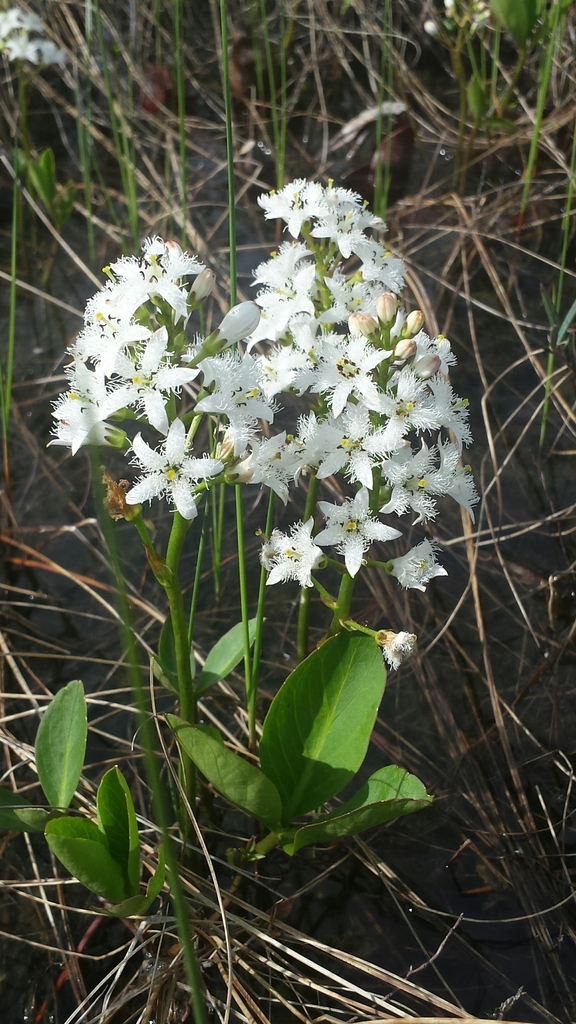
The bogbean is a lovely aquatic perennial that thrives in shallow water or very damp, boggy soil. It features beautiful, fringed white flowers that look like they are covered in tiny snowflakes. It is a hardy plant that brings a natural, wild look to any pond or water garden.
Auf einen Blick
- Pflegestufe
- Einfach
- Pflanzenart
- Aquatic perennial
- Licht
- Full sun to partial shade
- Licht im Innenraum
- Hell, indirekt
- Gießen
- Jeden Tag
- Endgröße
- 12 to 18 inches tall
- Wachstum
- Mittel
- Winterhärte
- USDA 3 bis 7
- Blütezeit
- Mid to late spring
Pflege
Keep the roots constantly submerged or in very saturated soil to mimic its natural wetland habitat. Watch for yellowing leaves which often signal that the water level has dropped too low. It is a very resilient plant that rarely needs much attention once established.
- Gießen
- The soil must remain completely saturated or submerged at all times.
- Düngen
- Apply a slow release aquatic fertilizer tablet once in the spring.
- Schneiden
- Trim back dead foliage in late autumn to keep the area tidy.
- Umtopfen
- Divide the creeping rhizomes every few years to prevent the plant from becoming overcrowded.
- Boden
- Heavy loam or aquatic soil
- Boden-pH
- Acidic to neutral
- Temperatur
- -35 bis 25°C
- Luftfeuchtigkeit
- 60 bis 100%
- Trockenheitstoleranz
- Gering
- Lebensdauer
- Perennial, typically 5 to 10 years.
- Duft
- Leicht
- Wildverbiss-Resistenz
- Mittel
Anzeichen fürs Umtopfen
- Roots growing out of the pot
- Reduced flowering
- Crowded rhizomes
Sicherheit
- Menschen
- The leaves are considered toxic if ingested in large quantities due to the presence of gentianin.
- Kinder
- Keep children away from the foliage as ingestion can cause stomach upset.
- Kontaktallergene
- The sap may cause mild skin irritation in sensitive individuals.
- Allergene in der Luft
- Pollen is generally not considered a significant airborne allergen.
- Essbarkeit
- The plant contains bitter alkaloids and should not be consumed without expert knowledge.
So erkennst du die Pflanze
- Three leaflets on each leaf stalk
- Fringed white or pinkish flowers
- Spikes of star shaped blooms
- Thick creeping underground stems
- Grows in shallow water or bogs
- Höhe
- 0,15 bis 0,3m
- Breite
- 0,3 bis 0,6m
- Blätter
- green, deciduous
- Blüten
- white, pink, 1 bis 2cm
- Früchte
- brown, Late summer
Häufige Probleme
- Aphids — Small insects that cluster on new growth.
Standort und Pflege
- Vermehrung
- division, seed
- Pflanzzeit
- spring
- Überwinterung
- The plant goes dormant in winter. If in a container, ensure the roots do not freeze solid by sinking the pot deeper into the water.
- Im Kübel
- It grows well in containers placed in shallow water, provided the pot is at least 20 centimeters wide.
Division
- 1. Lift the plant in spring.
- 2. Cut the rhizome into sections with buds.
- 3. Replant into wet soil or shallow water.
Group with other marginal aquatic plants to create a naturalistic pond edge.
Gute Pflanzpartner
- Marsh marigold — They share similar moisture requirements in pond margins.
- Myosotis scorpioides — It provides a nice color contrast in boggy areas.
Ähnliche Arten
- Bogbean — This is the same species.
Botanisches
- Familie
- Menyanthaceae
- Gattung
- Menyanthes
- Ordnung
- Asterales
- Klasse
- Magnoliopsida
- Ursprüngliche Heimat
- Northern hemisphere wetlands.
- Artenschutz
- It is protected in some regions due to the loss of wetland habitats.
It acts as a pioneer species in wetland succession by trapping sediment with its creeping rhizomes.
- Nutzen für Wildtiere
- nectar source
- Bestäuber
- Bienen, Schmetterlinge
- Verwendung
- water gardens, bog gardens, wildlife ponds
Im Jahresverlauf
Ökologische Zeigerwerte
- Salzgehalt
- 1/9
- Bodenreaktion
- 5/9
- Licht
- 7/9
- Temperatur
- 3/9
- Feuchtigkeit
- 9/9
- Nährstoffe
- 4/9
Taxonomie abgeglichen mit GBIF.
Häufige Fragen
- Can I grow this in a regular garden bed?
- No, it requires constant moisture and thrives best in shallow water or boggy conditions.
- How deep should the water be?
- It prefers shallow water up to 15 centimeters deep.
Woher der Name kommt
The name Menyanthes comes from Greek words meaning month and flower, possibly referring to the blooming period. Trifoliata refers to the three leaflets on each leaf.
Gut zu wissen
- It is commonly known as bogbean.
- The flowers have a unique fringed appearance.
- It thrives in shallow water or very wet soil.
- It is a circumpolar species found across the northern hemisphere.
Probleme mit Bogbean?
Diese Seite bietet allgemeine Infos. Pocket Botanist erkennt Probleme anhand eines Fotos deiner echten Pflanze, passt das Gießen an dein Licht und deinen Standort an und erinnert dich an die Pflege.
Dieser Ratgeber wurde mit KI erstellt und mit der GBIF-Taxonomie abgeglichen. Er dient zur allgemeinen Information und ersetzt keine gärtnerische oder tierärztliche Beratung. Hier erfährst du, wie wir diese Ratgeber erstellen.