 Pocket Botanist
Pflanzenratgeber
California buckwheat.
Eriogonum fasciculatum
Aussprache er-ee-OG-oh-num fas-sik-yoo-LAY-tum
Auch bekannt als California Buckwheat, California wild buckwheat, California-buckwheat, Eastern Mojave buckwheat, flat-topped buckwheat, flattop buckwheat, wild buckwheat, yellow buckwheat


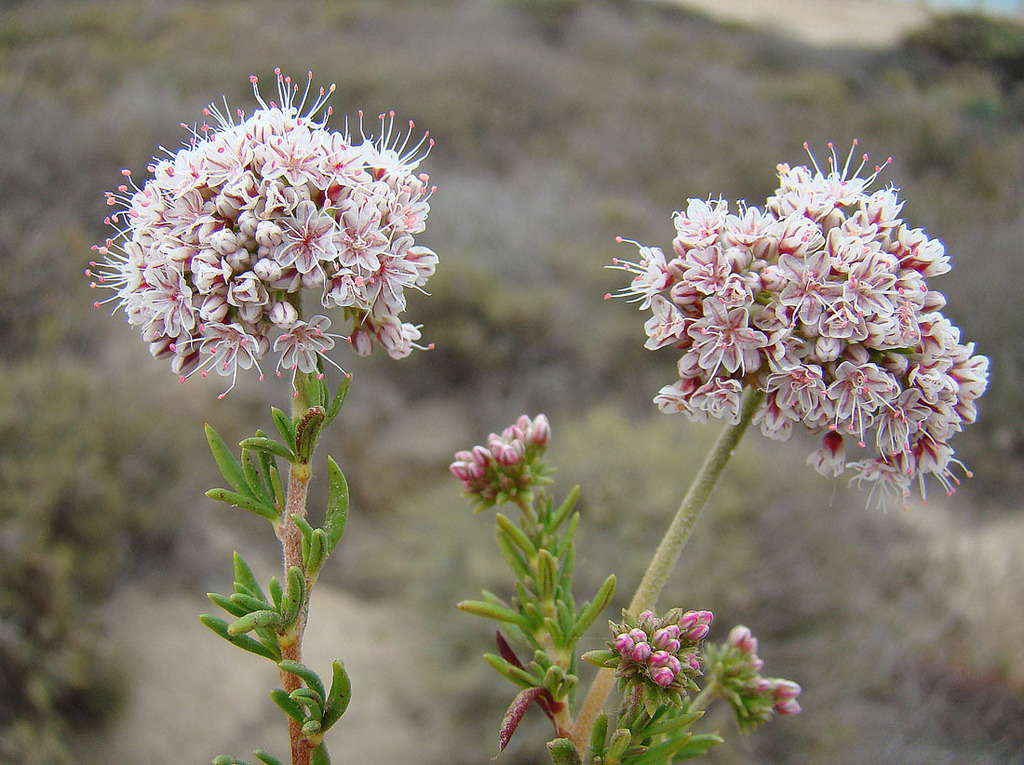
California buckwheat is a hardy, drought tolerant shrub native to the western United States. It produces beautiful clusters of tiny white to pink flowers that attract many pollinators. You will love how it thrives in dry, sunny spots where other plants might struggle.

Auf einen Blick
- Pflegestufe
- Einfach
- Pflanzenart
- Shrub
- Licht
- Full sun
- Licht im Innenraum
- Direkte Sonne
- Gießen
- Alle 14 bis 30 Tage
- Endgröße
- 3 to 6 feet
- Wachstum
- Mittel
- Winterhärte
- USDA 7 bis 10
- Blütezeit
- Late spring to early autumn
Pflege
Plant this shrub in well draining soil and avoid overwatering once it is established. Watch for yellowing leaves, which can indicate poor drainage or too much moisture. It requires very little attention beyond occasional light shaping.
- Gießen
- Water deeply but infrequently to encourage a deep root system.
- Düngen
- This plant generally does not require fertilizer in its native soil.
- Schneiden
- Prune lightly after flowering to maintain a tidy shape.
- Umtopfen
- Repot only if the plant becomes root bound in a container.
- Boden
- Sandy, rocky, or gravelly
- Boden-pH
- 6.0 to 8.0
- Temperatur
- -12 bis 40°C
- Luftfeuchtigkeit
- 10 bis 50%
Sicherheit
- Menschen
- There are no known reports of toxicity in humans.
- Kinder
- The plant is generally safe, but its woody stems can be sharp and should be handled with care.
- Kontaktallergene
- The foliage may cause minor skin irritation for sensitive individuals.
- Allergene in der Luft
- The pollen can trigger allergic reactions in those sensitive to windborne allergens.
- Essbarkeit
- This plant is not considered edible for humans.
So erkennst du die Pflanze
- Small, narrow, leathery leaves
- Clusters of tiny white flowers
- Woody, spreading shrub habit
- Leaves often have rolled edges
- Höhe
- 0,3 bis 1m
- Breite
- 0,6 bis 2m
- Blätter
- dark green, gray green, evergreen
- Blüten
- white, pale pink, 0,5 bis 1cm
- Früchte
- brown, Autumn
Häufige Probleme
- Root rot — Occurs when the soil stays too wet for too long.
- Aphids — Small insects that may cluster on new growth during spring.
Standort und Pflege
- Vermehrung
- seed, cuttings
- Pflanzzeit
- autumn, winter
Plant in groups with other drought tolerant natives to create a self sustaining habitat.
Gute Pflanzpartner
- Salvia apiana — They share similar water and light requirements in coastal sage scrub.
- California poppy — They provide a beautiful color contrast and thrive in similar dry conditions.
Ähnliche Arten
- Eriogonum latifolium — It shares a similar growth habit but prefers coastal bluffs.
Botanisches
- Familie
- Polygonaceae
- Gattung
- Eriogonum
- Ordnung
- Caryophyllales
- Klasse
- Magnoliopsida
- Ursprüngliche Heimat
- Southwestern United States and Baja California.
- Artenschutz
- This species is common in its native range and is not currently threatened.
It thrives in dry, rocky slopes and chaparral communities by utilizing deep roots to access moisture.
- Nutzen für Wildtiere
- nectar source, larval host plant, provides cover
- Bestäuber
- Bienen, Schmetterlinge, Nachtfalter, Käfer
- Verwendung
- xeriscaping, erosion control, pollinator gardens, restoration planting
Im Jahresverlauf
Ökologische Zeigerwerte
- Salzgehalt
- 4/9
- Bodenreaktion
- 6/9
- Licht
- 8/9
- Temperatur
- 7/9
- Feuchtigkeit
- 2/9
- Nährstoffe
- 2/9
Taxonomie abgeglichen mit GBIF.
Häufige Fragen
- Does it need fertilizer?
- No, it prefers poor, rocky soils and will suffer if overfed.
- How often should I water it?
- Once established, it rarely needs supplemental water.
Woher der Name kommt
The genus name Eriogonum comes from the Greek words for woolly and knee, referring to the hairy joints of some species. The specific epithet fasciculatum refers to the clustered arrangement of the leaves.
Gut zu wissen
- It is a primary source of honey for bees in Southern California.
- The flowers change color from white to rusty red as they age.
- It is exceptionally drought tolerant once established.
- The plant is a vital host for the metalmark butterfly.
Probleme mit California buckwheat?
Diese Seite bietet allgemeine Infos. Pocket Botanist erkennt Probleme anhand eines Fotos deiner echten Pflanze, passt das Gießen an dein Licht und deinen Standort an und erinnert dich an die Pflege.
Dieser Ratgeber wurde mit KI erstellt und mit der GBIF-Taxonomie abgeglichen. Er dient zur allgemeinen Information und ersetzt keine gärtnerische oder tierärztliche Beratung. Hier erfährst du, wie wir diese Ratgeber erstellen.