 Pocket Botanist
Plant guide
Cylindrical Snake Plant.
Sansevieria cylindrica
Pronounced drah-KEE-nah an-go-LEN-sis
Also known as African Bowstring Hemp
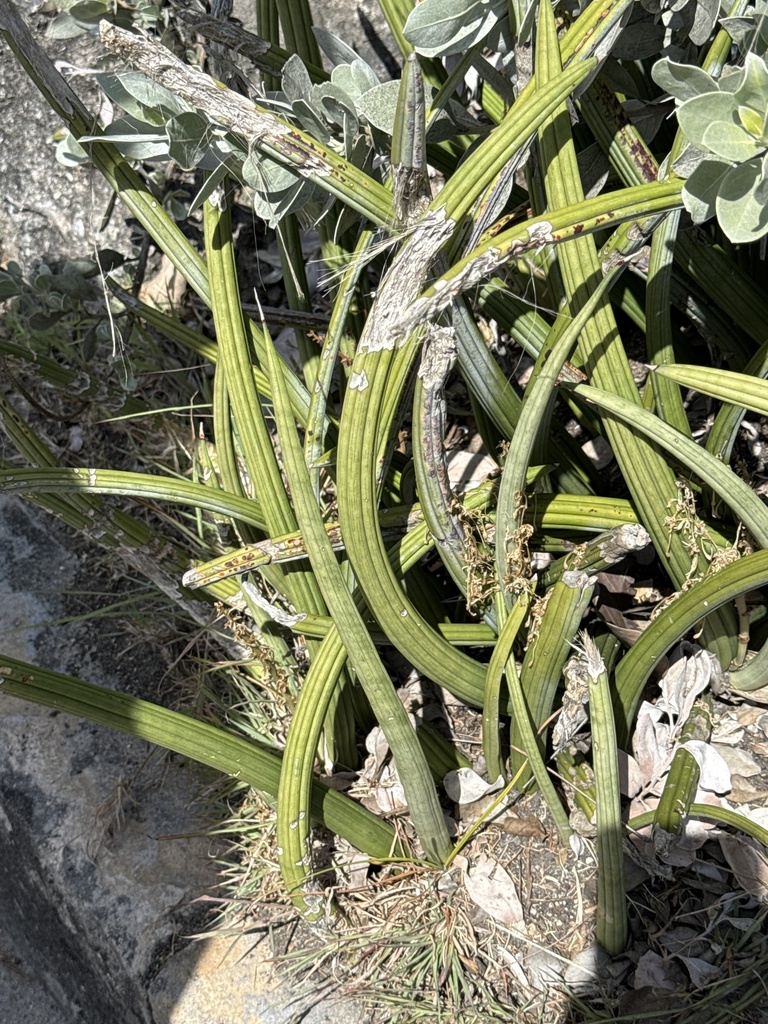
This striking succulent features stiff, round leaves that grow in a fan shape. It's a tough houseplant that handles neglect quite well. You'll love how its architectural form adds a modern touch to any room.
At a glance
- Care level
- Easy
- Plant type
- Succulent
- Light
- Bright indirect light is best, but it tolerates lower light levels.
- Indoor light
- medium
- Water
- Every 14 to 30 days
- Mature size
- Up to 1 meter tall.
- Growth rate
- slow
- Hardiness
- USDA 10 to 12
- Bloom time
- Rarely blooms indoors, but may produce flowers in late summer.
Care
Let the soil dry out completely between waterings to avoid root rot. Use a well draining potting mix to keep the roots happy. Watch for mushy leaves, which often signal that the plant is sitting in too much water.
- Watering
- Always check that the soil is bone dry before adding more water.
- Feeding
- Feed sparingly with a balanced liquid fertilizer during the growing season.
- Pruning
- Only remove damaged or dead leaves at the base as needed.
- Repotting
- Repot only when the plant becomes root bound or the container starts to bulge.
- Soil
- Well draining cactus or succulent mix.
- Soil pH
- Slightly acidic to neutral.
- Temperature
- 10 to 30°C
- Humidity
- 20 to 50%
- Drought tolerance
- high
- Lifespan
- Perennial, typically 10 to 20 years.
- Deer and rabbits
- high
Signs it needs repotting
- Roots growing out of the drainage holes.
- The plant has become top heavy and unstable.
- Growth has slowed significantly over a long period.
Safety
- People
- The plant contains saponins which are toxic if ingested by humans or pets.
- Pets
- This plant is toxic to cats and dogs if ingested.
- Children
- Keep this plant out of reach of small children to prevent accidental ingestion of the leaves.
- Contact allergens
- The sap may cause mild skin irritation in sensitive individuals.
- Airborne allergens
- There are no known significant respiratory allergens associated with this plant.
- Edibility
- This plant is not for consumption and can cause significant digestive distress if ingested.
How to identify it
- Smooth, cylindrical, spear like leaves
- Leaves grow in a fan arrangement
- Dark green with lighter horizontal bands
- Stiff, upright growth habit
- Height
- 0.3 to 1m
- Spread
- 0.2 to 0.5m
- Leaves
- dark green, light green, evergreen
- Flowers
- white, pinkish, 1 to 2cm
Common problems
- Root rot — This is caused by overwatering or poor drainage, leading to mushy, decaying roots.
- Mealybugs — These small, white, cottony insects suck sap from the leaves and can weaken the plant.
Growing it
- Propagation
- division, leaf cuttings
- When to plant
- spring, summer
- Overwintering
- Keep the plant in a warm spot and reduce watering significantly during the cooler months.
- In containers
- It grows very well in containers, provided the pot has excellent drainage and is not too large.
Leaf Cuttings
- Cut a healthy leaf into 3 to 4 inch sections.
- Allow the cut ends to callous over for a few days.
- Insert the calloused end into well draining soil.
- Keep the soil barely moist until roots form.
Group plants with similar water needs to make maintenance easier.
Grows well with
- ZZ Plant — They share similar low water and light requirements.
- Jade Plant — Both are succulents that thrive in well draining soil.
Keep away from
- Peace Lily — Peace lilies require much more moisture than this drought tolerant plant.
Similar species
- Snake Plant — It is a close relative with flat, sword shaped leaves.
Science
- Family
- Asparagaceae
- Genus
- Dracaena
- Order
- Asparagales
- Class
- Liliopsida
- Native range
- Angola and parts of Southern Africa.
- Conservation
- This species is not currently listed as threatened or endangered in its native habitat.
It survives in arid, rocky environments by storing water in its thick, succulent leaves.
- Uses
- Indoor ornamental, Air purification, Modern architectural accent
Through the year
Ecological indicators
- Salinity
- 2/9
- Soil reaction
- 6/9
- Light
- 4/9
- Temperature
- 7/9
- Moisture
- 2/9
- Nutrients
- 3/9
Taxonomy resolved against GBIF.
Questions people ask
- How often should I water it?
- Water only when the soil is completely dry, usually every 3 to 4 weeks.
- Does it need direct sun?
- It prefers bright, indirect light but can tolerate lower light levels.
Where the name comes from
The name Sansevieria honors the Italian prince Raimondo di Sangro, while cylindrica refers to the round, spear like shape of its leaves.
Good to know
- It is often called the African spear plant.
- The leaves can grow up to 7 feet long in their natural environment.
- It is incredibly resilient and thrives on neglect.
- It is a member of the Asparagaceae family.
Is your cylindrical snake plant looking unwell?
This page is a general guide. Pocket Botanist diagnoses problems from a photo of your actual plant, works out watering for your light and conditions, and reminds you when care is due.
This guide was generated with AI and checked against GBIF taxonomy. It is general information, not horticultural or veterinary advice. Read about how we build these guides.