 Pocket Botanist
Guide botanique
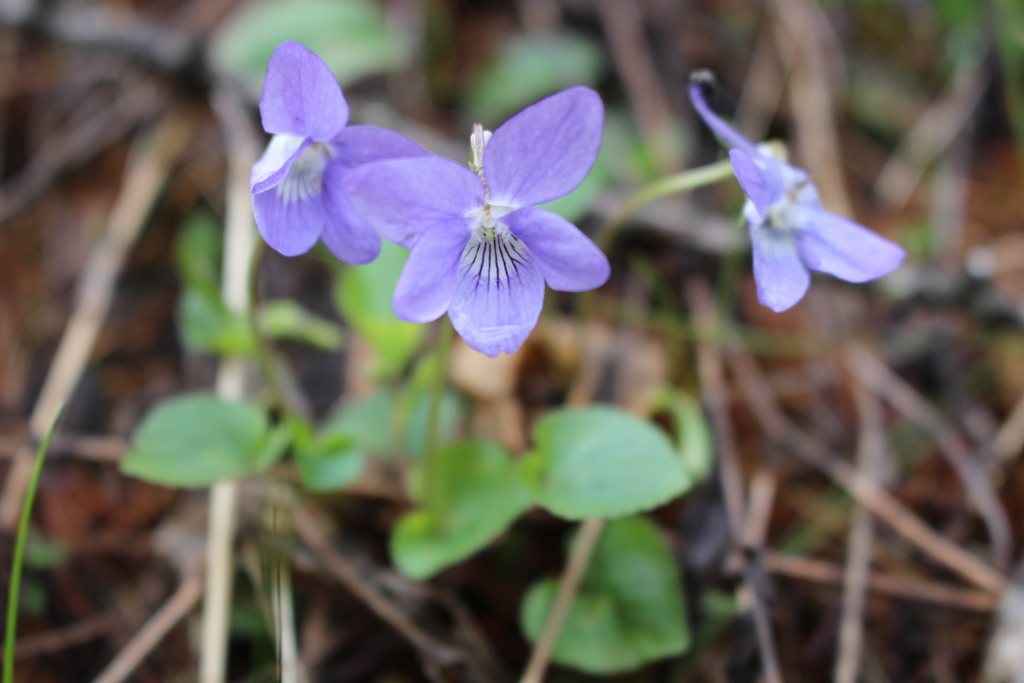
Common dog violet.
Viola riviniana
Prononciation vy-OH-luh riv-ih-nee-AY-nuh
Aussi appelée Common Dog-Violet, Rivinus' violet



The common dog violet is a lovely perennial that brings a touch of woodland charm to your garden. It thrives in shaded spots and produces delicate, pale blue to violet flowers in the spring. You will find it is a wonderful choice for naturalizing in wilder areas of your yard.
En un coup d'œil
- Niveau d'entretien
- Facile
- Type de plante
- Perennial
- Lumière
- Partial shade to full shade
- Lumière en intérieur
- Lumière moyenne
- Arrosage
- Tous les 3 à 7 jours
- Taille adulte
- 6 to 10 inches
- Croissance
- Moyenne
- Rusticité
- USDA 4 à 8
- Floraison
- Mid spring to early summer
Entretien
Keep the soil consistently moist but not waterlogged to mimic its natural woodland habitat. Watch for aphids or slugs that might enjoy the tender foliage. Deadhead the spent flowers if you want to encourage a longer blooming period.
- Arrosage
- Water whenever the top inch of soil feels dry to the touch.
- Engrais
- Apply a balanced liquid fertilizer during the active growing season.
- Taille
- Trim back dead or damaged foliage to keep the plant looking tidy.
- Rempotage
- Repot if the plant becomes root bound or if the soil loses its structure.
- Sol
- Moist, well draining, humus rich soil
- pH du sol
- Neutral to slightly acidic
- Température
- -20 à 25°C
- Humidité
- 50 à 80%
Sécurité
- Humains
- The plant is not considered toxic to humans.
- Enfants
- There are no specific safety concerns for children handling this plant.
- Allergènes de contact
- No specific skin irritation is associated with this plant.
- Allergènes aéroportés
- The pollen is not typically considered a significant airborne allergen.
- Comestibilité
- While the flowers are technically edible, they are often bitter and not typically consumed.
Comment l'identifier
- Heart shaped leaves with serrated edges
- Pale violet flowers with darker veins
- Spurred petals at the back
- Low growing clump forming habit
- Hauteur
- 0,05 à 0,2m
- Envergure
- 0,1 à 0,3m
- Feuilles
- green, deciduous
- Fleurs
- violet, blue, 1 à 2cm
- Fruits
- brown, Late summer
Problèmes courants
- Powdery mildew — A fungal infection causing white dusty spots on leaves.
- Slugs — These mollusks feed on tender young foliage.
La cultiver
- Multiplication
- seed, division
- Quand planter
- spring, autumn
Plant these in groups under deciduous trees to mimic their natural forest floor environment.
Bonnes associations
- Anémone des bois — They share similar woodland habitat requirements.
- Bluebell — They create a naturalistic woodland floor aesthetic.
Espèces similaires
- Viola odorata — It is a related species but features fragrant flowers.
Science
- Famille
- Violaceae
- Genre
- Viola
- Ordre
- Malpighiales
- Classe
- Magnoliopsida
- Région d'origine
- Europe and parts of North Africa.
- Préservation
- This species is common and not of conservation concern.
It grows in woodland clearings and hedge banks where it benefits from seasonal light changes.
- Intérêt pour la faune
- larval host plant, early nectar source
- Pollinisateurs
- abeilles, papillons
- Utilisations
- ground cover, woodland garden, pollinator habitat
Au fil des saisons
Repères écologiques
- Salinité
- 1/9
- Réaction du sol
- 5/9
- Lumière
- 4/9
- Température
- 4/9
- Humidité
- 5/9
- Nutriments
- 4/9
Taxonomie vérifiée avec le GBIF.
Ce qu'on demande souvent
- Does it spread easily?
- Yes, it self seeds readily in favorable conditions.
- Can I grow it in full sun?
- It prefers partial shade and may struggle in hot, direct sun.
D'où vient le nom
The name riviniana honors the German botanist Augustus Quirinus Rivinus.
Bon à savoir
- It is commonly known as the common dog violet.
- It thrives in dappled shade under deciduous trees.
- The flowers are scentless.
Aussi dans
Ta plante a mauvaise mine ?
Cette page est un guide général. Pocket Botanist diagnostique les problèmes directement à partir d'une photo de ta plante, adapte l'arrosage à sa luminosité et te prévient quand il faut t'en occuper.
Ce guide a été généré par IA et vérifié avec la taxonomie du GBIF. Il s'agit d'informations générales, et non de conseils horticoles ou vétérinaires. Découvre comment nous concevons ces guides.