 Pocket Botanist
Guide botanique
American sycamore.
Platanus occidentalis
Prononciation PLAT-uh-nus ok-si-den-TAY-liss
Aussi appelée American Plane, American Plane Tree, American Planetree, American Sycamore, American plane-tree, Bottonball, Buttonball, Buttontree


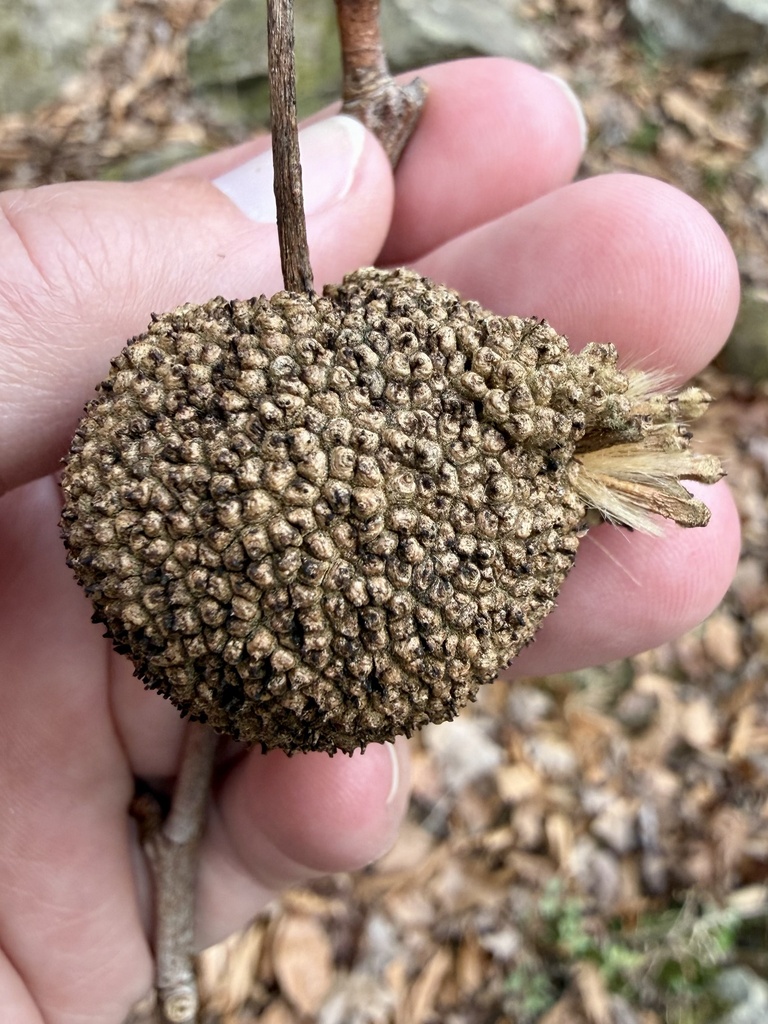
The American sycamore is a massive, fast growing deciduous tree native to North America. It is well known for its distinctive peeling bark that reveals white, cream, and tan patches underneath. You will often find these giants growing near streams and rivers where they have plenty of room to spread their roots.
En un coup d'œil
- Niveau d'entretien
- Facile
- Type de plante
- Deciduous tree
- Lumière
- Full sun
- Lumière en intérieur
- Soleil direct
- Arrosage
- Tous les 7 à 14 jours
- Taille adulte
- 75 to 100 feet
- Croissance
- Rapide
- Rusticité
- USDA 4 à 9
- Floraison
- Mid spring
Entretien
Plant this tree in a location with plenty of space for its expansive root system and canopy. Keep an eye out for leaf blight or anthracnose during wet springs. It is a very hardy tree that mostly takes care of itself once established.
- Arrosage
- Young trees need regular deep watering until they are well established in the landscape.
- Engrais
- Apply a balanced fertilizer in early spring if the tree shows signs of slow growth.
- Taille
- Prune during the dormant winter season to remove dead or crossing branches.
- Rempotage
- This tree is not suitable for container growth due to its massive size.
- Sol
- Moist, deep, rich soil
- pH du sol
- 5.0 to 8.0
- Température
- -30 à 35°C
- Humidité
- 40 à 80%
- Résistance à la sécheresse
- Moyenne
- Durée de vie
- Perennial, can live for 200 to 500 years.
- Résistance aux chevreuils et lapins
- Moyenne
Sécurité
- Humains
- The fine hairs on the leaves and fruit can cause irritation if inhaled or touched.
- Enfants
- The large, heavy fruit balls can be a tripping hazard or cause minor injury if they fall on small children.
- Allergènes de contact
- The fuzzy hairs on young leaves and fruit can cause skin irritation.
- Allergènes aéroportés
- The pollen is a common allergen during the spring flowering season.
- Comestibilité
- The fruit is not considered edible for humans.
Comment l'identifier
- Large, maple like lobed leaves
- Exfoliating bark with camouflage pattern
- Round, fuzzy seed balls hanging down
- Massive trunk with wide base
- Hauteur
- 20 à 40m
- Envergure
- 15 à 30m
- Feuilles
- green, deciduous
- Fleurs
- green, red, 1 à 2cm
- Fruits
- brown, Autumn to winter
Problèmes courants
- Sycamore Anthracnose — A fungal disease that causes leaf blight and twig dieback in cool, wet springs.
- Lace Bug — Small insects that feed on the undersides of leaves, causing yellowing and stippling.
La cultiver
- Multiplication
- seed, cuttings
- Quand planter
- spring, autumn
- Hivernage
- No special protection is needed as it is fully hardy in its native range.
- En pot
- This tree is far too large for container growth.
Seed
- Collect the fuzzy fruit balls in late winter.
- Break them apart to release the seeds.
- Sow seeds in moist soil and keep them consistently damp until germination.
Group this tree with other moisture loving species to create a stable riparian buffer.
Bonnes associations
- Betula nigra — They share similar moisture requirements and thrive in riparian settings.
- Quercus bicolor — This oak also tolerates the wet soil conditions often found near sycamores.
Espèces similaires
- Platane de Londres — It is a hybrid that is more resistant to anthracnose than the native species.
Science
- Famille
- Platanaceae
- Genre
- Platanus
- Ordre
- Proteales
- Classe
- Magnoliopsida
- Région d'origine
- Eastern and central North America.
- Préservation
- This species is widespread and not currently of conservation concern.
It thrives in moist, deep soils along floodplains where it can tolerate periodic inundation.
- Intérêt pour la faune
- seeds provide winter food for birds, nesting habitat for squirrels and birds
- Pollinisateurs
- abeilles
- Utilisations
- shade tree, riparian restoration, timber
Au fil des saisons
Repères écologiques
- Salinité
- 2/9
- Réaction du sol
- 6/9
- Lumière
- 7/9
- Température
- 5/9
- Humidité
- 8/9
- Nutriments
- 6/9
Taxonomie vérifiée avec le GBIF.
Ce qu'on demande souvent
- How fast does it grow?
- It is a very fast grower, often adding several feet per year.
- Can I plant it near my house?
- No, its massive size and aggressive root system make it unsuitable for small yards or near foundations.
D'où vient le nom
The name occidentalis means western, referring to its native range in the Western Hemisphere, while Platanus comes from the Greek word for broad, describing its large leaves.
Bon à savoir
- It is one of the largest deciduous trees in North America.
- The bark peels off in irregular plates to reveal a creamy white inner layer.
- It is often found growing naturally along riverbanks and streams.
- The wood is hard and was historically used for butcher blocks.
- It can live for several hundred years in ideal conditions.
Ta plante a mauvaise mine ?
Cette page est un guide général. Pocket Botanist diagnostique les problèmes directement à partir d'une photo de ta plante, adapte l'arrosage à sa luminosité et te prévient quand il faut t'en occuper.
Ce guide a été généré par IA et vérifié avec la taxonomie du GBIF. Il s'agit d'informations générales, et non de conseils horticoles ou vétérinaires. Découvre comment nous concevons ces guides.