 Pocket Botanist
Guide botanique
Nipa palm.
Nypa fruticans
Prononciation NY-pah froo-tih-KANZ
Aussi appelée Mangrove Palm, Nipa Palm, Nypa Palm, nipa



The Nipa palm is a unique mangrove species that thrives in brackish water environments. It grows in dense colonies along tidal rivers and estuaries. This plant is highly valued for its edible fruits and versatile leaves.
En un coup d'œil
- Niveau d'entretien
- Difficile
- Type de plante
- Palm
- Lumière
- Full sun
- Lumière en intérieur
- Soleil direct
- Arrosage
- Tous les 1 à 2 jours
- Taille adulte
- 9 meters
- Croissance
- Moyenne
- Rusticité
- USDA 10 à 12
- Floraison
- Year round in tropical climates
Entretien
Keep the soil consistently saturated with water to mimic its natural swampy habitat. Watch for yellowing leaves which often signal a lack of moisture or incorrect salinity levels. It requires high humidity and warmth to stay healthy.
- Arrosage
- The soil must remain constantly wet or submerged.
- Engrais
- Use a balanced aquatic fertilizer during the growing season.
- Taille
- Remove dead or damaged fronds to keep the colony tidy.
- Rempotage
- Repot only when the root system has completely outgrown its container.
- Sol
- Silty clay or mud
- pH du sol
- 6.0 to 7.5
- Température
- 15 à 35°C
- Humidité
- 70 à 100%
Sécurité
- Humains
- There is no known toxicity to humans associated with this plant.
- Enfants
- The large, heavy fruit clusters can pose a falling hazard if children are playing beneath mature palms.
- Comestibilité
- The endosperm of the immature fruit is edible, but ensure proper identification as it grows in specific mangrove environments.
Comment l'identifier
- Large feathery pinnate leaves
- Low growing trunkless habit
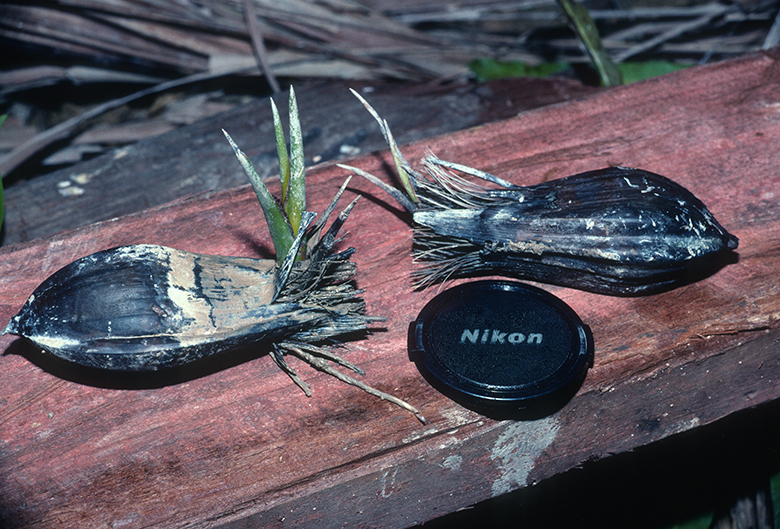
- Spherical clusters of woody fruits
- Grows in coastal mudflats
- Hauteur
- 3 à 9m
- Envergure
- 3 à 6m
- Feuilles
- bright green, dark green, evergreen
- Fleurs
- yellow, brown, 2 à 5cm
- Fruits
- brown, Year round
Problèmes courants
- Salt stress — While it loves brackish water, extreme changes in salinity can impact growth.
La cultiver
- Multiplication
- seed
- Quand planter
- spring, summer, autumn, winter
Plant these in groups to mimic their natural mangrove swamp communities.
Bonnes associations
- Red mangrove — They share the same tidal habitat and provide structural support for the shoreline.
- Avicennia germinans — They coexist in similar brackish conditions.
Espèces similaires
- Palmier cocotier — It is another palm that tolerates coastal conditions but requires different soil.
Science
- Famille
- Arecaceae
- Genre
- Nypa
- Ordre
- Arecales
- Classe
- Liliopsida
- Région d'origine
- Coastal and estuarine areas of the Indian and Pacific Oceans.
- Préservation
- It is not currently endangered but faces habitat loss due to coastal development.
It survives by anchoring itself in soft, anaerobic mud within tidal zones where it filters salt through its roots.
- Intérêt pour la faune
- habitat for estuarine species, nursery for fish
- Pollinisateurs
- abeilles, coléoptères
- Utilisations
- thatching, sugar production, alcohol production, coastal erosion control
Au fil des saisons
Repères écologiques
- Salinité
- 6/9
- Réaction du sol
- 7/9
- Lumière
- 8/9
- Température
- 9/9
- Humidité
- 9/9
- Nutriments
- 6/9
Taxonomie vérifiée avec le GBIF.
Ce qu'on demande souvent
- Can I grow this in a standard garden?
- No, it requires a specialized brackish water environment to survive.
- How do I propagate it?
- You must plant the mature seeds directly into wet, muddy substrate.
D'où vient le nom
The name Nypa comes from a local name in the Moluccas, while fruticans refers to its shrubby, clumping growth habit.
Bon à savoir
- The leaves are widely used for roofing in Southeast Asia.
- It is a stemless palm with leaves rising directly from a creeping underground rhizome.
- The fruit clusters can reach up to 30 centimeters in diameter.
- It thrives in soft mud along tidal rivers.
Ta plante a mauvaise mine ?
Cette page est un guide général. Pocket Botanist diagnostique les problèmes directement à partir d'une photo de ta plante, adapte l'arrosage à sa luminosité et te prévient quand il faut t'en occuper.
Ce guide a été généré par IA et vérifié avec la taxonomie du GBIF. Il s'agit d'informations générales, et non de conseils horticoles ou vétérinaires. Découvre comment nous concevons ces guides.