 Pocket Botanist
Guide botanique
Japanese stiltgrass.
Microstegium vimineum
Prononciation my-kro-STEE-jee-um vim-IN-ee-um
Aussi appelée Chinese Packing Grass, Flexible Sea Grass, Japanese Stilt Grass, Japanese Stiltgrass, Nepal Grass, Nepalese Browntop


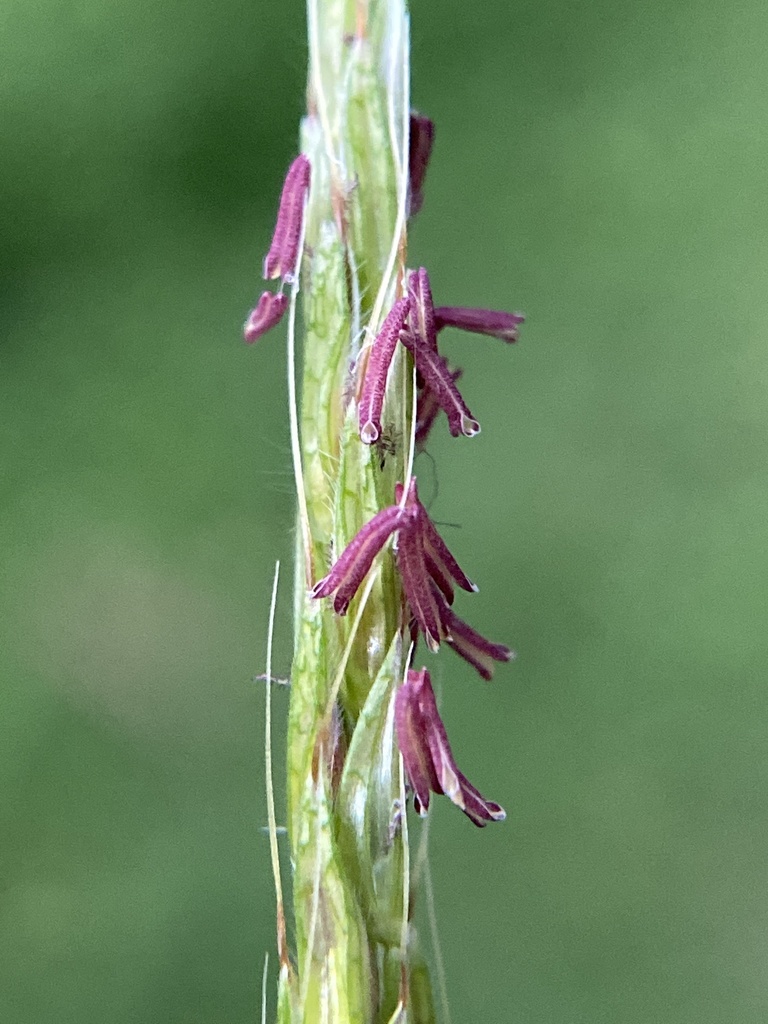
This is an invasive annual grass that spreads rapidly through forest floors and disturbed areas. It thrives in shaded environments and forms dense mats that crowd out native plants. You should avoid planting this as it is considered a significant ecological threat in many regions.

En un coup d'œil
- Niveau d'entretien
- Facile
- Type de plante
- Annual grass
- Lumière
- Partial shade to full shade
- Lumière en intérieur
- Lumière moyenne
- Arrosage
- Tous les 3 à 7 jours
- Taille adulte
- 3 feet
- Croissance
- Rapide
- Rusticité
- USDA 5 à 9
- Floraison
- Late summer to early autumn
Entretien
This plant is highly invasive and generally not kept in cultivation. If you find it on your property, you should pull it by hand before it sets seed. Watch for rapid colonization of damp, shady spots.
- Arrosage
- It prefers consistently moist soil conditions.
- Engrais
- Fertilizing is not recommended for this invasive species.
- Taille
- Remove seed heads before they mature to prevent further spread.
- Rempotage
- As an annual, it typically completes its life cycle within one year.
- Sol
- Moist, acidic soils
- pH du sol
- 5.0 to 7.0
- Température
- -20 à 35°C
- Humidité
- 40 à 90%
Sécurité
- Humains
- There is no significant toxicity reported, but it is not intended for human consumption.
- Enfants
- The plant is not inherently dangerous to children, though it is not a suitable play plant due to its invasive nature.
- Allergènes de contact
- The foliage can be slightly abrasive to sensitive skin.
- Allergènes aéroportés
- The pollen may cause mild seasonal allergies in sensitive individuals.
- Comestibilité
- This plant is not considered edible and may contain compounds that cause digestive upset.
Comment l'identifier
- Pale green lance shaped leaves
- Silvery stripe down leaf midrib
- Delicate branching stems
- Small spikelet flowers in late summer
- Hauteur
- 0,3 à 1m
- Envergure
- 0,2 à 0,6m
- Feuilles
- bright green, deciduous
- Fleurs
- green, yellow, 0,1 à 0,5cm
- Fruits
- brown, Autumn
Problèmes courants
- Fungal leaf spot — Small lesions appear on leaves during periods of high humidity.
La cultiver
- Multiplication
- seed
- Quand planter
- spring
Do not plant this species as it is an aggressive invader that harms local ecosystems.
Espèces similaires
- Leersia virginica — It shares a similar growth habit but is a native species.
Science
- Famille
- Poaceae
- Genre
- Microstegium
- Ordre
- Poales
- Classe
- Liliopsida
- Région d'origine
- East Asia
- Préservation
- It is classified as a noxious weed in many regions and should not be planted.
It outcompetes native flora by forming dense mats that shade out seedlings and alter soil chemistry.
- Intérêt pour la faune
- provides dense ground cover
- Pollinisateurs
- abeilles
- Utilisations
- ground cover in native range, erosion control in native range
Au fil des saisons
Repères écologiques
- Salinité
- 1/9
- Réaction du sol
- 5/9
- Lumière
- 4/9
- Température
- 5/9
- Humidité
- 6/9
- Nutriments
- 5/9
Taxonomie vérifiée avec le GBIF.
Ce qu'on demande souvent
- Is this a good garden plant?
- No, it is highly invasive and should be removed if found in your garden.
- How do I get rid of it?
- Hand pulling before it sets seed is effective for small patches.
D'où vient le nom
The name Microstegium comes from Greek words meaning small roof, referring to the structure of the spikelets.
Bon à savoir
- It was accidentally introduced to the United States in the early 20th century.
- A single plant can produce hundreds of seeds that remain viable in the soil for years.
- It thrives in disturbed areas like roadsides and forest edges.
Aussi dans
Ta plante a mauvaise mine ?
Cette page est un guide général. Pocket Botanist diagnostique les problèmes directement à partir d'une photo de ta plante, adapte l'arrosage à sa luminosité et te prévient quand il faut t'en occuper.
Ce guide a été généré par IA et vérifié avec la taxonomie du GBIF. Il s'agit d'informations générales, et non de conseils horticoles ou vétérinaires. Découvre comment nous concevons ces guides.