 Pocket Botanist
Guide botanique
Fishbone cactus.
Epiphyllum anguliger
Prononciation eh-pih-FIL-um AN-gyoo-lih-ger
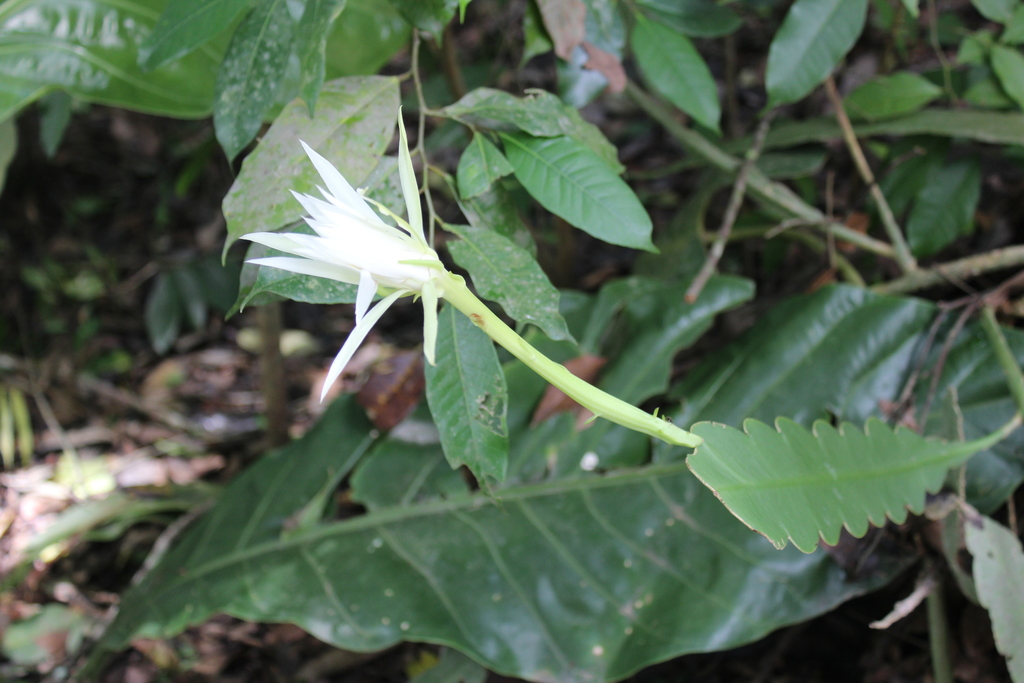
The Fishbone cactus is a really unique-looking succulent, native to the rainforests of Mexico. It's known for its flattened, stem-like leaves that look just like a zigzagging fish skeleton, hence the name! It's a popular choice for hanging baskets because of its trailing growth habit.
En un coup d'œil
- Care level
- Easy
- Plant type
- Succulent
- Light
- Bright, indirect light
- Indoor light
- bright-indirect
- Water
- Every 7 to 14 days
- Mature size
- 1-2 feet tall and wide
- Growth rate
- medium
- Hardiness
- USDA 10 to 12
- Bloom time
- Mid autumn to early winter
Entretien
This cactus prefers bright, indirect light and well-draining soil. Water thoroughly when the top inch of soil feels dry, and allow it to dry out between waterings. Avoid overwatering, as this can lead to root rot.
- Watering
- Water when the top inch of soil is dry. Reduce watering in winter.
- Feeding
- Feed with a balanced liquid fertilizer diluted to half strength every 30 days during the growing season (spring to fall).
- Pruning
- Prune lightly in spring to maintain shape or remove dead/damaged stems. Do not over-prune.
- Repotting
- Repot every 1-2 years, or when rootbound, into a slightly larger pot with fresh, well-draining soil.
- Soil
- Well-draining potting mix, cactus or succulent mix
- Soil pH
- Slightly acidic to neutral (5.5-7.0)
- Temperature
- 15 to 27°C
- Humidity
- 40 to 60%
Sécurité
- People
- This plant is not known to be toxic to humans, but it's best to avoid ingestion.
- Pets
- Non-toxic to cats and dogs.
- Children
- While not toxic, ingestion of plant parts by small children could cause mild stomach upset. Handle with care to avoid sharp edges.
- Contact allergens
- No significant contact allergens are typically associated with Epiphyllum anguliger.
- Airborne allergens
- Pollen from this plant may cause respiratory irritation in sensitive individuals.
- Edibility
- This plant is not intended for human consumption.
Comment l'identifier
- Flattened, stem-like leaves
- Zigzag or fishbone pattern
- Glossy green surfaces
- Spaced-out small spines
- Epiphytic growth
- Blooms at night
- Height
- 0.3 to 0.6m
- Spread
- 0.3 to 0.6m
- Leaves
- green, evergreen
- Flowers
- white, cream, 10 to 15cm
Problèmes courants
- Root Rot — Overwatering and poor drainage can lead to root rot, a common issue for epiphytic cacti.
- Mealybugs — These small, white, cottony pests can infest the stems and suck sap from the plant.
- Spider Mites — Tiny mites can cause stippling on the leaves and fine webbing, especially in dry conditions.
La cultiver
- Propagation
- stem cuttings, division
- When to plant
- Spring, Summer
When combining plants, ensure they all have similar light, watering, and humidity requirements to thrive together.
Bonnes associations
- Orchids — These plants share similar epiphytic needs for good drainage and bright, indirect light.
- Bromeliads — Bromeliads can provide a similar tropical aesthetic and thrive in comparable conditions.
- Ferns — Many ferns appreciate the humidity and indirect light that also suit Epiphyllum anguliger.
À éloigner de
- Mealybugs — These pests are a common problem for many houseplants and can damage the cactus by feeding on its sap.
- Spider Mites — Dry conditions, often found indoors, can encourage spider mite infestations that harm the plant's foliage.
- Mealybug Destroyer — While beneficial for controlling mealybugs, introducing predatory insects needs careful consideration for the specific plant's health and environment.
Espèces similaires
- Easter Cactus — Similar epiphytic growth habit and blooming period, though stem segments are typically segmented and flattened differently.
- Christmas Cactus — Also an epiphytic cactus with flattened stems, but Christmas cactus segments are more rounded and segmented, blooming in winter.
- Orchid Cactus — Other species within the Epiphyllum genus often share a similar epiphytic nature and large, showy flowers, though stem shapes vary widely.
Science
- Family
- Cactaceae
- Genus
- Disocactus
- Order
- Caryophyllales
- Class
- Magnoliopsida
- Native range
- Mexico
- Conservation
- This species is not currently listed as endangered or of conservation concern.
In its native tropical forests, Epiphyllum anguliger grows attached to trees, obtaining moisture and nutrients from the air and accumulated debris.
- Uses
- Ornamental
Au fil des saisons
Repères écologiques
- Salinity
- 2/9
- Soil reaction
- 6/9
- Light
- 6/9
- Temperature
- 7/9
- Moisture
- 5/9
- Nutrients
- 4/9
Taxonomie vérifiée avec le GBIF.
Ce qu'on demande souvent
- How often should I water my fishbone cactus?
- Water thoroughly when the top inch of soil feels dry, usually every 1-2 weeks during the growing season and less in winter.
- What kind of light does it prefer?
- Bright, indirect light is ideal; avoid direct, intense sunlight which can scorch the stems.
- Does it need special soil?
- Yes, it thrives in a well-draining potting mix, similar to what's used for orchids or other epiphytic cacti.
- When does it bloom?
- Blooming typically occurs in late fall or winter, with fragrant, nocturnal flowers.
- Can I grow this outdoors?
- Yes, in frost-free climates, but it's often grown indoors as a houseplant due to its sensitivity to cold.
D'où vient le nom
The genus name Epiphyllum comes from Greek words 'epi' (upon) and 'phyllon' (leaf), referring to its epiphytic nature. The species name 'anguliger' refers to the angled or cornered appearance of its stems.
Bon à savoir
- It's native to the rainforests of Mexico.
- Its flowers are typically white and highly fragrant, often opening at night.
- As an epiphyte, it naturally grows on other plants in its native habitat.
- The stems can grow quite long, making it a popular hanging basket plant.
Ton fishbone cactus a mauvaise mine ?
Cette page est un guide général. Pocket Botanist diagnostique les problèmes directement à partir d'une photo de ta plante, adapte l'arrosage à sa luminosité et te prévient quand il faut t'en occuper.
Ce guide a été généré par IA et vérifié avec la taxonomie du GBIF. Il s'agit d'informations générales, et non de conseils horticoles ou vétérinaires. Découvre comment nous concevons ces guides.