 Pocket Botanist
Guide botanique
Deutzia gracile.
Deutzia gracilis
Prononciation DOOT-zee-uh gruh-SILL-iss
Aussi appelée Japanese snowflower, Deutzia gracile, Slender pride of rochester, Deutzia gracile


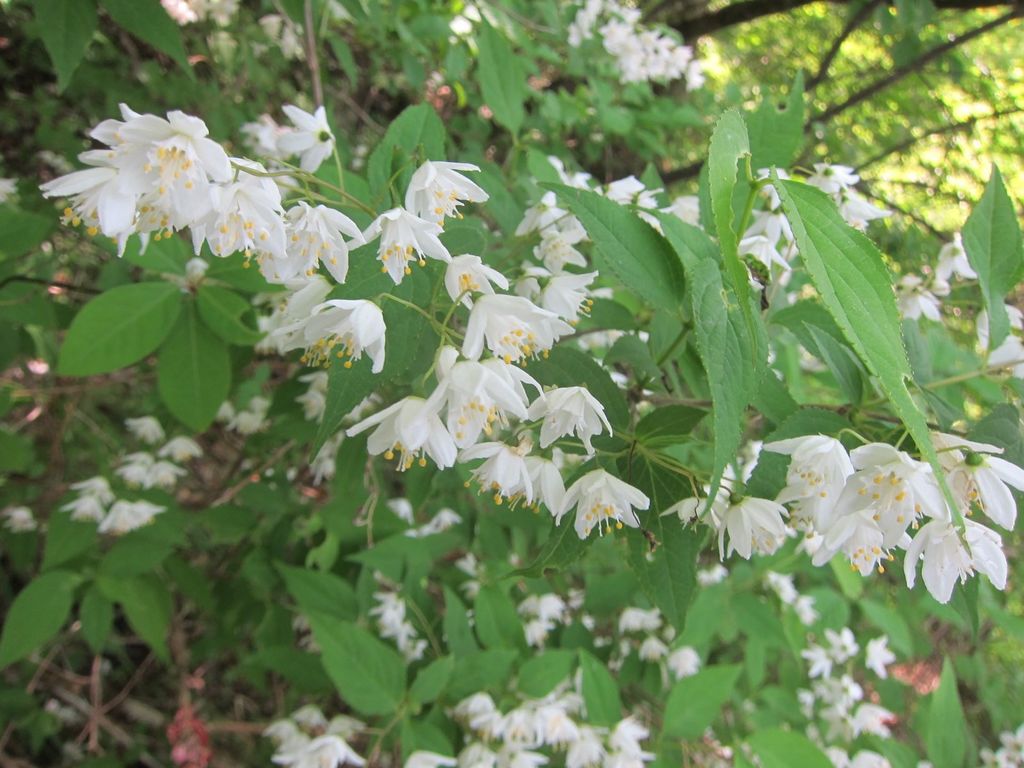
Ce charmant arbuste à feuilles caduques est un favori du printemps qui produit une profusion de délicates fleurs blanches. Il reste relativement compact, ce qui en fait un excellent choix pour les petits jardins ou les plantations de fondation. Vous adorerez la façon dont les branches arquées créent un aspect doux et gracieux dans votre paysage.

En un coup d'œil
- Niveau d'entretien
- Facile
- Type de plante
- Arbuste à feuilles caduques
- Lumière
- Plein soleil à mi-ombre
- Lumière en intérieur
- Lumière vive indirecte
- Arrosage
- Tous les 5 à 10 jours
- Taille adulte
- 3 à 4 pieds
- Croissance
- Moyenne
- Rusticité
- USDA 5 à 8
- Floraison
- Mi à fin du printemps
Entretien
Plantez cet arbuste dans un sol bien drainé et maintenez-le constamment humide pendant sa période d'établissement. Taillez juste après la disparition des fleurs pour encourager la croissance de nouvelles pousses pour l'année prochaine. Surveillez le jaunissement des feuilles, qui pourrait indiquer que le sol reste trop humide.
- Arrosage
- Arrosez abondamment chaque fois que le pouce supérieur du sol semble sec au toucher.
- Engrais
- Appliquez un engrais équilibré à libération lente au début du printemps avant le début de la nouvelle croissance.
- Taille
- Taillez immédiatement après la floraison pour façonner la plante et enlever le vieux bois.
- Rempotage
- Si vous cultivez en pot, rempotez dans un pot légèrement plus grand tous les quelques années pour rafraîchir le sol.
- Sol
- Terre franche fertile, humide et bien drainée
- pH du sol
- 6,0 à 7,5
- Température
- -23 à 35°C
- Humidité
- 40 à 70%
- Résistance à la sécheresse
- Moyenne
- Durée de vie
- Vivace, généralement de 10 à 20 ans
- Parfum
- Léger
- Résistance aux chevreuils et lapins
- Moyenne
Signes qu'il faut rempoter
- Les racines sortent des trous de drainage
- L'eau s'écoule directement à travers le pot
- Croissance ralentie pendant la saison active
Sécurité
- Humains
- Il est généralement considéré comme non toxique, bien que manger n'importe quelle partie de la plante ne soit pas recommandé.
- Enfants
- Les jeunes enfants doivent être découragés de mâcher les tiges ou les feuilles pour éviter un inconfort digestif potentiel.
- Allergènes de contact
- Il n'y a pas de rapports significatifs d'irritation cutanée due à la manipulation de cet arbuste.
- Allergènes aéroportés
- Le pollen peut provoquer des réactions légères chez les personnes sensibles pendant la saison de floraison.
- Comestibilité
- Cette plante n'est pas considérée comme comestible et son ingestion peut provoquer de légers maux d'estomac.
Comment l'identifier
- Tiges arquées à port élancé
- Feuilles vertes opposées, en forme de lance
- Grappes de fleurs blanches en forme de cloche
- Petit arbuste à feuilles caduques
- Hauteur
- 0,6 à 1,2m
- Envergure
- 0,6 à 1,2m
- Feuilles
- vert vif, caduc
- Fleurs
- blanc, 1 à 2cm
Problèmes à surveiller
- PuceronsCourant
- Taches foliairesCourant
- Brûlures du feuillagePeu courant
- OïdiumPeu courant
- Tache foliaire — Des taches fongiques apparaissent sur le feuillage pendant les périodes de forte humidité et de mauvaise circulation de l'air.
Par symptôme
Vérifie la santé de ta plante en photo
Pocket Botanist analyse une photo de ta plante et te dit ce qui ne va pas et quoi essayer en premier.
La cultiver
- Multiplication
- bouturage, division
- Quand planter
- printemps, automne
- Hivernage
- Appliquez une couche de paillis autour de la base pour protéger les racines des fluctuations de température extrêmes. Aucun couvrement spécial n'est nécessaire pour les branches.
- En pot
- Il pousse bien en pots, à condition que le pot mesure au moins 40 centimètres de large et qu'il ait un excellent drainage.
Boutures de bois tendre
- 1. Prélevez des boutures de 10 centimètres au début de l'été.
- 2. Retirez les feuilles inférieures.
- 3. Trempez dans de l'hormone d'enracinement.
- 4. Placez dans un mélange de terreau humide.
- 5. Maintenez l'humidité jusqu'à enracinement.
Plantez avec des bulbes de printemps pour apporter de la couleur avant que l'arbuste ne se couvre complètement de feuilles.
Bonnes associations
- Lamprocapnos spectabilis — Ils partagent des exigences similaires en matière de lumière et d'humidité pour un affichage printanier classique.
- Hosta — Le feuillage audacieux des hostas offre un beau contraste avec la texture fine du deutzia.
Espèces similaires
- Deutzia scabra — C'est un parent plus grand et plus robuste avec des fleurs blanches ou rosées similaires.
Science
- Famille
- Hydrangeaceae
- Genre
- Deutzia
- Ordre
- Cornales
- Classe
- Magnoliopsida
- Région d'origine
- Japon
- Préservation
- Cette espèce n'est actuellement pas répertoriée comme menacée ou en danger dans son aire de répartition naturelle.
Il pousse en bordure de bois et dans les fourrés où il bénéficie d'une ombre partielle et d'une humidité constante du sol.
- Intérêt pour la faune
- source de nectar
- Pollinisateurs
- abeilles, papillons
- Utilisations
- arbuste d'ornement, plantations de fondation, plantations de masse, culture en pot
Au fil des saisons
Repères écologiques
- Réaction du sol
- 6/9
- Humidité
- 5/9
- Nutriments
- 5/9
- Salinité
- 1/9
- Lumière
- 6/9
- Température
- 5/9
Taxonomie vérifiée avec le GBIF.
Ce qu'on demande souvent
- Quand dois-je tailler mon Deutzia ?
- Taille immédiatement après la floraison pour encourager la nouvelle croissance pour l'année suivante.
- A-t-il besoin de plein soleil ?
- Il préfère le plein soleil mais tolère l'ombre légère, surtout dans les climats plus chauds.
D'où vient le nom
Le genre honore Johann van der Deutz, un protecteur hollandais de la botanique du 18ème siècle. L'épithète spécifique gracilis souligne l'allure gracieuse et élancée de la plante.
Bon à savoir
- Le nom gracilis signifie élancé, faisant référence aux tiges délicates.
- C'est un choix populaire pour forcer à l'intérieur pendant la fin de l'hiver.
- Les fleurs sont légèrement parfumées, ajoutant un subtil arôme au jardin.
Garde ta plante en pleine forme
Cette page est un guide général. Enregistre ta plante dans Pocket Botanist et tu reçois des rappels d'entretien adaptés à cette plante, ainsi qu'un historique d'entretien qui montre ce qui a marché.
Ce guide a été généré par IA et vérifié avec la taxonomie du GBIF. Il s'agit d'informations générales, et non de conseils horticoles ou vétérinaires. Découvre comment nous concevons ces guides.