 Pocket Botanist
Guide botanique
Ivy-leaved toadflax.
Cymbalaria muralis
Prononciation sim-buh-LAIR-ee-uh myoo-RAL-iss
Aussi appelée Ivy-leaved Toadflax, Kenilworth Creeper, Kenilworth ivy, Kenilworth ivy, Ivy-leaved toadflax, Coliseum ivy, Oxford ivy, Mother of thousands, Pennywort, Wandering sailor, Kenilworth-ivy


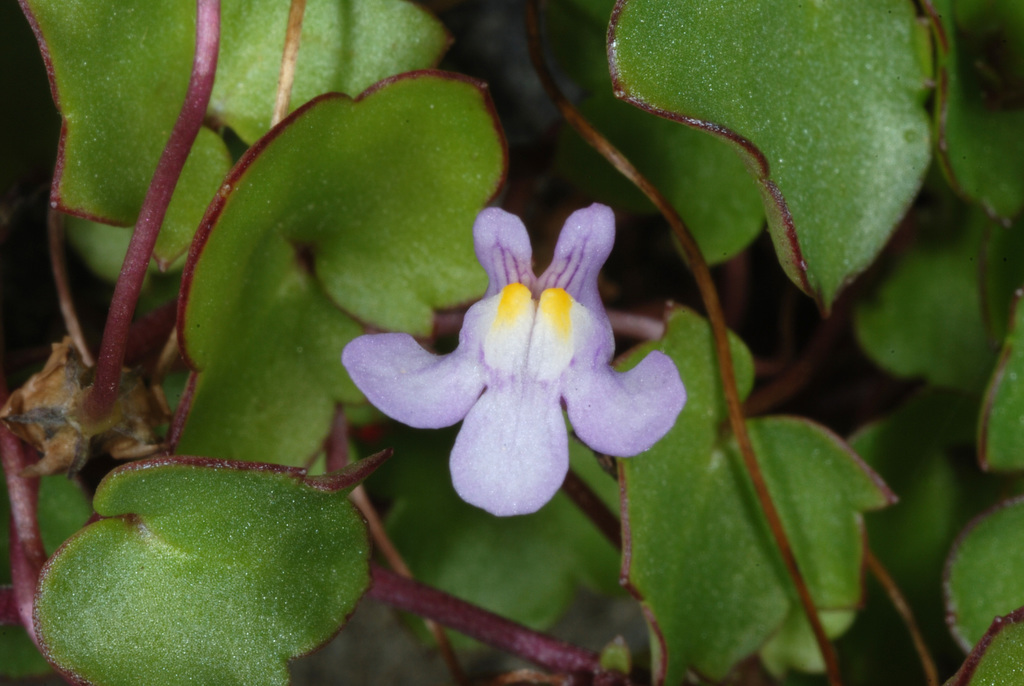
This charming little plant loves to creep along stone walls and rocky crevices. It produces delicate, snapdragon-like flowers that add a touch of whimsy to any garden. You'll find it's quite happy trailing from hanging baskets or tucked into rock gardens.

En un coup d'œil
- Niveau d'entretien
- Facile
- Type de plante
- Perennial herb
- Lumière
- Partial shade to full shade
- Lumière en intérieur
- Lumière vive indirecte
- Arrosage
- Tous les 3 à 7 jours
- Taille adulte
- 6 inches tall
- Croissance
- Rapide
- Rusticité
- USDA 5 à 9
- Floraison
- Late spring to early autumn
Entretien
Keep the soil consistently moist but never soggy to mimic its natural cool, rocky habitat. Watch for wilting during hot spells, as this plant prefers cooler temperatures and shade. If it gets too leggy, don't hesitate to trim it back to encourage a bushier shape.
- Arrosage
- Water whenever the top inch of soil feels dry to the touch.
- Engrais
- Apply a balanced liquid fertilizer once a month during the active growing season.
- Taille
- Trim back long, straggly stems to maintain a tidy appearance and promote new growth.
- Rempotage
- Repot only when the plant becomes root-bound or the soil loses its structure.
- Sol
- Well-draining, gritty soil
- pH du sol
- Neutral to slightly alkaline
- Température
- -15 à 30°C
- Humidité
- 40 à 70%
- Résistance à la sécheresse
- Faible
- Durée de vie
- Perennial, typically 3 to 5 years.
- Résistance aux chevreuils et lapins
- Moyenne
Signes qu'il faut rempoter
- Roots growing out of the drainage holes.
- The plant looks crowded and stops spreading.
- Water runs through the pot too quickly.
Sécurité
- Humains
- There are no reports of significant toxicity, but it is not intended for consumption.
- Enfants
- The small size of the plant and its tendency to grow in cracks may make it a minor choking hazard if small parts are ingested by children.
- Comestibilité
- This plant is not considered edible and should be kept away from food preparation areas.
Comment l'identifier
- Small, ivy-shaped, lobed leaves
- Delicate, lilac-colored snapdragon flowers
- Trailing, slender, reddish stems
- Tiny, rounded seed capsules
- Hauteur
- 0,05 à 0,15m
- Envergure
- 0,3 à 0,6m
- Feuilles
- green, evergreen
- Fleurs
- lilac, purple, white, 0,5 à 1cm
Problèmes courants
- Slugs — These mollusks can chew holes in the foliage during damp weather.
- Root rot — Occurs when the plant is kept in waterlogged soil without proper drainage.
La cultiver
- Multiplication
- seed, division, cuttings
- Quand planter
- spring, autumn
- Hivernage
- It is largely evergreen in mild climates, but may die back in severe cold. Simply clear away any dead foliage in early spring to encourage fresh growth.
- En pot
- It is excellent for containers, especially hanging baskets where it can trail over the edges.
Division
- 1. Carefully lift a clump from the soil or wall crevice.
- 2. Gently pull the root system apart into smaller sections.
- 3. Replant immediately into moist soil.
Seed
- 1. Collect ripe seeds in late summer.
- 2. Sow them directly into moist, gritty soil.
- 3. Keep the surface damp until germination occurs.
Pair this plant with other low growing rock garden species that prefer similar moisture levels to create a lush, green tapestry.
Bonnes associations
- Polystichum — They share a love for cool, shaded, and moist rock crevices.
- Lysimachia nummularia — Both plants provide excellent ground cover in moist, shaded areas.
Espèces similaires
- Cymbalaria pallida — It is a very close relative with slightly larger flowers.
Science
- Famille
- Plantaginaceae
- Genre
- Cymbalaria
- Ordre
- Lamiales
- Classe
- Magnoliopsida
- Région d'origine
- Southern and central Europe.
- Préservation
- It is considered an invasive species in some parts of North America where it outcompetes native rock dwelling plants.
It thrives in cool, damp crevices of stone walls where it finds protection from direct heat and competition.
- Intérêt pour la faune
- nectar source
- Pollinisateurs
- abeilles, papillons
- Utilisations
- rock gardens, wall plantings, ground cover, container filler
Au fil des saisons
Repères écologiques
- Salinité
- 2/9
- Réaction du sol
- 6/9
- Lumière
- 5/9
- Température
- 5/9
- Humidité
- 6/9
- Nutriments
- 4/9
Taxonomie vérifiée avec le GBIF.
Ce qu'on demande souvent
- Will it damage my brick walls?
- Generally no, it grows in existing mortar gaps and does not actively pry bricks apart.
- Can I grow it in full sun?
- It prefers partial shade but will tolerate full sun if the soil remains consistently moist.
D'où vient le nom
Cymbalaria refers to the cymbal shaped leaves, while muralis means of walls, describing its natural habitat perfectly.
Bon à savoir
- It is commonly known as Kenilworth ivy because it was once abundant at Kenilworth Castle.
- The plant is a master of colonizing vertical surfaces like brick walls and stone bridges.
- It is a member of the plantain family, Plantaginaceae.
- The tiny flowers look like miniature snapdragons.
Aussi dans
Ta plante a mauvaise mine ?
Cette page est un guide général. Pocket Botanist diagnostique les problèmes directement à partir d'une photo de ta plante, adapte l'arrosage à sa luminosité et te prévient quand il faut t'en occuper.
Ce guide a été généré par IA et vérifié avec la taxonomie du GBIF. Il s'agit d'informations générales, et non de conseils horticoles ou vétérinaires. Découvre comment nous concevons ces guides.