 Pocket Botanist
Guide botanique
Partridge pea.
Chamaecrista fasciculata
Prononciation kam-uh-KRIS-tuh fas-ik-yoo-LAY-tuh
Aussi appelée Golden Cassia, Partridge Pea, Prairie-senna, Sensitive-pea, Showy Partridge-pea, Showy Partridgepea, Sleepingplant, large-flowered sensitive pea


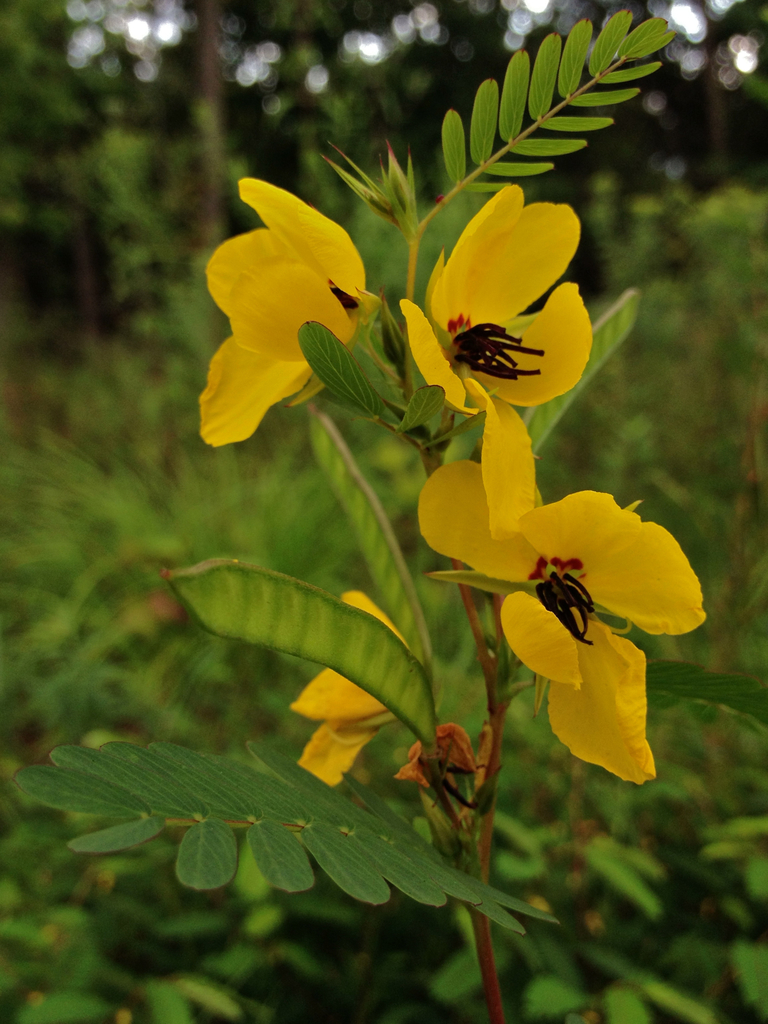
Partridge pea is a charming native annual that brings a splash of yellow to meadows and roadsides. It is a fantastic choice for supporting local pollinators like bees and butterflies. You will love how its delicate, ferny foliage folds up when touched.

En un coup d'œil
- Niveau d'entretien
- Facile
- Type de plante
- Annual wildflower
- Lumière
- Full sun
- Lumière en intérieur
- Soleil direct
- Arrosage
- Tous les 7 à 14 jours
- Taille adulte
- 2 to 3 feet
- Croissance
- Rapide
- Rusticité
- USDA 4 à 9
- Floraison
- Mid summer to early autumn
Entretien
This plant thrives in full sun and prefers well draining soil. Keep an eye out for wilting during extreme dry spells, though it is quite drought tolerant once established. It readily reseeds itself, so expect new growth in the same spot next year.
- Arrosage
- Water deeply during the first few weeks until the roots are well established.
- Engrais
- This plant generally does not require fertilizer as it fixes its own nitrogen.
- Taille
- You can cut the plant back after it has finished flowering and dropped its seeds.
- Rempotage
- As an annual, this plant completes its life cycle in one season and does not need repotting.
- Sol
- Sandy or rocky soil
- pH du sol
- Acidic to neutral
- Température
- -20 à 35°C
- Humidité
- 40 à 70%
- Résistance à la sécheresse
- Élevée
- Durée de vie
- Annual, completes life cycle in one season.
- Résistance aux chevreuils et lapins
- Moyenne
Signes qu'il faut rempoter
- Roots growing out of drainage holes
- Stunted growth during the active season
Sécurité
- Humains
- This plant is generally considered non-toxic, but ingestion is not recommended.
- Enfants
- The small seeds could pose a choking hazard if swallowed by young children.
- Allergènes de contact
- No notable skin irritation is associated with this plant.
- Allergènes aéroportés
- Pollen may cause mild reactions in sensitive individuals during peak bloom.
- Comestibilité
- The seeds are not considered edible and may cause stomach upset if ingested.
Comment l'identifier
- Bright yellow five petaled flowers
- Compound leaves with many leaflets
- Sensitive leaves fold when touched
- Slender seed pods turn dark brown
- Stems often have reddish tint
- Hauteur
- 0,3 à 0,9m
- Envergure
- 0,2 à 0,6m
- Feuilles
- green, deciduous
- Fleurs
- yellow, 2 à 4cm
- Fruits
- brown, Autumn
Problèmes courants
- Leaf spot — Fungal spots appear on foliage during periods of high humidity.
La cultiver
- Multiplication
- seed
- Quand planter
- spring
- Hivernage
- The plant dies back completely after the first frost, leaving behind seeds that overwinter in the soil.
- En pot
- It grows well in containers if provided with deep pots to accommodate its taproot.
Seed Sowing
- 1. Collect dry pods in late autumn.
- 2. Scarify seeds lightly with sandpaper.
- 3. Sow directly into garden soil in early spring.
Plant in groups to create a dense patch that supports more pollinators.
Bonnes associations
- Schizachyrium scoparium — They share similar moisture needs and provide a natural prairie aesthetic.
- Purple coneflower — Both plants attract a wide variety of pollinators to the garden.
Espèces similaires
- Sensitive plant — Both exhibit rapid leaf movement when touched.
Science
- Famille
- Fabaceae
- Genre
- Chamaecrista
- Ordre
- Fabales
- Classe
- Magnoliopsida
- Région d'origine
- Eastern and central North America.
- Préservation
- It is a common native species and is not currently under threat.
It grows in open, disturbed areas where it quickly colonizes bare soil.
- Intérêt pour la faune
- larval host plant, nectar source
- Pollinisateurs
- abeilles, papillons
- Utilisations
- pollinator gardens, meadow restoration, soil stabilization
Au fil des saisons
Repères écologiques
- Salinité
- 1/9
- Réaction du sol
- 5/9
- Lumière
- 8/9
- Température
- 6/9
- Humidité
- 4/9
- Nutriments
- 3/9
Taxonomie vérifiée avec le GBIF.
Ce qu'on demande souvent
- Does it need full sun?
- Yes, it thrives in full sun and will become leggy in the shade.
- Will it come back every year?
- It is an annual, but it drops seeds that will sprout the following spring.
D'où vient le nom
The genus name Chamaecrista means ground crest, while the species name fasciculata refers to the clustered arrangement of the flowers.
Bon à savoir
- It is an annual that readily reseeds itself in the garden.
- The plant is a member of the legume family and fixes nitrogen in the soil.
- It is a primary host for the cloudless sulphur butterfly.
Aussi dans
Ta plante a mauvaise mine ?
Cette page est un guide général. Pocket Botanist diagnostique les problèmes directement à partir d'une photo de ta plante, adapte l'arrosage à sa luminosité et te prévient quand il faut t'en occuper.
Ce guide a été généré par IA et vérifié avec la taxonomie du GBIF. Il s'agit d'informations générales, et non de conseils horticoles ou vétérinaires. Découvre comment nous concevons ces guides.