 Pocket Botanist
Guía de plantas
Partridge pea.
Chamaecrista fasciculata
Pronunciación kam-uh-KRIS-tuh fas-ik-yoo-LAY-tuh
También se conoce como Golden Cassia, Partridge Pea, Prairie-senna, Sensitive-pea, Showy Partridge-pea, Showy Partridgepea, Sleepingplant, large-flowered sensitive pea


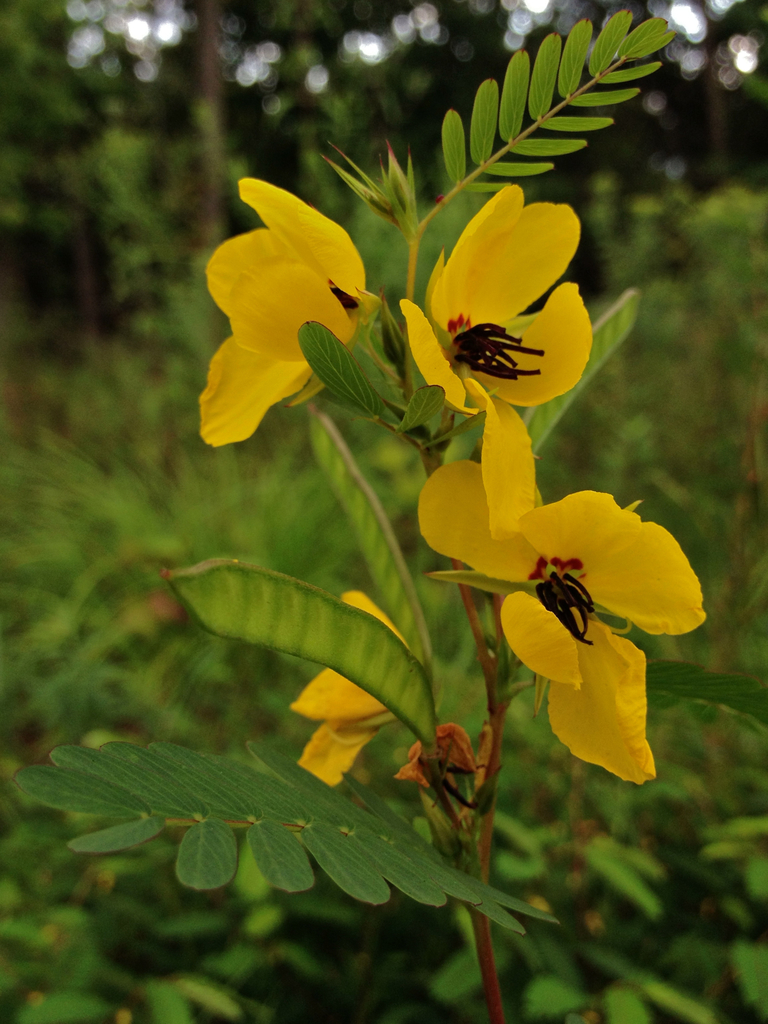
Partridge pea is a charming native annual that brings a splash of yellow to meadows and roadsides. It is a fantastic choice for supporting local pollinators like bees and butterflies. You will love how its delicate, ferny foliage folds up when touched.

De un vistazo
- Nivel de cuidados
- Fácil
- Tipo de planta
- Annual wildflower
- Luz
- Full sun
- Luz en interior
- Sol directo
- Riego
- Cada 7 a 14 días
- Tamaño adulto
- 2 to 3 feet
- Ritmo de crecimiento
- Rápido
- Rusticidad
- USDA 4 a 9
- Floración
- Mid summer to early autumn
Cuidados
This plant thrives in full sun and prefers well draining soil. Keep an eye out for wilting during extreme dry spells, though it is quite drought tolerant once established. It readily reseeds itself, so expect new growth in the same spot next year.
- Riego
- Water deeply during the first few weeks until the roots are well established.
- Abonado
- This plant generally does not require fertilizer as it fixes its own nitrogen.
- Poda
- You can cut the plant back after it has finished flowering and dropped its seeds.
- Trasplante
- As an annual, this plant completes its life cycle in one season and does not need repotting.
- Suelo
- Sandy or rocky soil
- pH del suelo
- Acidic to neutral
- Temperatura
- -20 a 35°C
- Humedad
- 40 a 70%
- Tolerancia a la sequía
- Alta
- Longevidad
- Annual, completes life cycle in one season.
- Resistencia a ciervos y conejos
- Moderada
Señales de que necesita trasplante
- Roots growing out of drainage holes
- Stunted growth during the active season
Seguridad
- Personas
- This plant is generally considered non-toxic, but ingestion is not recommended.
- Niños
- The small seeds could pose a choking hazard if swallowed by young children.
- Alérgenos por contacto
- No notable skin irritation is associated with this plant.
- Alérgenos en el aire
- Pollen may cause mild reactions in sensitive individuals during peak bloom.
- Comestibilidad
- The seeds are not considered edible and may cause stomach upset if ingested.
Cómo identificarla
- Bright yellow five petaled flowers
- Compound leaves with many leaflets
- Sensitive leaves fold when touched
- Slender seed pods turn dark brown
- Stems often have reddish tint
- Altura
- 0,3 a 0,9m
- Anchura
- 0,2 a 0,6m
- Hojas
- green, deciduous
- Flores
- yellow, 2 a 4cm
- Frutos
- brown, Autumn
Problemas frecuentes
- Leaf spot — Fungal spots appear on foliage during periods of high humidity.
Cómo cultivarla
- Propagación
- seed
- Cuándo plantar
- spring
- Cuidados en invierno
- The plant dies back completely after the first frost, leaving behind seeds that overwinter in the soil.
- En maceta
- It grows well in containers if provided with deep pots to accommodate its taproot.
Seed Sowing
- 1. Collect dry pods in late autumn.
- 2. Scarify seeds lightly with sandpaper.
- 3. Sow directly into garden soil in early spring.
Plant in groups to create a dense patch that supports more pollinators.
Buenas compañeras
- Schizachyrium scoparium — They share similar moisture needs and provide a natural prairie aesthetic.
- Purple coneflower — Both plants attract a wide variety of pollinators to the garden.
Especies parecidas
- Sensitive plant — Both exhibit rapid leaf movement when touched.
Ciencia
- Familia
- Fabaceae
- Género
- Chamaecrista
- Orden
- Fabales
- Clase
- Magnoliopsida
- Distribución natural
- Eastern and central North America.
- Conservación
- It is a common native species and is not currently under threat.
It grows in open, disturbed areas where it quickly colonizes bare soil.
- Valor para la fauna
- larval host plant, nectar source
- Polinizadores
- abejas, mariposas
- Usos
- pollinator gardens, meadow restoration, soil stabilization
A lo largo del año
Indicadores ecológicos
- Salinidad
- 1/9
- Reacción del suelo
- 5/9
- Luz
- 8/9
- Temperatura
- 6/9
- Humedad
- 4/9
- Nutrientes
- 3/9
Taxonomía cotejada con GBIF.
Lo que más preguntan
- Does it need full sun?
- Yes, it thrives in full sun and will become leggy in the shade.
- Will it come back every year?
- It is an annual, but it drops seeds that will sprout the following spring.
De dónde viene el nombre
The genus name Chamaecrista means ground crest, while the species name fasciculata refers to the clustered arrangement of the flowers.
Bueno saberlo
- It is an annual that readily reseeds itself in the garden.
- The plant is a member of the legume family and fixes nitrogen in the soil.
- It is a primary host for the cloudless sulphur butterfly.
También en
¿Tu partridge pea tiene mal aspecto?
Esta página es una guía general. Pocket Botanist diagnostica problemas a partir de una foto de tu propia planta, calcula el riego según tu luz y tus condiciones, y te avisa cuando toca cuidarla.
Esta guía se ha generado con IA y se ha cotejado con la taxonomía de GBIF. Es información general, no asesoramiento botánico ni veterinario. Descubre cómo elaboramos estas guías.