 Pocket Botanist
Guide botanique
Aspidistra.
Aspidistra elatior
Prononciation as-pi-DIS-tra e-LAY-tee-or
Aussi appelée Aspidistra, Aspidistra, barroomplant, Aspidistra



L'Aspidistra est une plante vraiment résistante qui supporte la négligence mieux que presque toutes les autres plantes d'intérieur. Elle prospère dans les coins sombres où d'autres plantes pourraient avoir du mal à survivre. Vous adorerez la façon dont son feuillage vert profond apporte une touche d'élégance aux espaces peu éclairés.
En un coup d'œil
- Niveau d'entretien
- Facile
- Type de plante
- Pérenne à feuilles persistantes
- Lumière
- Lumière indirecte faible à moyenne.
- Lumière en intérieur
- Lumière faible
- Arrosage
- Tous les 7 à 14 jours
- Taille adulte
- 2 à 3 pieds de hauteur.
- Croissance
- Lente
- Rusticité
- USDA 7 à 10
- Floraison
- Fin d'hiver à début de printemps
Entretien
Gardez le sol légèrement humide mais jamais détrempé pour éviter la pourriture des racines. Essuyez les feuilles avec un chiffon humide de temps en temps pour enlever la poussière et aider la plante à respirer. Surveillez les pointes brunes qui indiquent généralement que l'air est trop sec ou que la qualité de l'eau est médiocre.
- Arrosage
- Laissez la moitié supérieure du sol se dessécher complètement avant d'arroser à nouveau.
- Engrais
- Nourrissez avec un engrais liquide équilibré pendant la saison de croissance active.
- Taille
- Taillez les feuilles jaunes ou abîmées à la base pour que la plante reste nette.
- Rempotage
- Ne rempotez que lorsque la plante est sévèrement à l'étroit dans son pot, car elle préfère être à l'étroit.
- Sol
- Mélange de terreau à base de tourbe bien drainant.
- pH du sol
- 6.0 à 7.0
- Température
- 5 à 25°C
- Humidité
- 40 à 60%
- Résistance à la sécheresse
- Moyenne
- Durée de vie
- Vivace, peut vivre plusieurs décennies.
- Résistance aux chevreuils et lapins
- Élevée
Signes qu'il faut rempoter
- Racines sortant des trous de drainage
- L'eau s'écoule directement à travers le pot
- Croissance ralentie sur plusieurs années
Sécurité
- Humains
- La plante est généralement considérée comme non toxique pour l'homme, bien que l'ingestion ne soit pas recommandée.
- Animaux
- Cette plante est non toxique pour les chats et les chiens.
- Enfants
- Les grandes feuilles rigides peuvent être coupantes si elles sont déchirées, et la plante présente un risque d'étouffement pour les jeunes enfants.
- Comestibilité
- Cette plante n'est pas considérée comme comestible et peut provoquer des maux d'estomac si ingérée.
Comment l'identifier
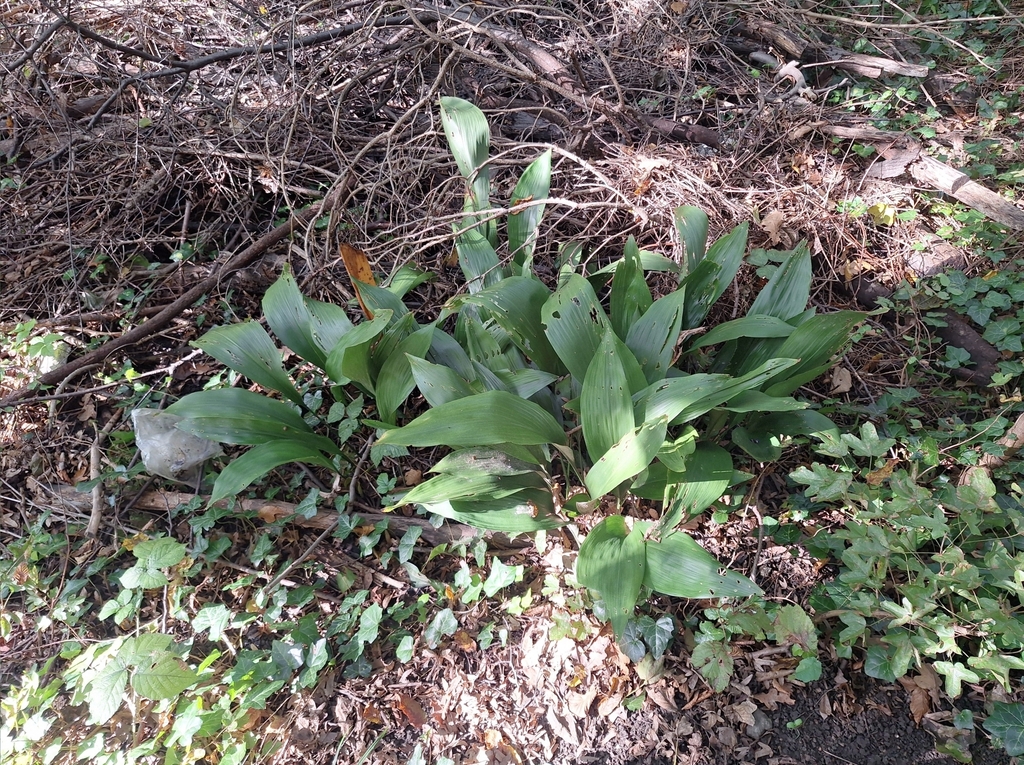
- Feuilles vert foncé, coriaces et en forme de lance
- Port érigé et robuste
- Système racinaire rhizomateux à croissance lente
- Petites fleurs en forme de clochette près du sol
- Hauteur
- 0,6 à 0,9m
- Envergure
- 0,45 à 0,6m
- Feuilles
- vert foncé, evergreen
- Fleurs
- violet, brun, 2 à 3cm
Problèmes à surveiller
- Taches foliairesCourant
- TétranyquesCourant
- Brunissement du bord des feuillesPeu courant
- Pourriture des racinesPeu courant
- CochenillesRare
- Cochenilles farineusesRare
- Maladie des taches foliaires — Des taches fongiques apparaissent sur les feuilles en raison d'une humidité excessive ou d'une mauvaise circulation de l'air.
- Acariens — De minuscules ravageurs qui provoquent des marbrures sur les feuilles dans des conditions intérieures sèches.
Vérifie la santé de ta plante en photo
Pocket Botanist analyse une photo de ta plante et te dit ce qui ne va pas et quoi essayer en premier.
La cultiver
- Multiplication
- division
- Quand planter
- printemps, début d'automne
- Hivernage
- Si elle est gardée à l'extérieur dans les régions plus froides, rentrez le contenant à l'intérieur avant le premier gel. Gardez le sol légèrement plus sec pendant les mois d'hiver.
- En pot
- C'est une excellente plante en pot qui prospère dans un pot pendant de nombreuses années sans nécessiter de rempotage fréquent.
Division
- Retirez la plante de son pot au printemps.
- Séparez délicatement la motte en plus petites sections.
- Assurez-vous que chaque section a au moins deux ou trois feuilles.
- Rempotez les divisions dans un terreau frais et bien drainant.
- Arrosez légèrement et gardez dans un endroit ombragé jusqu'à ce qu'elle soit établie.
Groupez cette plante avec d'autres amateurs d'ombre pour créer un affichage luxuriant et nécessitant peu d'entretien dans un style boisland.
Bonnes associations
- Polystic à feuilles de sabre — Elles partagent des exigences similaires en matière d'ombre et d'humidité.
- Hosta — Elles offrent un joli contraste de texture de feuilles dans les parterres de jardin ombragés.
Espèces similaires
- Aspidistra elatior 'Milky Way' — Elle a le même port mais présente des taches blanches sur les feuilles.
Science
- Famille
- Asparagaceae
- Genre
- Aspidistra
- Ordre
- Asparagales
- Classe
- Liliopsida
- Région d'origine
- Asie de l'Est, spécifiquement le Japon et Taiwan.
- Préservation
- Cette espèce n'est actuellement pas répertoriée comme menacée ou en danger dans son aire de répartition native.
Elle prospère dans l'ombre profonde des sols forestiers, où elle se propage lentement par rhizomes.
- Intérêt pour la faune
- accès aux pollinisateurs au niveau du sol
- Pollinisateurs
- coléoptères
- Utilisations
- feuillage d'intérieur, couvre-sol pour jardin d'ombre, plante en pot
Au fil des saisons
Repères écologiques
- Salinité
- 1/9
- Réaction du sol
- 5/9
- Lumière
- 2/9
- Température
- 5/9
- Humidité
- 4/9
- Nutriments
- 3/9
Taxonomie vérifiée avec le GBIF.
Ce qu'on demande souvent
- Quelle quantité de lumière nécessite-t-elle ?
- Elle préfère une lumière indirecte faible à moyenne et brûlera en plein soleil.
- À quelle fréquence dois-je l'arroser ?
- Arrosez lorsque les quelques centimètres supérieurs du sol sont secs au toucher.
D'où vient le nom
Le nom Aspidistra vient du mot grec pour petit bouclier rond, faisant référence à la forme de la fleur, tandis qu'elatior signifie plus grand.
Bon à savoir
- C'était une plante de base dans les maisons victoriennes car elle tolérait la fumée de charbon et la faible luminosité.
- Les fleurs poussent à la surface du sol, souvent cachées par le feuillage.
- C'est une plante à croissance lente qui peut vivre des décennies.
- Les feuilles sont souvent utilisées dans les arrangements floraux japonais.
Aussi dans
Garde ta plante en pleine forme
Cette page est un guide général. Enregistre ta plante dans Pocket Botanist et tu reçois des rappels d'entretien adaptés à cette plante, ainsi qu'un historique d'entretien qui montre ce qui a marché.
Ce guide a été généré par IA et vérifié avec la taxonomie du GBIF. Il s'agit d'informations générales, et non de conseils horticoles ou vétérinaires. Découvre comment nous concevons ces guides.