 Pocket Botanist
Guía de plantas
Planta carnívora Rajah.
Nepenthes rajah
Pronunciación neh-PEN-theez RAH-jah


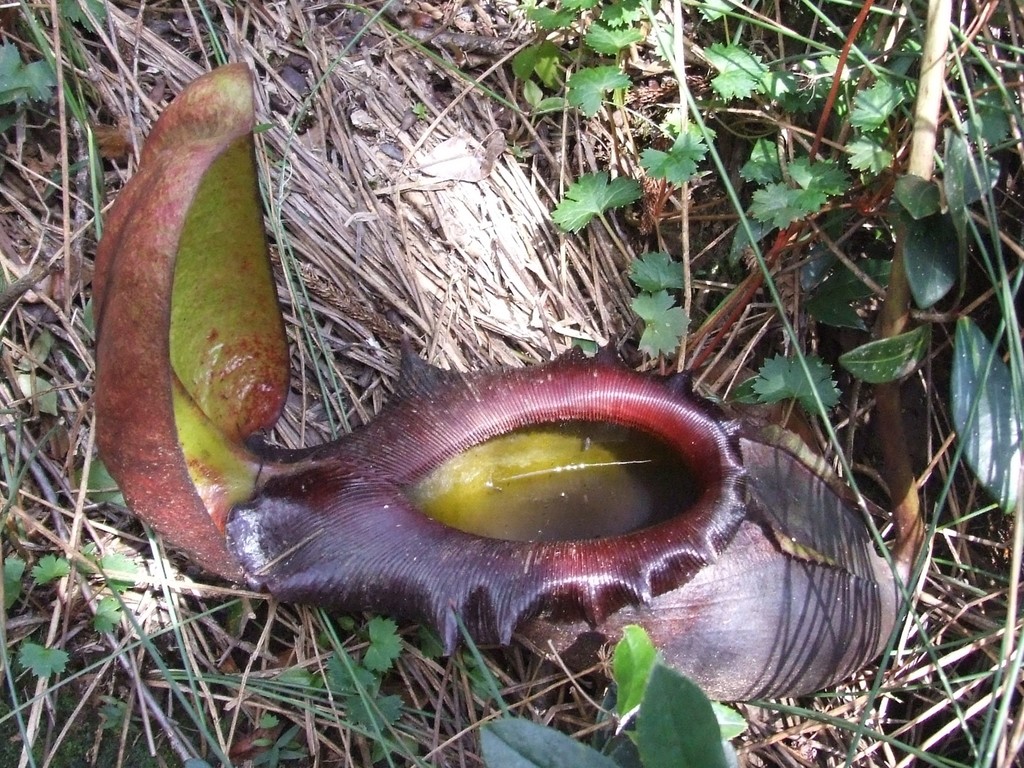
La planta carnívora Rajah es una espectacular especie carnívora nativa de las montañas de Borneo. Es famosa por producir enormes jarras terrestres que pueden atrapar incluso pequeños vertebrados. Esta planta es un verdadero artículo de colección que requiere condiciones muy específicas para prosperar.
De un vistazo
- Nivel de cuidados
- Difícil
- Tipo de planta
- Perenne carnívora perenne carnívora
- Luz
- Luz brillante y filtrada
- Luz en interior
- Luz indirecta brillante
- Riego
- Cada 1 a 3 días
- Tamaño adulto
- 1,5 metros
- Ritmo de crecimiento
- Lento
- Rusticidad
- USDA 11 a 12
- Floración
- Irregular throughout the year
Cuidados
Mantén alta humedad y temperaturas nocturnas frescas para imitar su hábitat de tierras altas. Usa solo agua destilada o de lluvia, ya que los minerales del agua del grifo dañarán rápidamente las raíces. Observa las hojas marrones, que a menudo indican que la humedad es demasiado baja.
- Riego
- Mantén el medio de cultivo constantemente húmedo pero nunca encharcado.
- Abonado
- Usa un fertilizante para orquídeas muy diluido solo en las hojas, o deja que la planta atrape sus propios insectos.
- Poda
- Recorta las jarras muertas o ennegrecidas para mantener la planta ordenada.
- Trasplante
- Trasplanta con cuidado cuando la planta supere su contenedor, teniendo cuidado de no perturbar el sensible sistema radicular.
- Suelo
- Mezcla de musgo sphagnum y perlita
- pH del suelo
- 4,0 a 5,5
- Temperatura
- 10 a 28°C
- Humedad
- 70 a 95%
- Tolerancia a la sequía
- Baja
- Longevidad
- Perennial, can live for many decades in the wild.
- Fragancia
- Suave
- Resistencia a ciervos y conejos
- Alta
Señales de que necesita trasplante
- Roots growing out of the drainage holes
- The medium has broken down and become compacted
- The plant has outgrown its current container
Seguridad
- Personas
- The plant is not considered toxic, but the digestive fluids inside the pitchers are acidic and can cause irritation.
- Niños
- Keep pitchers out of reach of small children to prevent them from drinking the acidic fluid or tipping the plant over.
- Alérgenos por contacto
- The stiff hairs on the leaves and pitchers may cause mild mechanical skin irritation.
- Alérgenos en el aire
- There are no known significant respiratory allergens associated with this species.
- Comestibilidad
- This plant is not edible and should not be consumed by humans or pets.
Cómo identificarla
- Jarras digestivas masivas en forma de urna
- Hojas grandes, coriáceas, de color verde oscuro
- Adhesión foliar peltada
- Coloración de jarra de rojo a púrpura
- Peristoma grueso y acanalado
- Altura
- 0,3 a 0,5m
- Anchura
- 0,4 a 1,5m
- Hojas
- green, evergreen
- Flores
- brown, red, 1 a 2cm
- Frutos
- brown, Late summer
Problemas frecuentes
- Root rot — Occurs when the growing medium stays too soggy and lacks proper aeration.
- Aphids — Small insects that suck sap from new growth and flower stalks.
Cómo cultivarla
- Propagación
- seed, cuttings
- Cuándo plantar
- spring, summer, autumn, winter
- Cuidados en invierno
- Keep the plant in a stable, warm environment with high humidity throughout the year, as it does not have a dormant season.
- En maceta
- It is best grown in large hanging baskets or specialized terrariums that can accommodate its massive size.
Seed
- Sow seeds on live sphagnum moss.
- Maintain high humidity and bright, indirect light.
- Keep temperatures consistent until germination occurs.
Cuttings
- Take a stem cutting with at least two nodes.
- Place in a moist, airy medium.
- Cover to maintain high humidity until roots develop.
Always use a nutrient poor, well draining medium like live sphagnum moss to mimic its natural boggy habitat.
Buenas compañeras
- Sphagnum — It provides the perfect acidic and moisture retentive substrate for the roots.
Especies parecidas
- Nepenthes attenboroughii — It is another giant pitcher plant that shares a similar high altitude habitat.
Ciencia
- Familia
- Nepenthaceae
- Género
- Nepenthes
- Orden
- Caryophyllales
- Clase
- Magnoliopsida
- Distribución natural
- High altitude slopes of Mount Kinabalu and Mount Tambuyukon in Borneo.
- Conservación
- It is listed as Endangered by the IUCN and is protected under CITES Appendix I, meaning trade is strictly regulated.
It grows in ultramafic soils on cool, misty mountain slopes where it relies on specialized nutrients from its prey.
- Valor para la fauna
- nectar source
- Polinizadores
- abejas, escarabajos
- Usos
- botanical collection, scientific study
A lo largo del año
Indicadores ecológicos
- Salinidad
- 1/9
- Reacción del suelo
- 4/9
- Luz
- 6/9
- Temperatura
- 3/9
- Humedad
- 8/9
- Nutrientes
- 1/9
Taxonomía cotejada con GBIF.
Lo que más preguntan
- Can I grow this on my windowsill?
- It is very difficult to grow in a typical home because it requires extremely high humidity and specific temperature drops at night.
- What should I feed it?
- It does not need to be fed, as it will capture its own insects if kept in an appropriate environment.
De dónde viene el nombre
It is named after Sir James Brooke, the first White Rajah of Sarawak, who was a British adventurer.
Bueno saberlo
- It is native only to Mount Kinabalu and Mount Tambuyukon in Sabah, Malaysia.
- The pitchers can hold up to 3.5 liters of fluid.
- It has a unique symbiotic relationship with tree shrews that feed on nectar from the pitcher lid and defecate into the pitcher.
- The pitchers are some of the largest in the entire genus Nepenthes.
También en
¿Tu planta carnívora rajah tiene mal aspecto?
Esta página es una guía general. Pocket Botanist diagnostica problemas a partir de una foto de tu propia planta, calcula el riego según tu luz y tus condiciones, y te avisa cuando toca cuidarla.
Esta guía se ha generado con IA y se ha cotejado con la taxonomía de GBIF. Es información general, no asesoramiento botánico ni veterinario. Descubre cómo elaboramos estas guías.