 Pocket Botanist
Guía de plantas
White dead-nettle.
Lamium album
Pronunciación LAY-mee-um AL-bum
También se conoce como White Dead-nettle, White Deadnettle


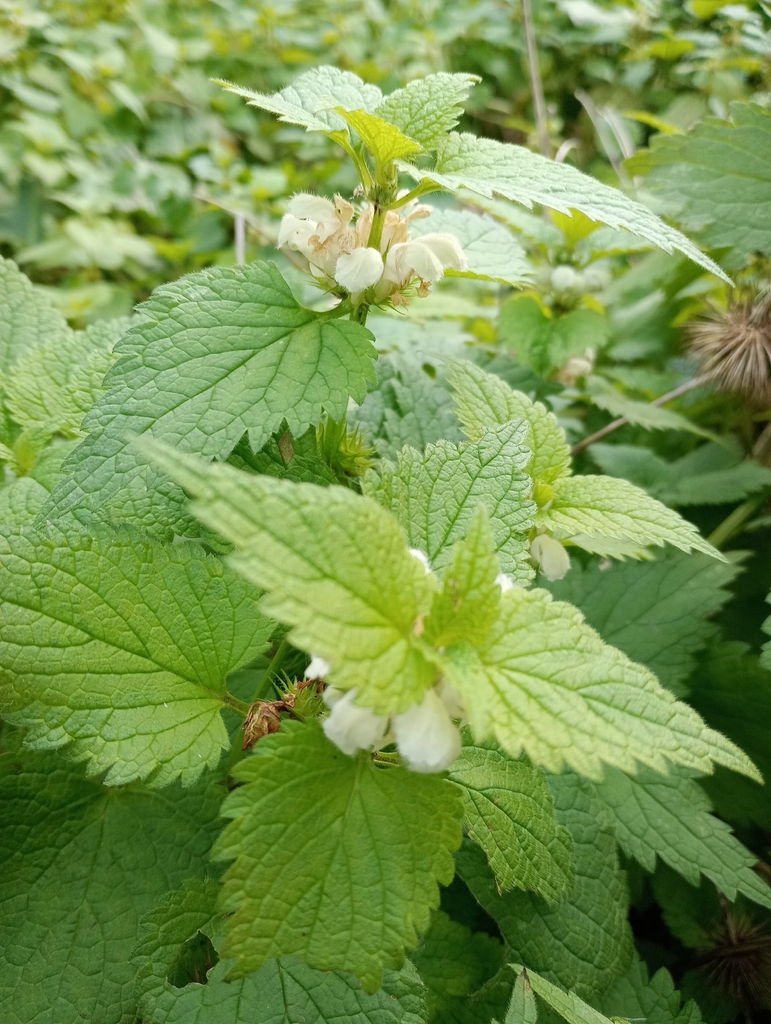
This hardy perennial is a common sight in meadows and along roadsides. It looks quite a bit like a stinging nettle, but it doesn't have any stingers at all. You'll love its cheerful white flowers that bloom throughout the warmer months.

De un vistazo
- Nivel de cuidados
- Fácil
- Tipo de planta
- Herbaceous perennial
- Luz
- Partial shade to full sun
- Luz en interior
- Luz indirecta brillante
- Riego
- Cada 3 a 7 días
- Tamaño adulto
- 0.5 to 0.8 meters
- Ritmo de crecimiento
- Rápido
- Rusticidad
- USDA 3 a 9
- Floración
- Mid spring to early autumn
Cuidados
Keep the soil consistently moist but not waterlogged to help it thrive. Watch for wilting if the soil dries out too much, and trim back stems if it starts spreading too aggressively. It's a vigorous grower that handles most garden conditions well.
- Riego
- Water whenever the top inch of soil feels dry to the touch.
- Abonado
- Apply a balanced liquid fertilizer during the active growing season.
- Poda
- Cut back stems after flowering to encourage a second flush of growth.
- Trasplante
- Move to a larger container once the roots fill the current pot.
- Suelo
- Moist, fertile, well drained soil
- pH del suelo
- Neutral to slightly alkaline
- Temperatura
- -30 a 30°C
- Humedad
- 40 a 70%
- Tolerancia a la sequía
- Moderada
- Longevidad
- Perennial, typically 3 to 5 years.
- Resistencia a ciervos y conejos
- Moderada
Señales de que necesita trasplante
- Roots growing out of the drainage holes.
- Water running straight through the pot.
- Stunted growth during the active season.
Seguridad
- Personas
- This plant is generally considered non toxic to humans.
- Niños
- There are no specific safety concerns for children, though the stems can be slightly rough to the touch.
- Alérgenos por contacto
- The foliage can cause mild skin irritation in sensitive individuals due to fine hairs.
- Alérgenos en el aire
- The pollen is not a significant cause of respiratory allergies.
- Comestibilidad
- While young leaves are sometimes used in salads, they can be bitter and should be harvested before flowering.
Cómo identificarla
- Square stems typical of mint family
- Opposite leaves with serrated edges
- White hooded flowers in leaf axils
- Soft hairs covering the foliage
- Altura
- 0,2 a 0,6m
- Anchura
- 0,3 a 0,9m
- Hojas
- green, deciduous
- Flores
- white, 1 a 3cm
Problemas frecuentes
- Powdery mildew — A white fungal growth on leaves often caused by poor air circulation or dry soil.
- Aphids — Small sap sucking insects that cluster on new growth.
Cómo cultivarla
- Propagación
- division, seed, cuttings
- Cuándo plantar
- spring, autumn
- Cuidados en invierno
- The foliage may die back in cold winters, but the roots remain hardy. Simply clear away dead debris in early spring to make room for new growth.
- En maceta
- It grows well in containers, but use a large pot to prevent it from drying out too quickly.
Division
- 1. Dig up a clump in spring or autumn.
- 2. Gently pull the root mass apart into smaller sections.
- 3. Replant immediately in moist soil.
Plant it under shrubs to suppress weeds, but be ready to trim it back if it gets too enthusiastic.
Buenas compañeras
- Hosta — They share similar shade and moisture requirements.
- Western sword fern — The textures contrast beautifully in a woodland setting.
Especies parecidas
- Purple deadnettle — A smaller, annual relative with purple flowers.
Ciencia
- Familia
- Lamiaceae
- Género
- Lamium
- Orden
- Lamiales
- Clase
- Magnoliopsida
- Distribución natural
- Europe and western Asia.
- Conservación
- It is a common and widespread species with no conservation concerns.
It thrives in disturbed soils and woodland edges where it can spread rapidly through rhizomes.
- Valor para la fauna
- early nectar source, ground cover habitat
- Polinizadores
- abejas, mariposas
- Usos
- ground cover, pollinator garden, woodland edge, edible greens
A lo largo del año
Indicadores ecológicos
- Salinidad
- 1/9
- Reacción del suelo
- 6/9
- Luz
- 4/9
- Temperatura
- 5/9
- Humedad
- 5/9
- Nutrientes
- 6/9
Taxonomía cotejada con GBIF.
Lo que más preguntan
- Is it invasive?
- It can be aggressive in ideal conditions, so keep an eye on it in small beds.
- Does it need full sun?
- It prefers partial shade but will tolerate full sun if the soil stays moist.
De dónde viene el nombre
The name Lamium comes from the Greek word for throat, referring to the shape of the flower, while album means white.
Bueno saberlo
- It is often called white dead nettle because it looks like a stinging nettle but lacks the sting.
- The flowers are a favorite of long tongued bees.
- It spreads quickly via underground runners.
- It has been used in traditional herbal medicine for centuries.
¿Tu white dead-nettle tiene mal aspecto?
Esta página es una guía general. Pocket Botanist diagnostica problemas a partir de una foto de tu propia planta, calcula el riego según tu luz y tus condiciones, y te avisa cuando toca cuidarla.
Esta guía se ha generado con IA y se ha cotejado con la taxonomía de GBIF. Es información general, no asesoramiento botánico ni veterinario. Descubre cómo elaboramos estas guías.