 Pocket Botanist
Guía de plantas
Saw Banksia.
Banksia serrata
Pronunciación BANK-see-uh seh-RAY-tuh



La Banksia sierra es una llamativa planta nativa de Australia, conocida por sus espigas florales únicas en forma de cono. Prospera en suelos arenosos y bien drenados, y añade una belleza rústica a cualquier jardín. Te encantará cómo su follaje arquitectónico destaca durante todo el año.
De un vistazo
- Nivel de cuidados
- Media
- Tipo de planta
- Árbol de hoja perenne
- Luz
- Pleno sol
- Luz en interior
- Sol directo
- Riego
- Cada 7 a 14 días
- Tamaño adulto
- 15 metros
- Ritmo de crecimiento
- Medio
- Rusticidad
- USDA 9 a 11
- Floración
- Late summer to early winter
Cuidados
Planta esta belleza en un lugar con excelente drenaje para prevenir la pudrición de las raíces. Mantén un ojo en las hojas amarillentas, que a menudo señalan que el suelo retiene demasiada humedad. Es bastante resistente una vez establecida y aprecia mucho el sol.
- Riego
- Riega profundamente cuando las primeras pulgadas de tierra se sientan secas al tacto.
- Abonado
- Utiliza un fertilizante bajo en fósforo especialmente formulado para plantas nativas.
- Poda
- Poda ligeramente después de la floración para mantener una forma ordenada y fomentar el nuevo crecimiento.
- Trasplante
- Solo trasplanta si la planta tiene las raíces claramente apretadas, ya que prefieren no ser molestadas.
- Suelo
- Arenoso, ácido, bien drenado
- pH del suelo
- 5.5 a 6.5
- Temperatura
- -5 a 35°C
- Humedad
- 40 a 70%
- Tolerancia a la sequía
- Alta
- Longevidad
- Perennial, typically 20 to 50 years.
- Fragancia
- Suave
- Resistencia a ciervos y conejos
- Alta
Señales de que necesita trasplante
- Roots growing out of the drainage holes.
- Water sitting on the surface for too long.
- Stunted growth despite healthy conditions.
Seguridad
- Personas
- There is no known toxicity to humans.
- Niños
- The sharp, serrated leaf edges and woody seed cones pose a minor risk of scratches or injury to small children.
- Alérgenos por contacto
- The stiff, serrated leaves can cause minor skin scratches if handled without gloves.
- Alérgenos en el aire
- The pollen may cause mild respiratory irritation in sensitive individuals during the flowering season.
- Comestibilidad
- The plant is not considered edible for humans.
Cómo identificarla
- Espigas florales grandes y cilíndricas
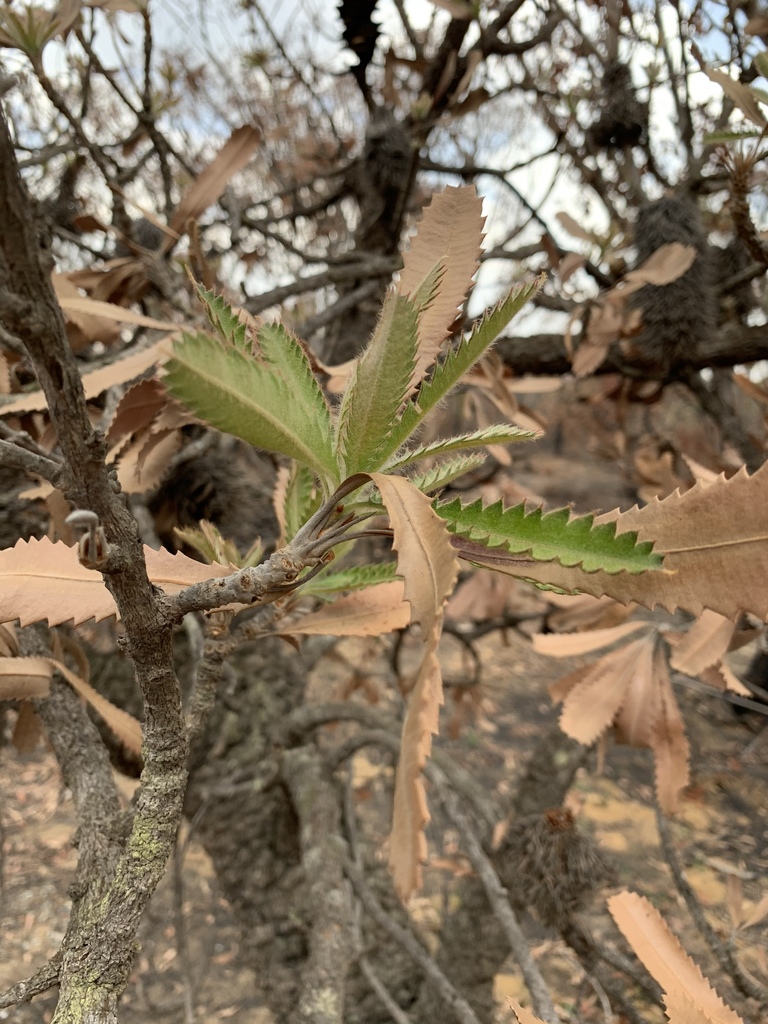
- Hojas verdes coriáceas y aserradas
- Folículos de semillas leñosos y con forma de cono
- Tronco de árbol robusto y nudoso
- Altura
- 4 a 10m
- Anchura
- 3 a 6m
- Hojas
- dark green, evergreen
- Flores
- yellow, cream, 7 a 12cm
- Frutos
- brown, Late summer
Problemas frecuentes
- Phytophthora root rot — A soilborne water mold that causes root decay and sudden wilting in poorly drained soils.
Cómo cultivarla
- Propagación
- seed
- Cuándo plantar
- spring, autumn
- Cuidados en invierno
- Ensure the plant is in a well drained spot to prevent root rot during wet winters. No special protection is needed in its preferred climate zones.
- En maceta
- It is not ideal for long term container growth due to its large size and sensitive root system.
Seed propagation
- 1. Collect the woody cones after they have matured.
- 2. Place the cones in a warm oven or near a fire to trigger the follicles to open.
- 3. Shake the seeds out and sow them in a sandy, well drained seed raising mix.
- 4. Keep the soil lightly moist until germination occurs.
Group with other low phosphorus, drought tolerant Australian natives to maintain soil balance.
Buenas compañeras
- Westringia fruticosa — It shares similar coastal environmental requirements and soil preferences.
- Xanthorrhoea resinosa — Both plants thrive in the same nutrient poor, sandy habitats.
Especies parecidas
- Banksia aemula — It has a similar appearance but features different seed cone structures.
Ciencia
- Familia
- Proteaceae
- Género
- Banksia
- Orden
- Proteales
- Clase
- Magnoliopsida
- Distribución natural
- Eastern Australia, primarily along the coast.
- Conservación
- This species is common and not currently of conservation concern.
It thrives in sandy, well drained soils and relies on fire to trigger seed dispersal.
- Valor para la fauna
- nectar source, habitat for small birds
- Polinizadores
- abejas, mariposas, aves
- Usos
- ornamental tree, coastal garden specimen, wildlife garden
A lo largo del año
Indicadores ecológicos
- Salinidad
- 6/9
- Reacción del suelo
- 4/9
- Luz
- 8/9
- Temperatura
- 7/9
- Humedad
- 3/9
- Nutrientes
- 1/9
Taxonomía cotejada con GBIF.
Lo que más preguntan
- Does it need fertilizer?
- No, it is sensitive to phosphorus and prefers native soil conditions without added fertilizer.
- Can I grow it in a pot?
- It is best suited for the ground but can be grown in a very large container for a few years.
De dónde viene el nombre
The genus is named after Sir Joseph Banks, who collected the first specimens in 1770. The species name serrata refers to the saw like teeth on the leaf edges.
Bueno saberlo
- The iconic seed cones were immortalized as the Big Bad Banksia Men in the Snugglepot and Cuddlepie children's books.
- It is commonly known as the Saw Banksia due to its distinctively serrated leaf margins.
- The plant is highly adapted to nutrient poor sandy soils.
- Indigenous Australians used the flower spikes as hairbrushes and to strain honey.
También en
¿Tu saw banksia tiene mal aspecto?
Esta página es una guía general. Pocket Botanist diagnostica problemas a partir de una foto de tu propia planta, calcula el riego según tu luz y tus condiciones, y te avisa cuando toca cuidarla.
Esta guía se ha generado con IA y se ha cotejado con la taxonomía de GBIF. Es información general, no asesoramiento botánico ni veterinario. Descubre cómo elaboramos estas guías.