 Pocket Botanist
Pflanzenratgeber
Common reed.
Phragmites australis
Aussprache frag-MY-teez oss-TRAH-liss
Auch bekannt als Common Reed, Ditch Reed, Giant Reed, Phragmites, Reed Grass


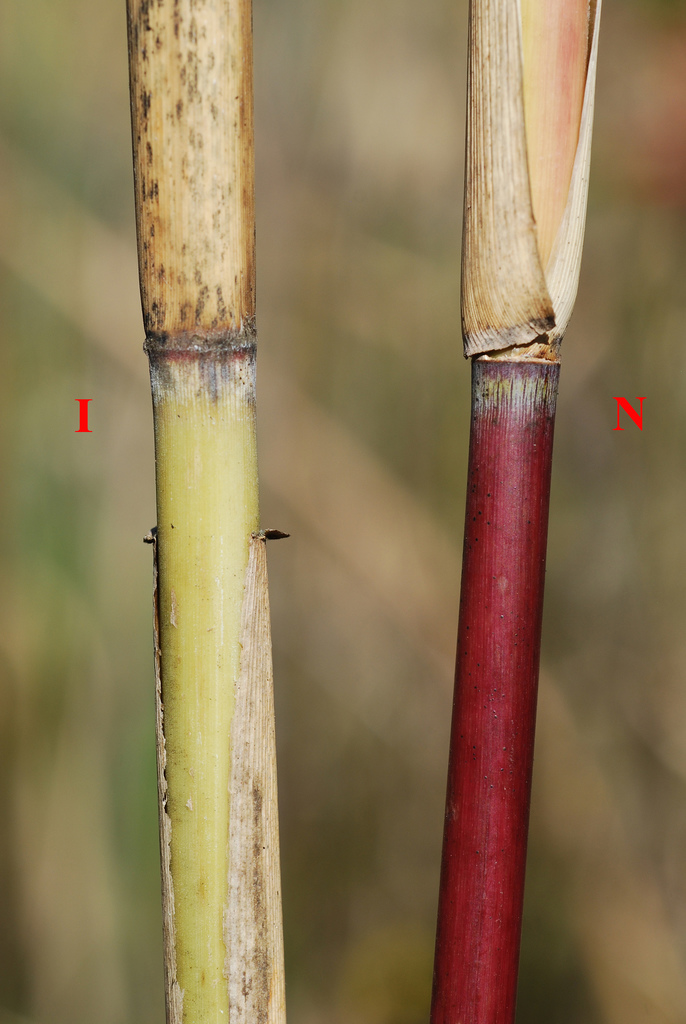
This is a tall, perennial grass that thrives in wetlands and along shorelines. It spreads aggressively through underground rhizomes, often forming dense stands. It is considered an invasive species in many parts of North America.
Auf einen Blick
- Pflegestufe
- Einfach
- Pflanzenart
- Perennial grass
- Licht
- Full sun
- Licht im Innenraum
- Direkte Sonne
- Gießen
- Alle 1 bis 3 Tage
- Endgröße
- 15 feet
- Wachstum
- Schnell
- Winterhärte
- USDA 4 bis 10
- Blütezeit
- Late summer to early autumn
Pflege
This plant requires consistently moist or saturated soil to thrive. Keep an eye on its spread, as it can quickly overtake native vegetation in a garden setting. It is best suited for large, contained wetland areas rather than typical garden beds.
- Gießen
- Keep the soil constantly wet or submerged in shallow water.
- Düngen
- Usually does not require supplemental fertilizer in natural wetland settings.
- Schneiden
- Cut back dead stalks in late winter or early spring to encourage fresh growth.
- Umtopfen
- If grown in a container, divide the plant every year or two to prevent it from becoming root bound.
- Boden
- Wet, boggy, or marshy soil
- Boden-pH
- 6.0 to 8.0
- Temperatur
- -30 bis 40°C
- Luftfeuchtigkeit
- 60 bis 100%
- Trockenheitstoleranz
- Gering
- Lebensdauer
- Perennial, can live for many decades through rhizomatous spread.
- Wildverbiss-Resistenz
- Hoch
Anzeichen fürs Umtopfen
- Roots growing out of the drainage holes.
- The plant becomes stunted due to lack of space.
- The soil dries out too quickly.
Sicherheit
- Menschen
- It is not considered toxic to humans.
- Kinder
- The sharp, serrated edges of the leaves can easily cut a child's skin if they run through the stalks.
- Kontaktallergene
- The sharp leaf edges can cause minor skin abrasions if handled without gloves.
- Allergene in der Luft
- The windborne pollen can trigger seasonal allergies in sensitive individuals.
- Essbarkeit
- The young shoots are sometimes consumed, but they must be properly identified and prepared to avoid potential contamination from polluted water sources.
So erkennst du die Pflanze
- Tall, rigid, hollow stems
- Large, feathery, plume-like flower heads
- Long, flat, lance-shaped leaves
- Spreads via extensive underground rhizomes
- Höhe
- 2 bis 4m
- Breite
- 1 bis 5m
- Blätter
- green, blue-green, deciduous
- Blüten
- purple, brown, tan, 15 bis 40cm
- Früchte
- brown, Autumn
Häufige Probleme
- Aphids — Small insects that feed on the sap of the leaves.
Standort und Pflege
- Vermehrung
- division, seed, rhizome cuttings
- Pflanzzeit
- spring, autumn
- Überwinterung
- The stalks turn brown and die back in winter, but the rhizomes remain dormant underground. You can cut the dead stalks to the ground in late winter to tidy the area.
- Im Kübel
- It is not recommended for containers due to its massive root system and need for constant moisture.
Rhizome Division
- 1. Dig up a section of the rhizome in early spring.
- 2. Cut the rhizome into segments that include at least one node.
- 3. Plant the segments in moist soil at a depth of 5 cm.
Because this plant is so aggressive, it is best kept away from other garden plants that it might quickly smother.
Gute Pflanzpartner
- Typha latifolia — They share similar wetland habitat requirements.
- Common rush — It thrives in the same moist conditions as this grass.
Ähnliche Arten
- Common reed — It is the primary species in the genus.
Botanisches
- Familie
- Poaceae
- Gattung
- Phragmites
- Ordnung
- Poales
- Klasse
- Liliopsida
- Ursprüngliche Heimat
- Cosmopolitan, found on every continent except Antarctica.
- Artenschutz
- While native in some regions, it is considered highly invasive in North America and is often subject to eradication programs.
It thrives in wet, nutrient rich soils and is highly effective at filtering water and stabilizing shorelines.
- Nutzen für Wildtiere
- nesting material for birds, larval host plant, cover for wetland wildlife
- Bestäuber
- Bienen, Schmetterlinge, Nachtfalter
- Verwendung
- erosion control, wetland restoration, thatching material
Im Jahresverlauf
Ökologische Zeigerwerte
- Salzgehalt
- 4/9
- Bodenreaktion
- 6/9
- Licht
- 8/9
- Temperatur
- 5/9
- Feuchtigkeit
- 9/9
- Nährstoffe
- 7/9
Taxonomie abgeglichen mit GBIF.
Häufige Fragen
- Is Phragmites australis invasive?
- In many parts of North America, it is considered a highly invasive species that disrupts local wetland habitats.
- Can I plant it in my garden?
- It is strongly discouraged due to its aggressive spreading habit and potential to escape into local waterways.
Woher der Name kommt
The name Phragmites comes from the Greek word phragma, meaning fence or hedge, referring to its dense growth habit. The specific epithet australis means southern.
Gut zu wissen
- It is one of the most widely distributed plants on the planet.
- The rhizomes can grow up to 2 meters deep in the soil.
- It has been used for centuries as a traditional material for roofing and baskets.
Auch in
Probleme mit Common reed?
Diese Seite bietet allgemeine Infos. Pocket Botanist erkennt Probleme anhand eines Fotos deiner echten Pflanze, passt das Gießen an dein Licht und deinen Standort an und erinnert dich an die Pflege.
Dieser Ratgeber wurde mit KI erstellt und mit der GBIF-Taxonomie abgeglichen. Er dient zur allgemeinen Information und ersetzt keine gärtnerische oder tierärztliche Beratung. Hier erfährst du, wie wir diese Ratgeber erstellen.