 Pocket Botanist
Pflanzenratgeber
Partridgeberry.
Mitchella repens
Aussprache mi-CHELL-uh REE-penz
Auch bekannt als Partridge-berry, Partridgeberry, Squawvine, Twinberry, pigeon plum, running box, turkeyberry, two-eyed berry


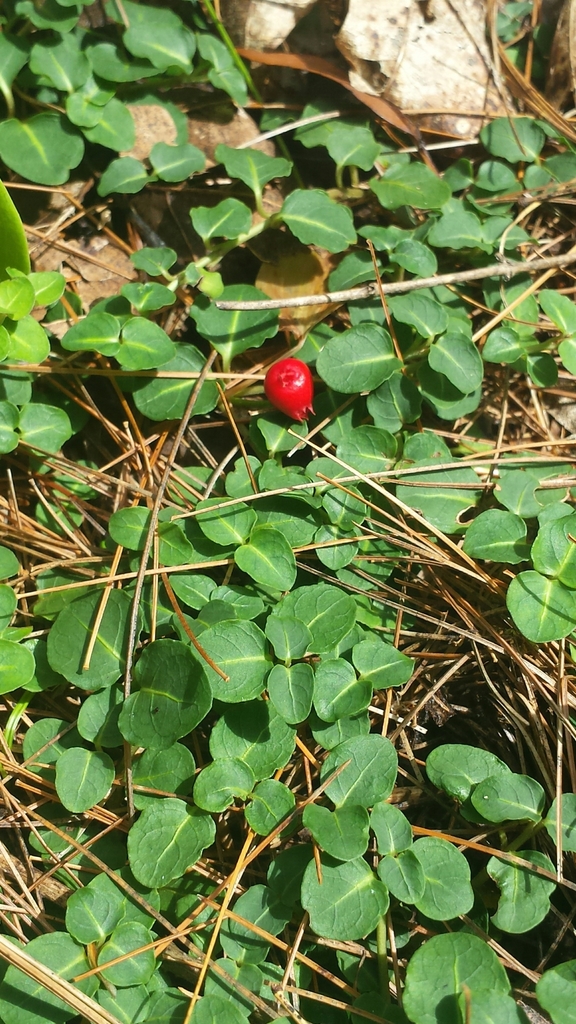
Partridgeberry is a charming, low growing evergreen groundcover that thrives in cool, moist woodland settings. It produces delicate white flowers followed by bright red berries that often persist through winter. This plant is a wonderful choice for terrariums or shaded rock gardens.
Auf einen Blick
- Pflegestufe
- Mittel
- Pflanzenart
- Perennial groundcover
- Licht
- Partial shade to full shade
- Licht im Innenraum
- Mittleres Licht
- Gießen
- Alle 3 bis 7 Tage
- Endgröße
- 2 to 3 inches tall
- Wachstum
- Langsam
- Winterhärte
- USDA 3 bis 9
- Blütezeit
- Late spring to early summer
Pflege
Keep the soil consistently moist but never waterlogged to mimic its natural forest floor habitat. Watch for wilting or leaf drop, which often signal that the soil has dried out too much. Provide high humidity and avoid harsh, direct sunlight to keep the foliage healthy.
- Gießen
- Keep the soil evenly moist at all times without letting it dry out completely.
- Düngen
- Apply a balanced, diluted liquid fertilizer sparingly during the active growing season.
- Schneiden
- Trim back any straggly or dead stems in early spring to encourage a denser growth habit.
- Umtopfen
- Repot only when the plant has clearly outgrown its container or the soil has degraded.
- Boden
- Rich, acidic, humusy soil
- Boden-pH
- 4.5 to 6.0
- Temperatur
- -30 bis 30°C
- Luftfeuchtigkeit
- 60 bis 90%
- Trockenheitstoleranz
- Gering
- Lebensdauer
- Perennial, long lived in ideal conditions.
- Duft
- Leicht
- Wildverbiss-Resistenz
- Mittel
Anzeichen fürs Umtopfen
- Roots circling the bottom of the container
- Growth slows significantly
- Soil becomes compacted and drains poorly
Sicherheit
- Menschen
- This plant is not considered toxic to humans.
- Kinder
- The small red berries may pose a choking hazard to very small children.
- Kontaktallergene
- No known skin irritants are associated with this plant.
- Allergene in der Luft
- There are no significant reports of respiratory allergies from this species.
- Essbarkeit
- While the berries are technically edible, they are flavorless and best left for wildlife.
So erkennst du die Pflanze
- Creeping stems that root at nodes
- Small, rounded, dark green leaves
- White, fragrant, trumpet shaped flowers
- Bright red, edible berries
- Opposite leaf arrangement
- Höhe
- 0,02 bis 0,05m
- Breite
- 0,15 bis 0,6m
- Blätter
- dark green, white-veined, evergreen
- Blüten
- white, 1 bis 1,5cm
- Früchte
- red, Late summer to winter
Häufige Probleme
- Root rot — Occurs when the soil remains waterlogged for extended periods.
Standort und Pflege
- Vermehrung
- division, cuttings, seed
- Pflanzzeit
- spring, fall
- Überwinterung
- It is hardy and requires no special protection, though a light layer of leaf mulch can help retain moisture.
- Im Kübel
- It is excellent for terrariums or shallow pots, provided the soil stays consistently moist.
Division
- 1. Gently lift a section of the mat in spring.
- 2. Separate into smaller clumps with roots attached.
- 3. Replant immediately in moist, acidic soil.
Plant in groups of three or more to ensure better pollination and fruit set.
Gute Pflanzpartner
- White Trillium — They share similar woodland shade and moisture requirements.
- Christmas fern — Ferns provide a nice textural contrast to the low mat of the partridgeberry.
Ähnliche Arten
- Wintergreen — Both are low growing, evergreen, and produce red berries in woodland settings.
Botanisches
- Familie
- Rubiaceae
- Gattung
- Mitchella
- Ordnung
- Gentianales
- Klasse
- Magnoliopsida
- Ursprüngliche Heimat
- Eastern North America
- Artenschutz
- It is not currently listed as endangered or threatened in its native range.
It grows in moist, acidic woodland soils where it forms a carpet under trees.
- Nutzen für Wildtiere
- nectar source, winter food for birds
- Bestäuber
- Bienen, Schmetterlinge
- Verwendung
- groundcover, terrarium plant, woodland garden
Im Jahresverlauf
Ökologische Zeigerwerte
- Salzgehalt
- 1/9
- Bodenreaktion
- 3/9
- Licht
- 2/9
- Temperatur
- 4/9
- Feuchtigkeit
- 7/9
- Nährstoffe
- 3/9
Taxonomie abgeglichen mit GBIF.
Häufige Fragen
- Does it need full sun?
- No, it prefers partial to full shade.
- Can I grow it in a pot?
- Yes, it thrives in terrariums or shallow containers with acidic soil.
Woher der Name kommt
The genus honors John Mitchell, an early American botanist, while the species name means creeping.
Gut zu wissen
- It is commonly known as partridgeberry because partridges enjoy the fruit.
- The plant forms a dense mat that helps suppress weeds.
- It is a slow growing creeper that stays close to the forest floor.
Auch in
Probleme mit Partridgeberry?
Diese Seite bietet allgemeine Infos. Pocket Botanist erkennt Probleme anhand eines Fotos deiner echten Pflanze, passt das Gießen an dein Licht und deinen Standort an und erinnert dich an die Pflege.
Dieser Ratgeber wurde mit KI erstellt und mit der GBIF-Taxonomie abgeglichen. Er dient zur allgemeinen Information und ersetzt keine gärtnerische oder tierärztliche Beratung. Hier erfährst du, wie wir diese Ratgeber erstellen.