 Pocket Botanist
Pflanzenratgeber
Chilean wine palm.
Jubaea chilensis
Aussprache joo-BEE-uh chi-LEN-sis
Auch bekannt als Chile Cocopalm, Chilean coco palm, Chilean wine palm, coquito palm, honey palm, little cokernut, syrup palm



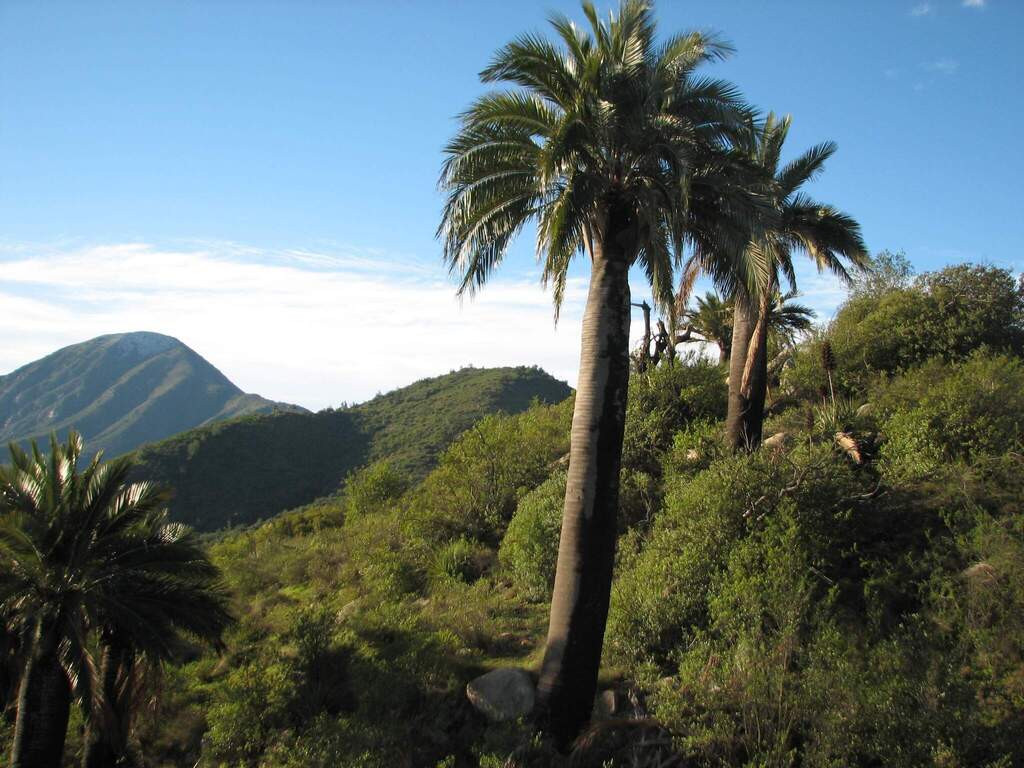
The Chilean wine palm is a majestic, slow growing giant native to central Chile. It is famous for its incredibly thick, sturdy trunk and feathery, arching fronds. This palm is a long lived specimen that adds a dramatic architectural element to large landscapes.
Auf einen Blick
- Pflegestufe
- Mittel
- Pflanzenart
- Palm
- Licht
- Full sun
- Licht im Innenraum
- Direkte Sonne
- Gießen
- Alle 7 bis 14 Tage
- Endgröße
- 60 to 80 feet
- Wachstum
- Langsam
- Winterhärte
- USDA 8 bis 10
- Blütezeit
- Late spring to early summer
Pflege
Plant this palm in a spot with plenty of space to accommodate its eventual size. Ensure the soil drains well to prevent root rot, and watch for yellowing fronds which may indicate nutrient deficiencies. It is quite hardy once established but needs consistent care while young.
- Gießen
- Water deeply and regularly while the palm is young, allowing the soil to dry slightly between sessions.
- Düngen
- Apply a balanced, slow release palm fertilizer during the active growing season.
- Schneiden
- Remove only dead or damaged fronds to maintain the health and appearance of the tree.
- Umtopfen
- Repot only when the palm has clearly outgrown its container, as they prefer not to be disturbed.
- Boden
- Well draining, sandy or loamy soil
- Boden-pH
- 6.0 to 7.5
- Temperatur
- -12 bis 40°C
- Luftfeuchtigkeit
- 40 bis 70%
- Trockenheitstoleranz
- Hoch
- Lebensdauer
- Perennial, can live for several hundred years.
- Wildverbiss-Resistenz
- Hoch
Anzeichen fürs Umtopfen
- Roots circling the bottom of the pot
- Stunted growth despite proper care
Sicherheit
- Menschen
- The plant is not considered toxic to humans.
- Kinder
- The sharp, woody leaf bases pose a physical injury risk if children climb or play near the trunk.
- Kontaktallergene
- The stiff, sharp leaf bases can cause skin scratches or irritation during handling.
- Allergene in der Luft
- Pollen may cause mild respiratory irritation in sensitive individuals during the flowering season.
- Essbarkeit
- The fruit is edible, but the hard shell requires significant effort to open and process.
So erkennst du die Pflanze
- Massive, smooth, grey trunk
- Large, pinnate, arching green fronds
- Slow growing, thick base
- Produces small, edible, coconut like fruits
- Höhe
- 6 bis 20m
- Breite
- 3 bis 6m
- Blätter
- dark green, grayish green, evergreen
- Blüten
- yellow, 0,5 bis 1cm
- Früchte
- yellow, brown, Autumn
Häufige Probleme
- Scale insects — Small sap sucking insects that cluster on leaves and stems.
- Root rot — Fungal decay caused by consistently waterlogged soil conditions.
Standort und Pflege
- Vermehrung
- seed
- Pflanzzeit
- spring, early autumn
- Überwinterung
- Ensure the soil is well drained to prevent freezing around the roots. Mature plants are quite hardy, but young specimens may benefit from frost cloth during extreme cold snaps.
- Im Kübel
- It can be grown in large containers while young, but will eventually require planting in the ground.
Seed germination
- Clean the pulp from the seed.
- Soak seeds in warm water for 48 hours.
- Sow in a deep pot with well draining soil.
- Keep warm and moist, as germination can take several months.
Plant drought tolerant Mediterranean herbs around the base to create a low water landscape.
Gute Pflanzpartner
- Echter Lavendel — It shares similar requirements for full sun and well drained soil.
- Rosemary — This shrub thrives in the same dry, sunny conditions as the palm.
Ähnliche Arten
- Butia capitata — It has a similar appearance but is smaller and faster growing.
Botanisches
- Familie
- Arecaceae
- Gattung
- Jubaea
- Ordnung
- Arecales
- Klasse
- Liliopsida
- Ursprüngliche Heimat
- Central Chile
- Artenschutz
- It is classified as vulnerable in its native habitat due to historical overharvesting for palm syrup.
It grows in Mediterranean climates on rocky slopes where it survives long, dry summers.
- Nutzen für Wildtiere
- provides nesting habitat, food source for birds
- Bestäuber
- Bienen, Käfer
- Verwendung
- ornamental specimen, culinary palm syrup, landscape focal point
Im Jahresverlauf
Ökologische Zeigerwerte
- Salzgehalt
- 2/9
- Bodenreaktion
- 6/9
- Licht
- 8/9
- Temperatur
- 7/9
- Feuchtigkeit
- 3/9
- Nährstoffe
- 4/9
Taxonomie abgeglichen mit GBIF.
Häufige Fragen
- How fast does it grow?
- It is a very slow grower, often adding only a few centimeters of trunk height per year.
- Does it need full sun?
- Yes, it thrives best in full sun to maintain its structural integrity and health.
Woher der Name kommt
The genus name honors Juba II, a king of Numidia, while the species name refers to its native Chile.
Gut zu wissen
- It is the most cold hardy of all pinnate leaved palms.
- The sap is traditionally boiled down to make a sweet syrup.
- These palms grow very slowly, often taking decades to reach maturity.
- The seeds are known as coquitos and are sometimes used in confectionery.
Auch in
Probleme mit Chilean wine palm?
Diese Seite bietet allgemeine Infos. Pocket Botanist erkennt Probleme anhand eines Fotos deiner echten Pflanze, passt das Gießen an dein Licht und deinen Standort an und erinnert dich an die Pflege.
Dieser Ratgeber wurde mit KI erstellt und mit der GBIF-Taxonomie abgeglichen. Er dient zur allgemeinen Information und ersetzt keine gärtnerische oder tierärztliche Beratung. Hier erfährst du, wie wir diese Ratgeber erstellen.