 Pocket Botanist
Pflanzenratgeber
Cobra lily.
Darlingtonia californica
Aussprache dar-lin-TOH-nee-uh kal-i-FOR-ni-kuh
Auch bekannt als California pitcherplant, California-pitcherplant, Cobra Lily, calf's head, cobra plant, cobra-lily, California pitcher plant


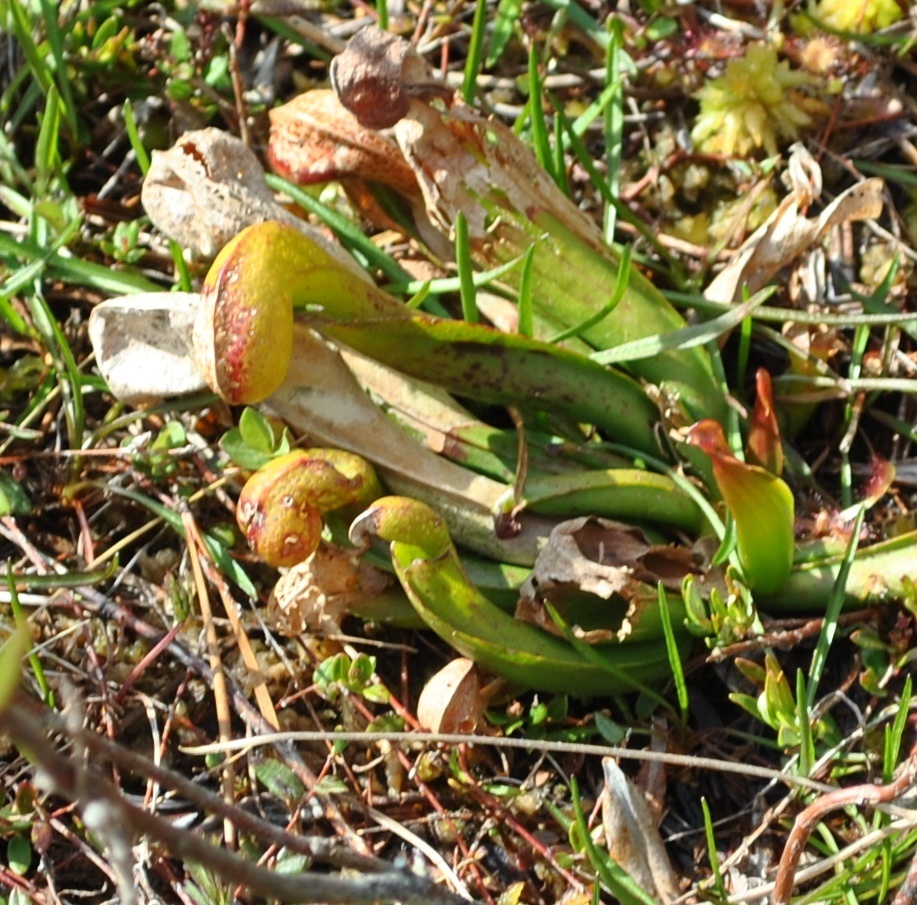
The cobra lily is a fascinating carnivorous plant native to boggy areas in Oregon and California. It captures insects by luring them into a hooded, pitcher shaped leaf that mimics a striking cobra. It is a rewarding but challenging plant to keep happy in a home environment.

Auf einen Blick
- Pflegestufe
- Schwierig
- Pflanzenart
- Carnivorous perennial
- Licht
- Bright, indirect light with cool roots
- Licht im Innenraum
- Hell, indirekt
- Gießen
- Alle 1 bis 3 Tage
- Endgröße
- 30 to 90 cm
- Wachstum
- Langsam
- Winterhärte
- USDA 7 bis 9
- Blütezeit
- Late spring to early summer
Pflege
Keep the root system cool by using distilled or rain water and providing plenty of airflow. Watch for wilting or browning leaves, which often signal that the roots are too warm or the water quality is poor. Always keep the soil consistently moist but never waterlogged.
- Gießen
- Always use distilled, rain, or reverse osmosis water to keep the soil constantly damp.
- Düngen
- Do not fertilize this plant as it gets all its nutrients from the insects it catches.
- Schneiden
- Trim away dead or decaying pitchers during the dormant season to keep the plant tidy.
- Umtopfen
- Repot only when the plant has clearly outgrown its container or the media has broken down.
- Boden
- Sphagnum moss and perlite mix
- Boden-pH
- Acidic
- Temperatur
- -5 bis 25°C
- Luftfeuchtigkeit
- 60 bis 90%
- Trockenheitstoleranz
- Gering
- Lebensdauer
- Perennial, can live for many years with proper care.
- Duft
- Leicht
- Wildverbiss-Resistenz
- Hoch
Anzeichen fürs Umtopfen
- Roots growing out of the drainage holes.
- The plant has produced multiple offsets that are crowding the container.
- The growing medium has broken down and no longer drains well.
Sicherheit
- Menschen
- The plant is not considered toxic, but it is not meant for consumption.
- Kinder
- The pitcher structure can be fragile and may pose a minor choking hazard if small parts are ingested.
- Essbarkeit
- This plant is not edible and should never be consumed.
So erkennst du die Pflanze
- Hooded, cobra shaped pitcher leaves
- Translucent windows on the hood
- Forked, tongue like appendage
- Yellowish green to reddish coloration
- Höhe
- 0,3 bis 0,8m
- Breite
- 0,15 bis 0,45m
- Blätter
- green, red, yellow, evergreen
- Blüten
- purple, green, 3 bis 5cm
Häufige Probleme
- Root rot — Occurs when water is stagnant and not cool enough for the root system.
Standort und Pflege
- Vermehrung
- division, seed
- Pflanzzeit
- spring
- Überwinterung
- Keep the plant in a cool, bright location during winter. Ensure the soil stays moist but not waterlogged.
- Im Kübel
- It grows well in pots, but requires a tall, well draining container to keep the roots cool.
Division
- Gently remove the plant from its pot in early spring.
- Identify the rhizome offsets that have their own roots.
- Carefully separate the offsets and pot them in fresh, damp sphagnum moss.
Group carnivorous plants together to maintain a consistent microclimate of high humidity.
Gute Pflanzpartner
- Round leaved sundew — They share similar moisture and light requirements in a bog setting.
- Common butterwort — These plants thrive in the same cool, wet, nutrient poor conditions.
Ähnliche Arten
- North American pitcher plant — These are also pitcher plants but generally easier to grow in standard bog conditions.
Botanisches
- Familie
- Sarraceniaceae
- Gattung
- Darlingtonia
- Ordnung
- Ericales
- Klasse
- Magnoliopsida
- Ursprüngliche Heimat
- Northern California and Southern Oregon
- Artenschutz
- This plant is considered rare in the wild and should only be purchased from nurseries that propagate their own stock.
It grows in nutrient poor, serpentine seeps where cold water keeps the roots cool.
- Nutzen für Wildtiere
- nectar source
- Bestäuber
- Bienen
- Verwendung
- bog gardens, carnivorous plant collections
Im Jahresverlauf
Ökologische Zeigerwerte
- Salzgehalt
- 1/9
- Bodenreaktion
- 4/9
- Licht
- 7/9
- Temperatur
- 4/9
- Feuchtigkeit
- 9/9
- Nährstoffe
- 1/9
Taxonomie abgeglichen mit GBIF.
Häufige Fragen
- Does it need tap water?
- No, always use distilled, rain, or reverse osmosis water to avoid mineral buildup.
- How do I keep it cool?
- You can use cool water irrigation or place the pot in a shaded area during the hottest part of the day.
Woher der Name kommt
The genus name honors William Darlington, a botanist, while the species name refers to its native range in California.
Gut zu wissen
- It is commonly called the cobra lily because its leaves resemble a striking cobra.
- Unlike many other pitcher plants, it does not produce digestive enzymes but relies on symbiotic bacteria.
- It thrives in cold, running water, which is quite unique for a carnivorous plant.
Probleme mit Cobra lily?
Diese Seite bietet allgemeine Infos. Pocket Botanist erkennt Probleme anhand eines Fotos deiner echten Pflanze, passt das Gießen an dein Licht und deinen Standort an und erinnert dich an die Pflege.
Dieser Ratgeber wurde mit KI erstellt und mit der GBIF-Taxonomie abgeglichen. Er dient zur allgemeinen Information und ersetzt keine gärtnerische oder tierärztliche Beratung. Hier erfährst du, wie wir diese Ratgeber erstellen.