 Pocket Botanist
Pflanzenratgeber
harebell.
Campanula rotundifolia
Aussprache kam-PAN-yoo-luh ro-tun-di-FOH-lee-uh
Auch bekannt als Bluebell Bellflower, Common Harebell, Harebell, Harebell / Bluebell, Northern European harebell


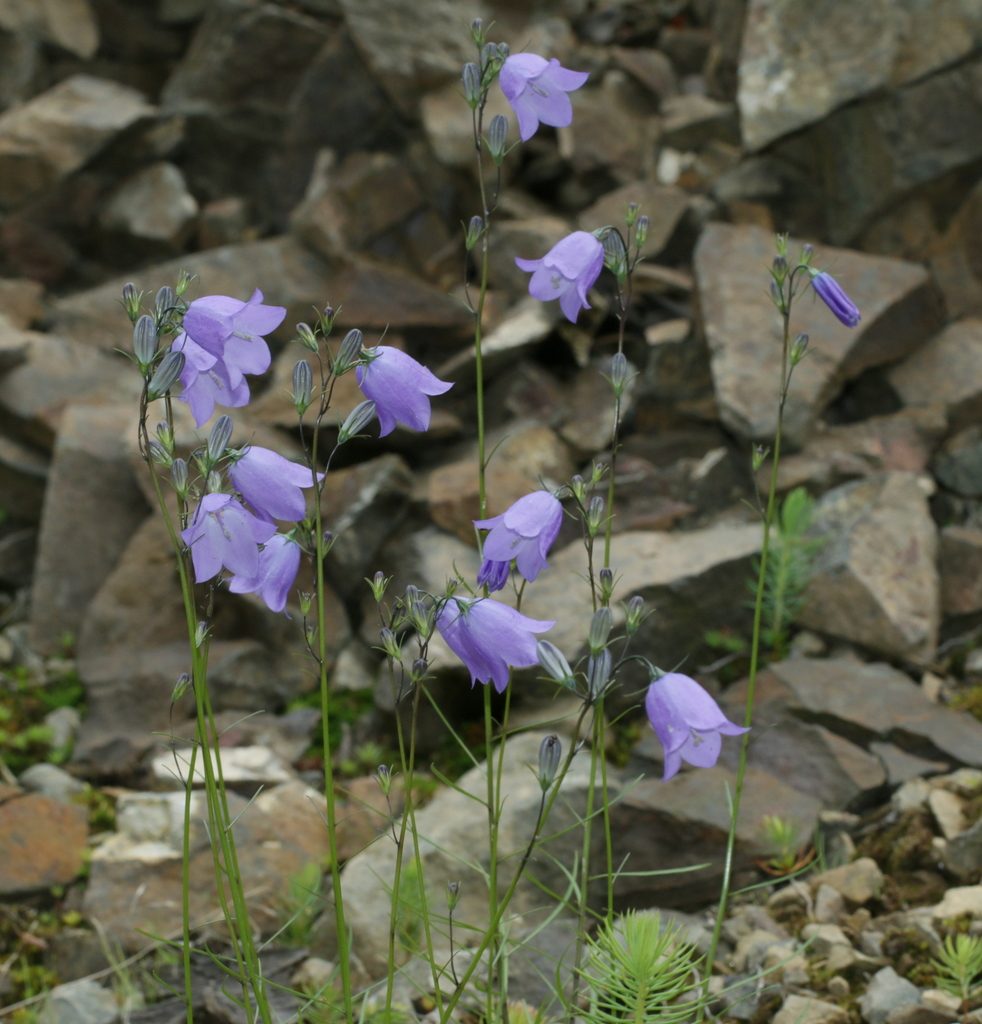
The harebell is a lovely, delicate perennial that brings a touch of wild charm to any garden. It features slender stems and nodding, bell shaped flowers that dance in the breeze. You will find it is quite hardy and adapts well to various rocky or grassy spots.

Auf einen Blick
- Pflegestufe
- Einfach
- Pflanzenart
- Perennial
- Licht
- Full sun to partial shade
- Licht im Innenraum
- Hell, indirekt
- Gießen
- Alle 3 bis 7 Tage
- Endgröße
- 12 to 24 inches
- Wachstum
- Mittel
- Winterhärte
- USDA 2 bis 8
- Blütezeit
- Early summer to early autumn
Pflege
Keep the soil consistently moist but never soggy to maintain healthy growth. Watch for wilting during dry spells, as this plant prefers cooler, damp conditions. Deadheading spent blooms will encourage the plant to produce more flowers throughout the season.
- Gießen
- Water when the top inch of soil feels dry to the touch.
- Düngen
- Apply a balanced liquid fertilizer once every two months during the active growing season.
- Schneiden
- Trim back spent flower stalks regularly to promote continuous blooming.
- Umtopfen
- Repot in the spring if the plant becomes root bound or needs fresh soil.
- Boden
- Well draining, sandy or rocky soil
- Boden-pH
- Neutral to slightly alkaline
- Temperatur
- -35 bis 25°C
- Luftfeuchtigkeit
- 40 bis 70%
- Trockenheitstoleranz
- Mittel
- Lebensdauer
- Short-lived perennial, typically 3 to 5 years.
- Wildverbiss-Resistenz
- Mittel
Anzeichen fürs Umtopfen
- Roots growing out of the drainage holes.
- Water draining through the pot too quickly.
- Stunted growth during the active season.
Sicherheit
- Menschen
- This plant is generally considered non-toxic to humans.
- Kinder
- There are no specific safety concerns for children, but it is always best to discourage eating unknown garden plants.
- Kontaktallergene
- The sap may cause mild skin irritation in sensitive individuals.
- Allergene in der Luft
- The pollen is not considered a significant allergen.
- Essbarkeit
- While the leaves are technically edible, they are often bitter and not commonly consumed.
So erkennst du die Pflanze
- Nodding bell shaped blue flowers
- Slender, wiry stems
- Round basal leaves
- Narrow, grass like stem leaves
- Höhe
- 0,15 bis 0,45m
- Breite
- 0,2 bis 0,3m
- Blätter
- green, deciduous
- Blüten
- blue, violet, 1 bis 2cm
- Früchte
- brown, late summer
Häufige Probleme
- Slugs — Slugs can chew holes in the foliage during wet weather.
- Powdery mildew — White fungal growth on leaves often caused by poor air circulation.
Standort und Pflege
- Vermehrung
- seed, division
- Pflanzzeit
- spring, autumn
- Überwinterung
- Cut back dead foliage in late autumn. It is very cold hardy and requires no special protection.
- Im Kübel
- It grows well in containers, provided the pot has excellent drainage and is at least 15 cm deep.
Division
- 1. Carefully dig up the clump in spring.
- 2. Gently pull the root mass apart into smaller sections.
- 3. Replant immediately in well-draining soil.
Seed
- 1. Sow seeds on the surface of moist soil in spring.
- 2. Do not cover, as they need light to germinate.
- 3. Keep consistently moist until established.
Plant in groups to create a natural meadow effect that supports local pollinators.
Gute Pflanzpartner
- Thymus serpyllum — They share similar requirements for rocky, well-drained soil.
- Blue Fescue — The grass provides a nice textural contrast to the delicate bells.
Ähnliche Arten
- Campanula glomerata — It has a similar bell shape but flowers are held in dense clusters.
Botanisches
- Familie
- Campanulaceae
- Gattung
- Campanula
- Ordnung
- Asterales
- Klasse
- Magnoliopsida
- Ursprüngliche Heimat
- Circumboreal regions of the Northern Hemisphere.
- Artenschutz
- It is widespread and not of conservation concern.
It thrives in open, well-drained habitats where it can outcompete other plants in nutrient-poor soils.
- Nutzen für Wildtiere
- nectar source
- Bestäuber
- Bienen, Schmetterlinge, Nachtfalter
- Verwendung
- rock gardens, pollinator borders, meadow plantings
Im Jahresverlauf
Ökologische Zeigerwerte
- Salzgehalt
- 1/9
- Bodenreaktion
- 5/9
- Licht
- 7/9
- Temperatur
- 3/9
- Feuchtigkeit
- 4/9
- Nährstoffe
- 3/9
Taxonomie abgeglichen mit GBIF.
Häufige Fragen
- Does it need full sun?
- It prefers full sun but appreciates some afternoon shade in hotter climates.
- How do I keep it blooming?
- Deadheading spent flowers will encourage a longer bloom period.
Woher der Name kommt
The genus name Campanula comes from the Latin for little bell, while rotundifolia refers to the round basal leaves.
Gut zu wissen
- It is also known as the harebell in Scotland.
- The plant is remarkably hardy and can grow in very thin, rocky soil.
- Its basal leaves are round, which gives it the specific epithet rotundifolia.
- It is a classic wildflower of the northern hemisphere.
Probleme mit harebell?
Diese Seite bietet allgemeine Infos. Pocket Botanist erkennt Probleme anhand eines Fotos deiner echten Pflanze, passt das Gießen an dein Licht und deinen Standort an und erinnert dich an die Pflege.
Dieser Ratgeber wurde mit KI erstellt und mit der GBIF-Taxonomie abgeglichen. Er dient zur allgemeinen Information und ersetzt keine gärtnerische oder tierärztliche Beratung. Hier erfährst du, wie wir diese Ratgeber erstellen.