 Pocket Botanist
Pflanzenratgeber
Agave.
Agave
Aussprache uh-GAH-vee
Auch bekannt als Agave, agaves, century plants



Scanne den Code mit der Kamera deines Smartphones und hol dir die App
Oder öffne pocketbotanist.app/get auf deinem Smartphone
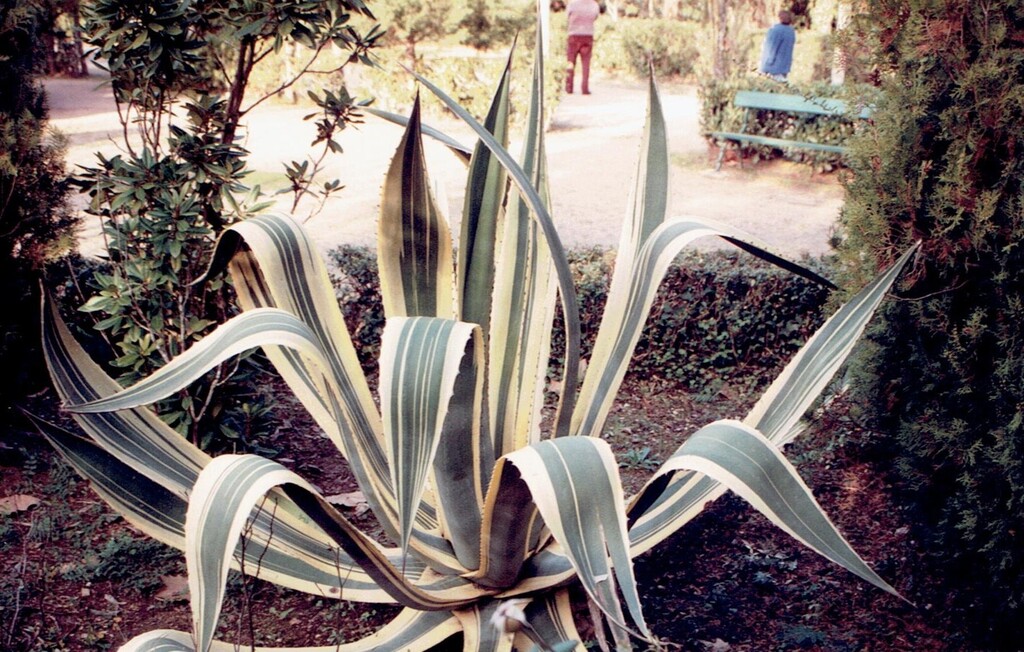
Agaves are striking succulents known for their architectural rosettes of thick, fleshy leaves. They thrive in warm, sunny spots and bring a bold desert aesthetic to any collection. These plants are incredibly resilient and perfect for those who prefer a low maintenance companion.

Auf einen Blick
- Pflegestufe
- Einfach
- Pflanzenart
- Succulent
- Licht
- Full sun
- Licht im Innenraum
- Direkte Sonne
- Gießen
- Alle 14 bis 30 Tage
- Endgröße
- 3 to 10 feet
- Wachstum
- Langsam
- Winterhärte
- USDA 8 bis 11
- Blütezeit
- Late spring to summer
Pflege
Plant your agave in well draining soil and place it where it can soak up plenty of sun. Watch for mushy leaves, which indicate overwatering, or shriveling, which means it needs a drink. Ensure the pot has drainage holes to keep the roots happy.
- Gießen
- Allow the soil to dry out completely between waterings to prevent root rot.
- Düngen
- Feed with a balanced liquid fertilizer diluted to half strength during the growing season.
- Schneiden
- Remove dead or damaged lower leaves as needed to maintain a tidy appearance.
- Umtopfen
- Repot only when the plant becomes rootbound or outgrows its current container.
- Boden
- Sandy, gritty, well draining cactus mix
- Boden-pH
- 6.0 to 7.5
- Temperatur
- -7 bis 45°C
- Luftfeuchtigkeit
- 10 bis 40%
Sicherheit
- Menschen
- The sap contains calcium oxalate crystals which cause skin irritation and mouth swelling if ingested.
- Haustiere
- Agave plants contain calcium oxalate crystals that can cause irritation and swelling if ingested by cats or dogs.
- Kinder
- The sharp, pointed tips of the leaves pose a significant puncture risk to small children.
- Kontaktallergene
- The sap can cause contact dermatitis, and the sharp spines can cause mechanical injury.
- Allergene in der Luft
- Pollen from the massive flower stalks can trigger seasonal allergies in sensitive individuals.
- Essbarkeit
- The sap of many agave species can cause severe irritation if ingested or touched.
So erkennst du die Pflanze
- Large, fleshy, succulent leaves
- Sharp terminal spines at leaf tips
- Rosette growth pattern
- Serrated or smooth leaf margins
- Höhe
- 0,6 bis 2m
- Breite
- 0,6 bis 2m
- Blätter
- blue, green, gray, evergreen
- Blüten
- yellow, green, white, 5 bis 10cm
- Früchte
- brown, Autumn
Worauf du achten solltest
- Agave snout weevil · Larvae bore into the base of the plant, causing it to collapse.
- Root rot · Fungal infection caused by overly wet soil conditions.
Agave per Foto prüfen
Pocket Botanist schaut sich ein Foto deiner Pflanze an und sagt dir, was ihr fehlt und was du zuerst probieren kannst.
Scanne den Code mit der Kamera deines Smartphones und hol dir die App
Oder öffne pocketbotanist.app/get auf deinem Smartphone
Standort und Pflege
- Vermehrung
- division, seed, cuttings
- Pflanzzeit
- spring, early summer
Group plants with similar low water needs to prevent accidental overwatering of your agave.
Gute Pflanzpartner
- Wüstenlöffel · It shares similar water and light requirements.
- Ocotillo · It provides a nice structural contrast in a desert garden.
Ähnliche Arten
- Echte Aloe · Often confused due to succulent leaves, but aloe leaves are softer and lack terminal spines.
- Adams-Nadel · Shares a similar architectural form but has different flower structures.
Botanisches
- Familie
- Asparagaceae
- Gattung
- Agave
- Ordnung
- Asparagales
- Klasse
- Liliopsida
- Ursprüngliche Heimat
- Americas, primarily Mexico and the southwestern United States.
- Artenschutz
- Some species are threatened in the wild due to habitat loss and overcollection for spirits production.
They thrive in arid environments by utilizing Crassulacean Acid Metabolism to conserve water.
- Nutzen für Wildtiere
- nectar source
- Bestäuber
- Bienen, Nachtfalter, Kolibris
- Verwendung
- ornamental, xeriscaping, fiber production
Im Jahresverlauf
Ökologische Zeigerwerte
- Salzgehalt
- 4/9
- Bodenreaktion
- 6/9
- Licht
- 8/9
- Temperatur
- 7/9
- Feuchtigkeit
- 2/9
- Nährstoffe
- 3/9
Taxonomie abgeglichen mit GBIF.
Häufige Fragen
- Do I need to water my agave often?
- No, they prefer to dry out completely between waterings.
- Will my agave die after it blooms?
- Yes, most agaves are monocarpic and will die after producing their massive flower spike.
Woher der Name kommt
The name comes from the Greek word agauos, meaning noble or admirable. The common name is simply the genus name.
Gut zu wissen
- Agaves are often called century plants because they take a long time to bloom.
- The fibers of some species are used to make rope and twine.
- They store water in their thick leaves to survive long droughts.
Auch in
Agave lange gesund halten
Diese Seite bietet allgemeine Infos. Speichere deine Pflanze in Pocket Botanist und du bekommst Pflege-Erinnerungen, die auf diese Pflanze abgestimmt sind, und einen Pflegeverlauf, der zeigt, was geholfen hat.
Scanne den Code mit der Kamera deines Smartphones und hol dir die App
Oder öffne pocketbotanist.app/get auf deinem Smartphone
Dieser Ratgeber wurde am mit KI erstellt und mit der GBIF-Taxonomie abgeglichen. Er dient zur allgemeinen Information und ersetzt keine gärtnerische oder tierärztliche Beratung. Hier erfährst du, wie wir diese Ratgeber erstellen.