 Pocket Botanist
Plant guide
Petunia.
Petunia × hybrida
Pronounced peh-TOO-nyuh HY-brih-duh
Also known as Petunia × hybrida, Common garden petunia
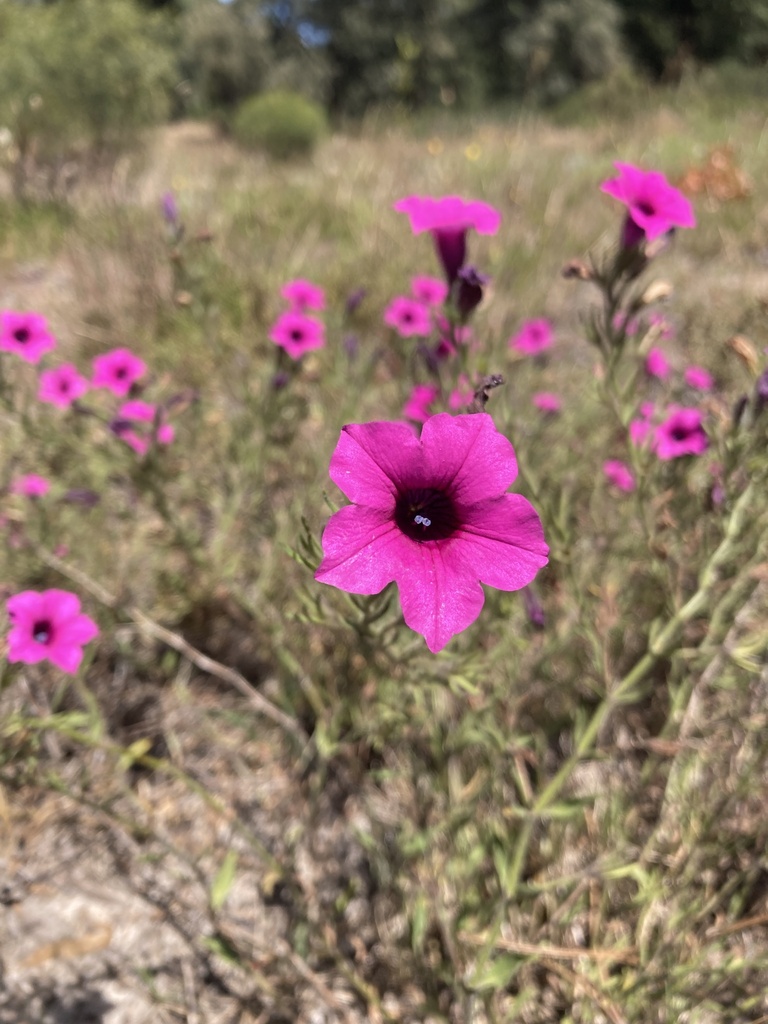
Petunias are cheerful, fast growing annuals that bring a splash of color to any sunny garden. They thrive in containers or beds and bloom continuously until the first frost. You'll love how they brighten up your porch or patio.
At a glance
- Care level
- Easy
- Plant type
- Annual
- Light
- Full sun
- Indoor light
- direct
- Water
- Every 2 to 4 days
- Mature size
- 30 to 60 cm
- Growth rate
- fast
- Hardiness
- USDA 9 to 11
- Bloom time
- Late spring to late autumn
Care
Keep your petunias happy by deadheading faded blooms to encourage constant new growth. Watch for wilting which signals a need for water, but ensure the soil drains well to prevent root rot. They appreciate a sunny spot to perform their best.
- Watering
- Water deeply when the top inch of soil feels dry to the touch.
- Feeding
- Use a balanced liquid fertilizer every two weeks for consistent blooms.
- Pruning
- Pinch back stems to keep the plant bushy and remove spent flowers.
- Repotting
- Usually grown as annuals, so repotting is rarely needed.
- Soil
- Well draining, fertile, slightly acidic soil
- Soil pH
- 6.0 to 7.0
- Temperature
- 10 to 30°C
- Humidity
- 40 to 60%
- Drought tolerance
- moderate
- Lifespan
- Annual, or tender perennial in frost free climates.
- Fragrance
- strong
- Deer and rabbits
- low
Signs it needs repotting
- Roots growing out of the drainage holes.
- Water running straight through the pot without soaking in.
- The plant stops blooming despite regular feeding.
Safety
- People
- The plant is generally considered non toxic to humans, though it is not meant for consumption.
- Pets
- Petunias are generally considered non-toxic to cats and dogs.
- Children
- Keep the plant away from small children to prevent accidental ingestion of leaves or flowers.
- Contact allergens
- Some people may experience mild skin irritation from the sticky, glandular hairs on the stems and leaves.
- Airborne allergens
- The pollen is generally not a major allergen, but sensitive individuals may react to the heavy fragrance of some varieties.
- Edibility
- While not highly toxic, petunias are not considered edible and ingestion can cause mild stomach upset.
How to identify it
- trumpet shaped colorful flowers
- sticky glandular hairy foliage
- ovate leaves with entire margins
- trailing or mounding growth habit
- Height
- 0.15 to 0.45m
- Spread
- 0.3 to 0.9m
- Leaves
- green, deciduous
- Flowers
- purple, pink, white, red, yellow, blue, 5 to 10cm
Common problems
- Aphids — These tiny insects cluster on new growth and suck sap, often causing distorted leaves.
- Botrytis blight — A fungal infection that causes gray mold on flowers, especially during cool, damp weather.
- Tobacco mosaic virus — This virus causes mottled or stunted leaves and is often spread by handling.
Growing it
- Propagation
- seed, cuttings
- When to plant
- spring
- Overwintering
- Bring containers indoors to a bright, cool spot before the first frost. Keep the soil barely moist until spring.
- In containers
- They are excellent for containers, but ensure the pot has good drainage and is at least 10 inches wide.
Stem cuttings
- Take a 4 inch cutting from a healthy, non flowering stem.
- Remove the lower leaves and dip the cut end in rooting hormone.
- Place in moist potting mix and keep in bright, indirect light until rooted.
Pair petunias with plants that have similar feeding requirements to ensure they all stay healthy in the same container.
Grows well with
- Sweet Alyssum — They share similar water and light needs while providing a nice textural contrast.
- Geranium — These are classic container partners that thrive in the same sunny conditions.
- Verbena — Verbena adds a different flower shape that complements the trumpet blooms of petunias.
Keep away from
- None notable — Petunias are generally easy to pair with most other annuals.
Similar species
- Calibrachoa — Often called million bells, these look like miniature petunias and do not require deadheading.
Science
- Family
- Solanaceae
- Genus
- Petunia
- Order
- Solanales
- Class
- Magnoliopsida
- Native range
- South America.
- Conservation
- This is a cultivated hybrid and is not a species of conservation concern in the wild.
In their native habitat, they grow as short lived perennials in sunny, open areas.
- Value to wildlife
- nectar source
- Pollinators
- bees, butterflies, moths, hummingbirds
- Uses
- hanging baskets, container gardens, bedding plants, window boxes
Through the year
Ecological indicators
- Salinity
- 2/9
- Soil reaction
- 6/9
- Light
- 8/9
- Temperature
- 7/9
- Moisture
- 5/9
- Nutrients
- 6/9
Taxonomy resolved against GBIF.
Questions people ask
- Do I need to deadhead my petunias?
- Yes, removing spent blooms encourages the plant to produce more flowers throughout the season.
- Why are my petunia leaves turning yellow?
- This is often a sign of overwatering or a lack of iron in the soil.
Where the name comes from
The genus name Petunia comes from the Tupi word for tobacco, as the plants are related. The species name hybrida indicates that modern garden varieties are crosses between different wild species.
Good to know
- Petunias were first discovered in South America in the 18th century.
- The name comes from the Tupi word petun, which means tobacco.
- Modern petunias are complex hybrids developed from wild species.
- They are technically tender perennials but are grown as annuals in most climates.
Is your petunia looking unwell?
This page is a general guide. Pocket Botanist diagnoses problems from a photo of your actual plant, works out watering for your light and conditions, and reminds you when care is due.
This guide was generated with AI and checked against GBIF taxonomy. It is general information, not horticultural or veterinary advice. Read about how we build these guides.