 Pocket Botanist
Guide botanique
Devil's bit scabious.
Succisa pratensis
Prononciation suk-SEE-uh pruh-TEN-sis
Aussi appelée Devil's-Bit Scabious, Devilsbit


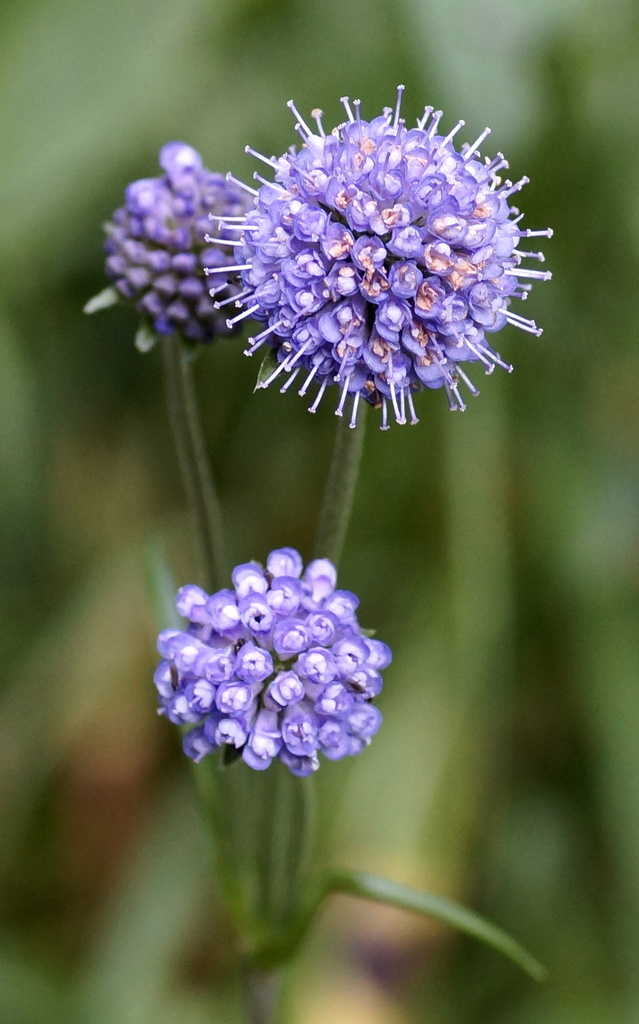
This lovely perennial is a real treat for pollinators in damp meadows and grasslands. It produces charming, globe shaped blue to violet flower heads on tall stems. You will find it thrives best in areas that mimic its natural moist habitat.

En un coup d'œil
- Niveau d'entretien
- Facile
- Type de plante
- Perennial
- Lumière
- Full sun to partial shade
- Lumière en intérieur
- Soleil direct
- Arrosage
- Tous les 3 à 7 jours
- Taille adulte
- 1 meter
- Croissance
- Moyenne
- Rusticité
- USDA 4 à 9
- Floraison
- Mid summer to mid autumn
Entretien
Keep the soil consistently moist to mimic its native damp meadow environment. Watch for wilting if the ground dries out too much during the summer. It appreciates a spot with plenty of sunshine to encourage the best blooms.
- Arrosage
- Keep the soil damp but not waterlogged.
- Engrais
- A light application of compost in spring is plenty.
- Taille
- Cut back spent flower stalks in late autumn.
- Rempotage
- Only repot if the plant becomes rootbound in its container.
- Sol
- Moist, neutral to acidic soil
- pH du sol
- 6.0 to 7.5
- Température
- -20 à 30°C
- Humidité
- 50 à 80%
- Résistance à la sécheresse
- Faible
- Durée de vie
- Perennial, typically 5 to 10 years
- Parfum
- Léger
- Résistance aux chevreuils et lapins
- Moyenne
Signes qu'il faut rempoter
- Roots growing out of the drainage holes.
- Water sitting on the surface for too long.
Sécurité
- Humains
- There is no significant toxicity reported for humans.
- Enfants
- The plant is not known to be a hazard to children.
- Comestibilité
- This plant is not considered edible and should not be consumed.
Comment l'identifier
- Globe shaped blue violet flower heads
- Basal rosette of oblong leaves
- Tall slender branching stems
- Short rootstock appearing bitten off
- Hauteur
- 0,3 à 0,8m
- Envergure
- 0,2 à 0,4m
- Feuilles
- green, deciduous
- Fleurs
- blue, violet, 1 à 3cm
Problèmes courants
- Powdery mildew — A fungal growth that appears as white dust on leaves during dry spells.
La cultiver
- Multiplication
- seed, division
- Quand planter
- spring, autumn
- Hivernage
- Leave the foliage until spring to protect the crown, then clear away dead material.
- En pot
- It grows well in large pots that can hold moisture, but it is best suited for the ground.
Seed
- Sow seeds in autumn in a cold frame.
- Keep the soil moist but not waterlogged.
- Transplant seedlings once they are large enough to handle.
Division
- Lift the plant in spring.
- Carefully pull the root clump apart.
- Replant sections immediately into moist soil.
Group this plant with other moisture loving meadow species to create a stable habitat for pollinators.
Bonnes associations
- Reine-des-prés — They both thrive in the same damp meadow conditions.
- Purple moor grass — This grass provides a naturalistic backdrop for the blue flowers.
Espèces similaires
- Knautia arvensis — It has a similar flower shape but prefers drier soil.
Science
- Famille
- Caprifoliaceae
- Genre
- Succisa
- Ordre
- Dipsacales
- Classe
- Magnoliopsida
- Région d'origine
- Europe and parts of western Asia.
- Préservation
- It is declining in some parts of its range due to habitat loss.
It grows in damp, nutrient poor grasslands where it competes well in moist conditions.
- Intérêt pour la faune
- nectar source, larval host plant for marsh fritillary
- Pollinisateurs
- abeilles, papillons, papillons de nuit
- Utilisations
- meadow gardens, pollinator borders, wildlife habitats
Au fil des saisons
Repères écologiques
- Salinité
- 1/9
- Réaction du sol
- 5/9
- Lumière
- 6/9
- Température
- 5/9
- Humidité
- 7/9
- Nutriments
- 3/9
Taxonomie vérifiée avec le GBIF.
Ce qu'on demande souvent
- Does it need full sun?
- It prefers full sun but tolerates light shade.
- Is it drought tolerant?
- No, it prefers consistently moist soil.
D'où vient le nom
The name Succisa comes from the Latin for bitten off, referring to the appearance of the rootstock. Pratensis means of the meadow.
Bon à savoir
- It is a key plant for the rare marsh fritillary butterfly.
- The flowers are highly attractive to late season pollinators.
- It thrives in damp grasslands and meadows.
Ta plante a mauvaise mine ?
Cette page est un guide général. Pocket Botanist diagnostique les problèmes directement à partir d'une photo de ta plante, adapte l'arrosage à sa luminosité et te prévient quand il faut t'en occuper.
Ce guide a été généré par IA et vérifié avec la taxonomie du GBIF. Il s'agit d'informations générales, et non de conseils horticoles ou vétérinaires. Découvre comment nous concevons ces guides.