 Pocket Botanist
Guide botanique
Coast live oak.
Quercus agrifolia
Prononciation KWER-kus ag-ri-FOH-lee-uh
Aussi appelée California live oak, Coast Live Oak


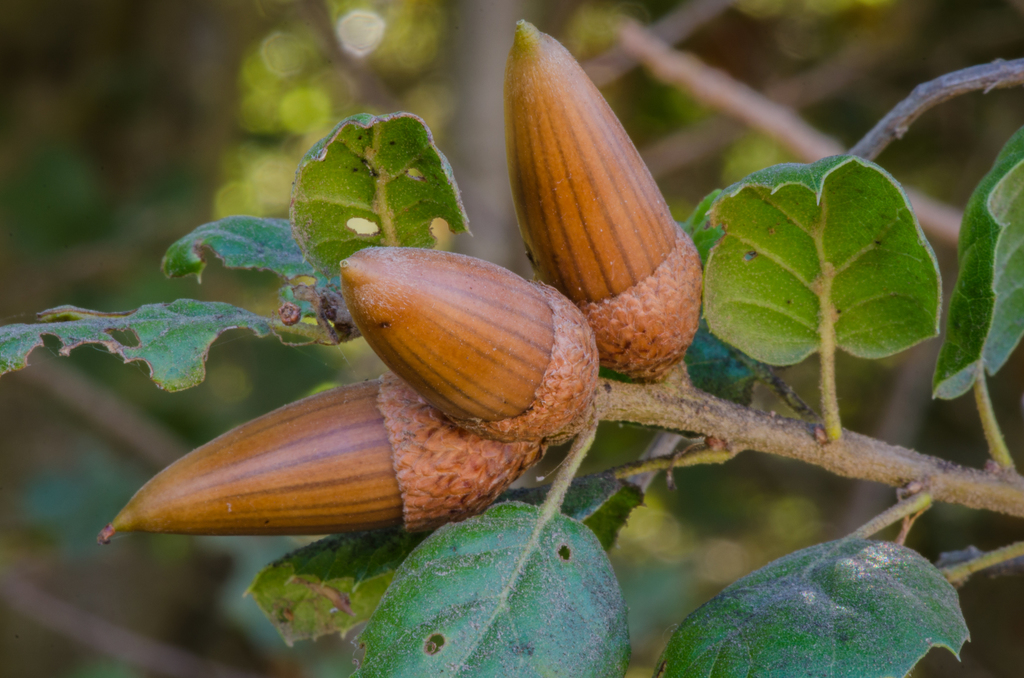
The coast live oak is a beautiful, evergreen tree native to the California coast. It's known for its iconic rounded canopy and holly like leaves. These trees are a cornerstone of their ecosystem and provide habitat for many local species.

En un coup d'œil
- Niveau d'entretien
- Facile
- Type de plante
- Tree
- Lumière
- Full sun
- Lumière en intérieur
- Soleil direct
- Arrosage
- Tous les 14 à 30 jours
- Taille adulte
- 20 to 80 feet
- Croissance
- Moyenne
- Rusticité
- USDA 8 à 10
- Floraison
- Early to mid spring
Entretien
Plant this tree in a spot with plenty of space for its wide root system. Avoid overwatering once established, as summer water can lead to root rot. Watch for signs of sudden oak death or leaf spots to keep it healthy.
- Arrosage
- Young trees need regular water, but mature trees prefer to stay dry during the summer.
- Engrais
- Generally does not need fertilizer if planted in native soil.
- Taille
- Prune only to remove dead or crossing branches during the dormant winter season.
- Rempotage
- These are best planted directly in the ground as they develop deep taproots.
- Sol
- Well draining loam or clay
- pH du sol
- 6.0 to 7.5
- Température
- -7 à 38°C
- Humidité
- 20 à 60%
- Résistance à la sécheresse
- Élevée
- Durée de vie
- Perennial, typically 100 to 250 years.
- Résistance aux chevreuils et lapins
- Moyenne
Signes qu'il faut rempoter
- Roots circling the bottom of the pot
- Stunted growth during the active season
Sécurité
- Humains
- The plant is not considered toxic, but the high tannin content in raw acorns can cause digestive upset.
- Enfants
- The sharp, prickly leaf margins can scratch young children, so it is best planted away from play areas.
- Allergènes de contact
- The stiff, holly like leaves can cause minor skin scratches if handled without gloves.
- Allergènes aéroportés
- The windborne pollen produced in spring is a common cause of seasonal allergies.
- Comestibilité
- Acorns contain high levels of tannins and require extensive leaching before they are safe for human consumption.
Comment l'identifier
- Evergreen leaves with spiny margins
- Dark gray and furrowed bark
- Rounded and dense canopy shape
- Small acorns with cap scales
- Leaves are cupped or convex
- Hauteur
- 6 à 25m
- Envergure
- 5 à 30m
- Feuilles
- dark green, evergreen
- Fleurs
- yellow, green, 0,5 à 1cm
- Fruits
- brown, Autumn
Problèmes courants
- Sudden Oak Death — A lethal pathogen that causes cankers and dieback in coastal oak populations.
- Oak Moth — Caterpillars can occasionally defoliate large portions of the canopy.
La cultiver
- Multiplication
- seed
- Quand planter
- autumn, winter
- Hivernage
- No special care is needed as it is fully adapted to its native climate. Keep the area around the trunk clear of mulch to prevent moisture buildup.
- En pot
- It is not suitable for long term container growth due to its massive size and deep taproot requirements.
Seed
- Collect fresh acorns in autumn as soon as they fall.
- Float test them in water and discard any that do not sink.
- Plant immediately in deep pots to accommodate the long taproot.
- Keep the soil lightly moist until germination occurs in spring.
Avoid planting thirsty garden perennials directly under the drip line to prevent crown rot.
Bonnes associations
- Artemisia californica — They share similar drought requirements and thrive in the same coastal scrub habitat.
- Toyon — This shrub provides a beautiful evergreen understory that complements the oak.
- Frangula californica — It is a reliable companion that tolerates the dry shade beneath the oak canopy.
Espèces similaires
- Quercus wislizeni — It is very similar but better adapted to hotter, inland climates.
- Quercus chrysolepis — It has a similar evergreen habit but prefers cooler, mountainous regions.
Science
- Famille
- Fagaceae
- Genre
- Quercus
- Ordre
- Fagales
- Classe
- Magnoliopsida
- Région d'origine
- Coastal California and northern Baja California.
- Préservation
- It is not currently endangered, but it faces significant threats from sudden oak death syndrome and habitat loss.
It survives in Mediterranean climates by utilizing deep taproots to access groundwater during long, rainless summers.
- Intérêt pour la faune
- larval host plant, provides nesting cover, acorns feed mammals and birds
- Pollinisateurs
- abeilles, papillons, papillons de nuit
- Utilisations
- shade tree, wildlife garden, erosion control, coastal windbreak
Au fil des saisons
Repères écologiques
- Salinité
- 2/9
- Réaction du sol
- 6/9
- Lumière
- 7/9
- Température
- 7/9
- Humidité
- 3/9
- Nutriments
- 4/9
Taxonomie vérifiée avec le GBIF.
Ce qu'on demande souvent
- Does it need summer water?
- Established trees prefer dry summers and may suffer from root rot if irrigated during the hot months.
- How fast does it grow?
- It is a moderate grower, typically adding 30 to 60 centimeters of height per year.
D'où vient le nom
The species name agrifolia means field leaf, referring to the resemblance of its leaves to those of the European holly.
Bon à savoir
- The coast live oak is the only California native oak that thrives in coastal environments.
- These trees can live for over 250 years in the right conditions.
- The wood is extremely hard and was historically used for making charcoal.
- They are well adapted to survive wildfires by resprouting from the root crown.
Aussi dans
Ta plante a mauvaise mine ?
Cette page est un guide général. Pocket Botanist diagnostique les problèmes directement à partir d'une photo de ta plante, adapte l'arrosage à sa luminosité et te prévient quand il faut t'en occuper.
Ce guide a été généré par IA et vérifié avec la taxonomie du GBIF. Il s'agit d'informations générales, et non de conseils horticoles ou vétérinaires. Découvre comment nous concevons ces guides.