 Pocket Botanist
Guide botanique
Flame vine.
Pyrostegia venusta
Prononciation py-roh-STEE-jee-uh veh-NOO-stuh
Aussi appelée Brazilian flame creeper, Flamevine, Golden shower, Orange trumpet, Orange trumpet creeper, orange trumpetvine, orange-creeper



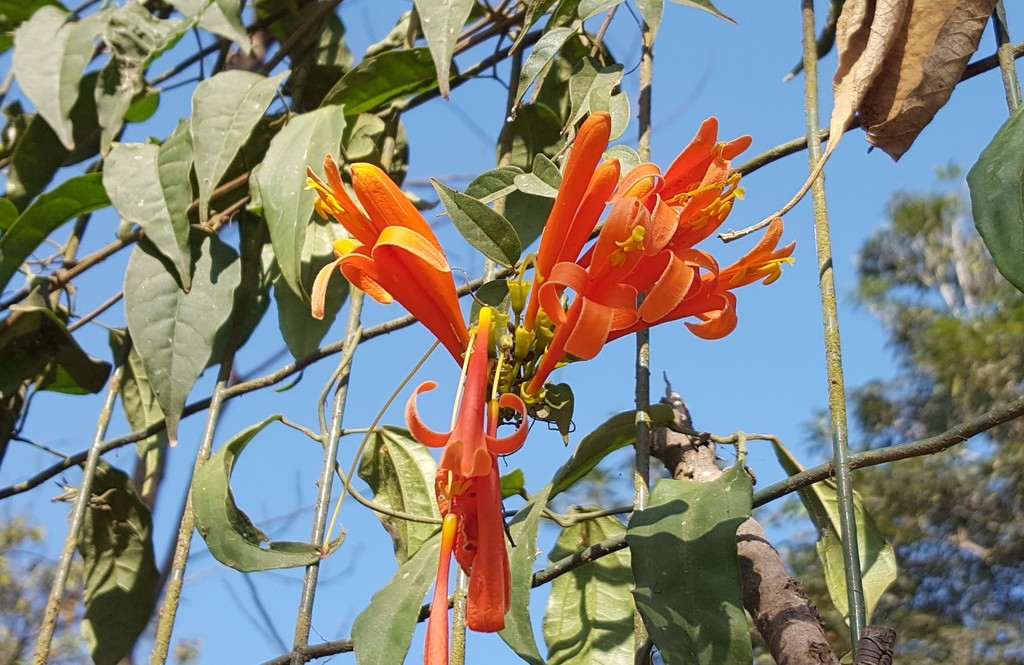
The flame vine is a stunning, fast growing climber that puts on a show with masses of bright orange, tubular flowers. It is a tropical beauty that loves to scramble over fences, trellises, or walls. You will find it thrives best in warm climates where it can soak up plenty of sun.
En un coup d'œil
- Niveau d'entretien
- Moyenne
- Type de plante
- Evergreen vine
- Lumière
- Full sun
- Lumière en intérieur
- Soleil direct
- Arrosage
- Tous les 3 à 7 jours
- Taille adulte
- 20 to 30 feet
- Croissance
- Rapide
- Rusticité
- USDA 9 à 11
- Floraison
- Late winter to early spring
Entretien
Provide a sturdy support structure for this vigorous climber to sprawl across. Watch for yellowing leaves which may indicate the soil is staying too wet or the plant needs more nutrients. Prune back after the main flowering season to keep its size in check.
- Arrosage
- Keep the soil consistently moist but never soggy during the active growing season.
- Engrais
- Feed with a balanced liquid fertilizer during the spring and summer months to encourage blooms.
- Taille
- Trim back the vines immediately after the flowering period ends to maintain shape.
- Rempotage
- Repot only if the plant becomes root bound or if you need to refresh the soil.
- Sol
- Well draining, fertile soil
- pH du sol
- 6.0 to 7.5
- Température
- 5 à 35°C
- Humidité
- 50 à 80%
- Résistance à la sécheresse
- Moyenne
- Durée de vie
- Perennial, typically 10 to 20 years
- Résistance aux chevreuils et lapins
- Moyenne
Signes qu'il faut rempoter
- roots growing out of the drainage holes
- water draining through too quickly
- stunted growth during the active season
Sécurité
- Humains
- There is no significant evidence of human toxicity, but it is not meant for consumption.
- Enfants
- The long, trailing stems can be a strangulation hazard for very small children if left to hang low.
- Allergènes de contact
- The sap can cause mild skin irritation in sensitive individuals.
- Allergènes aéroportés
- There are no notable airborne allergy risks associated with this vine.
- Comestibilité
- This plant is not considered edible and should be kept away from food preparation areas.
Comment l'identifier
- Clusters of bright orange tubular flowers
- Opposite, compound leaves with three leaflets
- Tendrils used for climbing surfaces
- Evergreen foliage throughout the year
- Hauteur
- 3 à 6m
- Envergure
- 2 à 4m
- Feuilles
- dark green, evergreen
- Fleurs
- orange, reddish orange, 5 à 8cm
- Fruits
- brown, Late spring
Problèmes courants
- Aphids — Small insects that cluster on new growth and suck plant juices.
- Root rot — Occurs when the soil stays too wet for too long.
La cultiver
- Multiplication
- cuttings, layering
- Quand planter
- spring, early summer
- Hivernage
- In cooler climates, move the container to a bright, frost-free location. Keep the soil slightly drier during the winter months.
- En pot
- It can grow in large containers, but it requires a very large pot of at least 50 liters to support its size.
Stem Cuttings
- 1. Take a 15 centimeter cutting from a healthy, non-flowering stem.
- 2. Remove the lower leaves and dip the end in rooting hormone.
- 3. Place the cutting in a pot with moist, well-draining potting mix.
- 4. Cover with a plastic bag to maintain humidity until roots form.
Plant this vine where it can climb freely without smothering smaller shrubs nearby.
Bonnes associations
- Bougainvillea spectabilis — They share similar light and water needs and create a vibrant color display.
- Chinese hibiscus — The tropical foliage of hibiscus complements the fine texture of the flame vine.
Espèces similaires
- Bignone — Both are vigorous vines with tubular flowers that attract hummingbirds.
Science
- Famille
- Bignoniaceae
- Genre
- Pyrostegia
- Ordre
- Lamiales
- Classe
- Magnoliopsida
- Région d'origine
- Brazil, Argentina, and Paraguay
- Préservation
- This species is not currently listed as endangered or protected.
It grows as a high climbing vine in tropical forests, reaching for sunlight in the canopy.
- Intérêt pour la faune
- nectar source
- Pollinisateurs
- colibris, abeilles
- Utilisations
- ornamental vine, trellis cover, fence screen
Au fil des saisons
Repères écologiques
- Salinité
- 2/9
- Réaction du sol
- 6/9
- Lumière
- 8/9
- Température
- 8/9
- Humidité
- 5/9
- Nutriments
- 6/9
Taxonomie vérifiée avec le GBIF.
Ce qu'on demande souvent
- Does it need a trellis?
- Yes, it is a vigorous climber that needs sturdy support to thrive.
- How often should I prune it?
- Prune it right after flowering to keep it tidy and encourage more blooms next year.
D'où vient le nom
The name Pyrostegia comes from the Greek words for fire and roof, referring to the fiery orange flowers that cover the top of the plant.
Bon à savoir
- It is commonly called flame vine because of its brilliant orange color.
- The plant can grow quite rapidly once established in a sunny spot.
- It is a popular choice for covering pergolas in tropical climates.
Ta plante a mauvaise mine ?
Cette page est un guide général. Pocket Botanist diagnostique les problèmes directement à partir d'une photo de ta plante, adapte l'arrosage à sa luminosité et te prévient quand il faut t'en occuper.
Ce guide a été généré par IA et vérifié avec la taxonomie du GBIF. Il s'agit d'informations générales, et non de conseils horticoles ou vétérinaires. Découvre comment nous concevons ces guides.