 Pocket Botanist
Guide botanique
Eastern white pine.
Pinus strobus
Prononciation PY-nus STRO-bus
Aussi appelée Eastern White Pine, Eastern White Pine, Northern White Pine, White Pine, Weymouth Pine (british), Soft Pine, Northern White Pine, Soft Pine, Weymouth Pine, White Pine



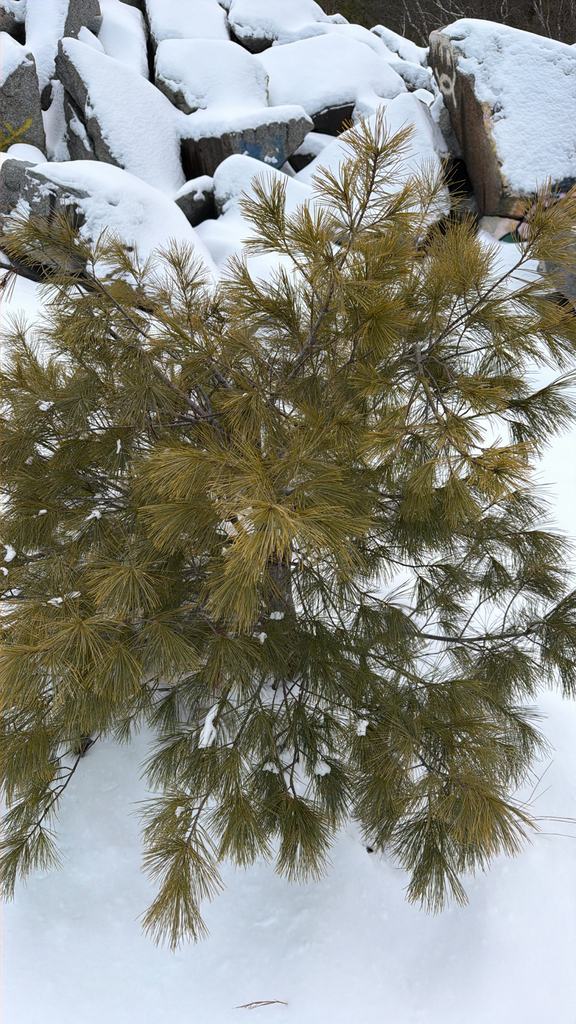
The Eastern white pine is a majestic evergreen conifer native to North America. It is well known for its soft, blue green needles and tall, straight trunk. These trees provide excellent shelter for wildlife and add a classic look to any landscape.
En un coup d'œil
- Niveau d'entretien
- Facile
- Type de plante
- Coniferous evergreen tree
- Lumière
- Full sun to partial shade
- Lumière en intérieur
- Soleil direct
- Arrosage
- Tous les 7 à 14 jours
- Taille adulte
- 50 to 80 feet
- Croissance
- Rapide
- Rusticité
- USDA 3 à 8
- Floraison
- Late spring
Entretien
Plant your pine in a spot with plenty of space for its mature size. Keep an eye out for yellowing needles or drooping branches, which can indicate moisture issues. Ensure the soil drains well to keep the roots healthy.
- Arrosage
- Water deeply during the first few years to establish a strong root system.
- Engrais
- Apply a balanced fertilizer once in early spring before new growth begins.
- Taille
- Remove dead or damaged branches in late winter while the tree is dormant.
- Rempotage
- Repotting is generally not necessary for trees planted directly in the landscape.
- Sol
- Moist, well drained, acidic soil
- pH du sol
- 4.5 to 6.0
- Température
- -40 à 35°C
- Humidité
- 40 à 70%
- Résistance à la sécheresse
- Moyenne
- Durée de vie
- Long-lived, often 200 to 400 years.
- Parfum
- Fort
- Résistance aux chevreuils et lapins
- Moyenne
Signes qu'il faut rempoter
- Roots circling the bottom of the pot
- Growth stalling despite proper care
Sécurité
- Humains
- The plant is generally non-toxic, though excessive consumption of pine needles can cause digestive upset.
- Enfants
- The sharp needles and heavy cones can pose a minor injury risk if children play roughly near the tree.
- Allergènes de contact
- The sticky resin can cause skin irritation in sensitive individuals.
- Allergènes aéroportés
- The tree releases large amounts of pollen in late spring that may cause hay fever.
- Comestibilité
- The needles are often used for tea, but ensure they are not from a toxic yew tree before harvesting.
Comment l'identifier
- Soft flexible blue green needles
- Needles arranged in bundles of five
- Long slender cylindrical cones
- Greyish bark with shallow fissures
- Hauteur
- 15 à 30m
- Envergure
- 6 à 12m
- Feuilles
- blue-green, evergreen
- Fleurs
- yellow, 1 à 2cm
- Fruits
- brown, Autumn
Problèmes courants
- White pine blister rust — A fungal disease that causes cankers on branches and stems.
- White pine weevil — Larvae bore into the terminal leader, causing the top of the tree to wilt and die.
La cultiver
- Multiplication
- seed
- Quand planter
- spring, autumn
- Hivernage
- No special protection is needed as it is fully hardy in its native range.
- En pot
- It is not well-suited for long-term container growth due to its massive size.
Seed
- Collect cones in late summer before they open.
- Dry the cones until they release the seeds.
- Cold stratify the seeds in a refrigerator for 30 to 60 days.
- Sow seeds in a well-draining soil mix in early spring.
Planting acid-loving shrubs underneath helps maintain the soil pH and creates a natural woodland aesthetic.
Bonnes associations
- Amelanchier arborea — They share similar soil requirements and provide a nice contrast in texture.
- Mountain Laurel — This shrub thrives in the acidic soil conditions created by pine needles.
Espèces similaires
- Pinus resinosa — It has needles in bundles of two rather than five.
Science
- Famille
- Pinaceae
- Genre
- Pinus
- Ordre
- Pinales
- Classe
- Pinopsida
- Région d'origine
- Eastern North America.
- Préservation
- This species is widespread and not currently of conservation concern.
It thrives in well-drained, acidic soils and often acts as a pioneer species in forest succession.
- Intérêt pour la faune
- nesting site, seed source for birds, cover for small mammals
- Pollinisateurs
- abeilles
- Utilisations
- ornamental specimen, windbreak, timber, wildlife habitat
Au fil des saisons
Repères écologiques
- Salinité
- 1/9
- Réaction du sol
- 3/9
- Lumière
- 7/9
- Température
- 4/9
- Humidité
- 5/9
- Nutriments
- 4/9
Taxonomie vérifiée avec le GBIF.
Ce qu'on demande souvent
- How fast does it grow?
- It is a relatively fast grower, often adding 60 to 90 centimeters per year.
- Does it tolerate shade?
- Young trees tolerate partial shade, but they need full sun to reach their full potential.
D'où vient le nom
The name strobus comes from the Latin word for a pine cone, while the common name refers to the soft, flexible needles.
Bon à savoir
- It is the provincial tree of Ontario and the state tree of Maine and Michigan.
- The needles grow in bundles of five, which is a key identification feature.
- These trees can live for over 400 years in undisturbed conditions.
- They are the tallest trees in eastern North America.
Ta plante a mauvaise mine ?
Cette page est un guide général. Pocket Botanist diagnostique les problèmes directement à partir d'une photo de ta plante, adapte l'arrosage à sa luminosité et te prévient quand il faut t'en occuper.
Ce guide a été généré par IA et vérifié avec la taxonomie du GBIF. Il s'agit d'informations générales, et non de conseils horticoles ou vétérinaires. Découvre comment nous concevons ces guides.