 Pocket Botanist
Guide botanique
Rattlesnake plant.
Calathea lancifolia
Prononciation go-ep-ER-tee-uh in-SIG-nis
Aussi appelée Calathea lancifolia


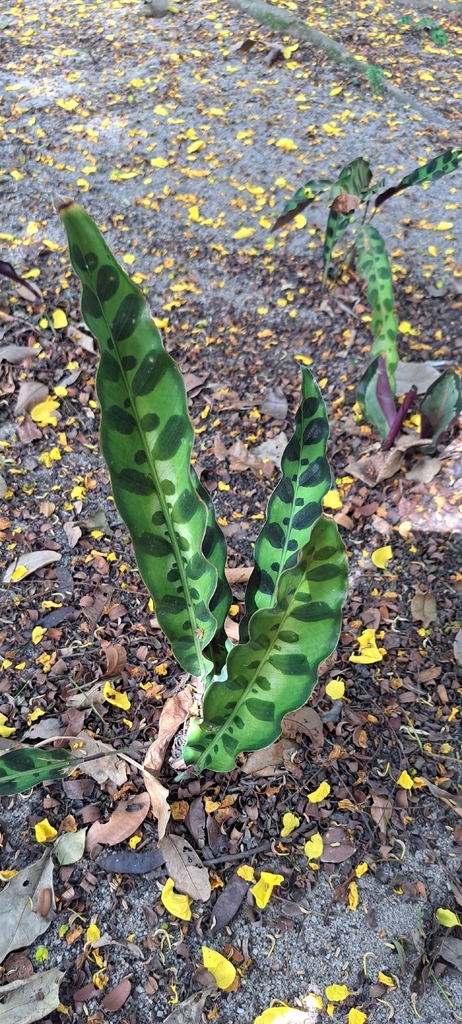
The rattlesnake plant is a stunning tropical beauty known for its wavy, patterned foliage. It brings a touch of the jungle to your home with its unique leaf markings. You will love how it folds its leaves up at night.
En un coup d'œil
- Niveau d'entretien
- Moyenne
- Type de plante
- Tropical perennial
- Lumière
- Bright indirect light
- Lumière en intérieur
- Lumière moyenne
- Arrosage
- Tous les 5 à 10 jours
- Taille adulte
- 2 to 3 feet
- Croissance
- Moyenne
Entretien
Keep this plant in a spot with high humidity to prevent crispy leaf edges. Use distilled or filtered water to avoid brown tips from minerals. If the leaves start to curl, it is likely telling you it needs more water or higher humidity.
- Arrosage
- Keep the soil consistently moist but never soggy.
- Engrais
- Feed with a balanced liquid fertilizer diluted to half strength during the growing season.
- Taille
- Trim away any yellow or damaged leaves at the base of the stem to keep the plant tidy.
- Rempotage
- Move to a slightly larger pot once the roots begin to crowd the current container.
- Sol
- Well draining peat based mix
- pH du sol
- 6.0 to 7.0
Sécurité
- Animaux
- This plant is non toxic to cats and dogs.
Comment l'identifier
- Wavy leaf edges
- Dark green spots on light green leaves
- Deep purple undersides
- Lance shaped foliage
Science
- Famille
- Marantaceae
- Genre
- Goeppertia
- Ordre
- Zingiberales
- Classe
- Liliopsida
Taxonomie vérifiée avec le GBIF.
Aussi dans
Ta plante a mauvaise mine ?
Cette page est un guide général. Pocket Botanist diagnostique les problèmes directement à partir d'une photo de ta plante, adapte l'arrosage à sa luminosité et te prévient quand il faut t'en occuper.
Ce guide a été généré par IA et vérifié avec la taxonomie du GBIF. Il s'agit d'informations générales, et non de conseils horticoles ou vétérinaires. Découvre comment nous concevons ces guides.