 Pocket Botanist
Guide botanique
European Beech.
Fagus sylvatica
Prononciation FAY-gus sil-VAT-ih-kuh
Aussi appelée Beech, European Beech, European Beech, Common Beech



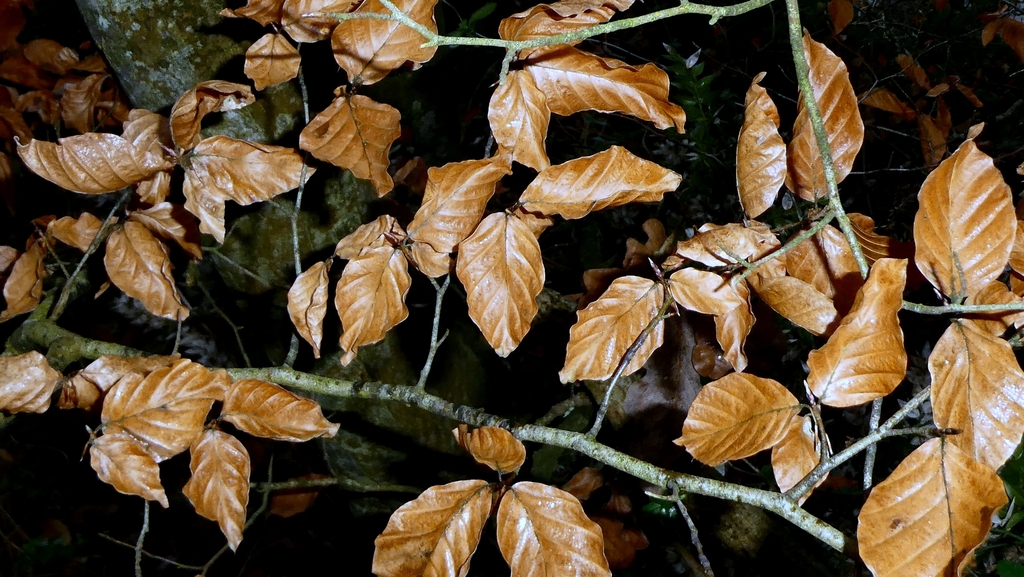
The European Beech is a majestic deciduous tree known for its smooth, silver gray bark and dense canopy. It makes a stunning specimen tree for large landscapes where it has plenty of room to spread out. You will love how its leaves turn a beautiful copper color in the autumn.
En un coup d'œil
- Niveau d'entretien
- Moyenne
- Type de plante
- Deciduous tree
- Lumière
- Full sun to partial shade
- Lumière en intérieur
- Lumière vive indirecte
- Arrosage
- Tous les 7 à 14 jours
- Taille adulte
- 100 feet
- Croissance
- Moyenne
- Rusticité
- USDA 4 à 7
- Floraison
- Mid to late spring
Entretien
Plant your beech in deep, fertile, and well drained soil to keep it happy. Watch for scorched leaves during hot, dry spells, which indicate the tree needs more moisture. Keep the area around the base clear of heavy foot traffic to protect the shallow root system.
- Arrosage
- Young trees need consistent moisture until they are well established.
- Engrais
- Apply a balanced fertilizer in early spring to support healthy growth.
- Taille
- Prune during the dormant winter season to remove dead or crossing branches.
- Rempotage
- Only relevant for young trees or bonsai specimens grown in containers.
- Sol
- Loamy, chalky, or sandy soil
- pH du sol
- Neutral to slightly alkaline
- Température
- -30 à 35°C
- Humidité
- 40 à 70%
Sécurité
- Humains
- The leaves and nuts are generally considered non toxic, but the nuts should be cooked to reduce tannin content.
- Enfants
- The small, sharp husks of the beech nuts can be a minor physical irritant if handled by small children.
- Allergènes de contact
- The bark and leaves are generally safe, though some individuals may experience mild contact sensitivity.
- Allergènes aéroportés
- The pollen is a known seasonal allergen for many people during the spring flowering period.
- Comestibilité
- Beech nuts are edible in small quantities but contain tannins that can cause stomach upset if consumed raw in large amounts.
Comment l'identifier
- Smooth silver gray bark
- Oval leaves with wavy margins
- Small prickly seed husks
- Dense rounded canopy shape
- Hauteur
- 15 à 35m
- Envergure
- 10 à 25m
- Feuilles
- green, bronze, purple, deciduous
- Fleurs
- yellow, green, 0,5 à 1cm
- Fruits
- brown, Autumn
Problèmes courants
- Beech scale — Small insects that feed on the sap and create entry points for fungal infections.
- Beech bark disease — A complex interaction between scale insects and fungi that causes bark lesions.
La cultiver
- Multiplication
- seed, grafting
- Quand planter
- Spring, Autumn
Plant spring ephemerals beneath the canopy to take advantage of the light before the tree fully leafs out.
Bonnes associations
- English Holly — It tolerates the deep shade cast by the beech canopy.
- Anémone des bois — It blooms early in the spring before the beech leaves fully emerge.
Espèces similaires
- American beech — It is the North American counterpart with similar growth habits and requirements.
Science
- Famille
- Fagaceae
- Genre
- Fagus
- Ordre
- Fagales
- Classe
- Magnoliopsida
- Région d'origine
- Central and Western Europe
- Préservation
- This species is widespread and not currently listed as endangered in its native range.
It thrives in cool, moist climates and often forms dense, shade casting forests that suppress understory growth.
- Intérêt pour la faune
- larval host plant, provides nesting sites, mast source for birds and mammals
- Pollinisateurs
- abeilles
- Utilisations
- specimen tree, hedging, woodworking, shade tree
Au fil des saisons
Repères écologiques
- Salinité
- 1/9
- Réaction du sol
- 6/9
- Lumière
- 5/9
- Température
- 4/9
- Humidité
- 5/9
- Nutriments
- 6/9
Taxonomie vérifiée avec le GBIF.
Ce qu'on demande souvent
- How fast does a European beech grow?
- It is a slow to moderate grower, typically adding 30 to 60 centimeters per year.
- Can I grow a beech tree in a small garden?
- Standard species are likely too large, but there are many dwarf or columnar cultivars available.
D'où vient le nom
The name Fagus comes from the Latin word for eating, referring to the edible nuts, while sylvatica means of the woods.
Bon à savoir
- Beech trees are often called the mothers of the forest because their leaf litter creates nutrient rich soil.
- The wood is highly valued for furniture because it is hard, strong, and easy to work with.
- Beech trees can live for several hundred years if given enough space to grow.
- In the past, beech leaves were sometimes used as bedding for livestock.
Ta plante a mauvaise mine ?
Cette page est un guide général. Pocket Botanist diagnostique les problèmes directement à partir d'une photo de ta plante, adapte l'arrosage à sa luminosité et te prévient quand il faut t'en occuper.
Ce guide a été généré par IA et vérifié avec la taxonomie du GBIF. Il s'agit d'informations générales, et non de conseils horticoles ou vétérinaires. Découvre comment nous concevons ces guides.