 Pocket Botanist
Guide botanique
Longan.
Dimocarpus longan
Prononciation dy-mo-KAR-pus LON-gan
Aussi appelée Longan, dragon eye, dragon's-eye


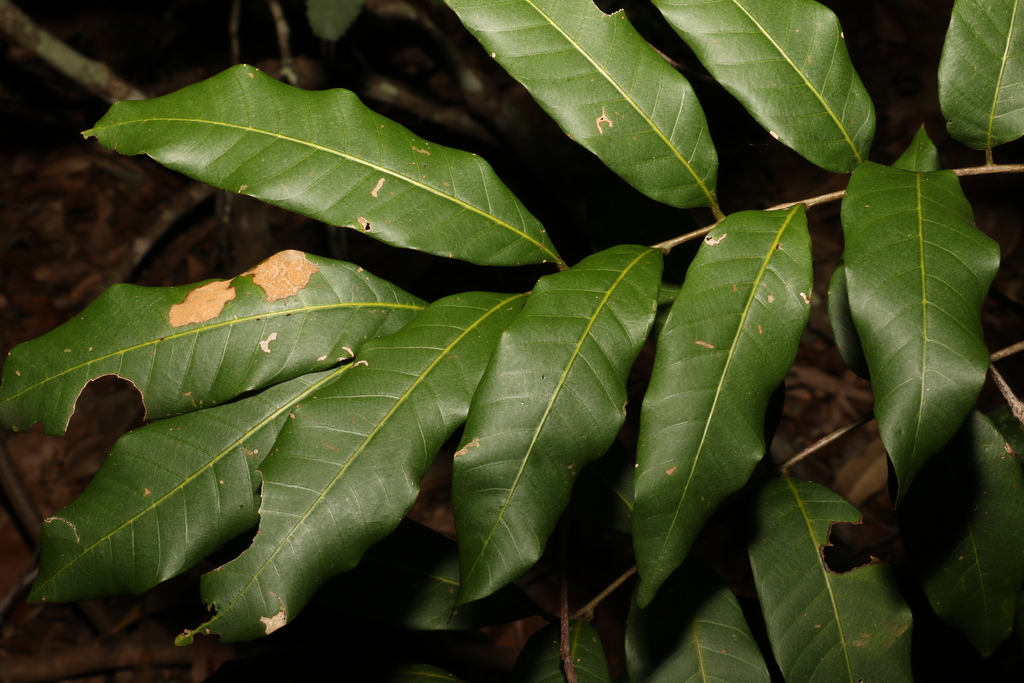
The longan is a lovely tropical fruit tree that produces clusters of sweet, translucent berries. It thrives in warm climates and makes a beautiful ornamental addition to a sunny garden. You'll enjoy its lush, evergreen foliage year round.

En un coup d'œil
- Niveau d'entretien
- Moyenne
- Type de plante
- Fruit tree
- Lumière
- Full sun
- Lumière en intérieur
- Soleil direct
- Arrosage
- Tous les 3 à 7 jours
- Taille adulte
- 30 to 40 feet
- Croissance
- Moyenne
- Rusticité
- USDA 9 à 11
- Floraison
- Late winter to early spring
Entretien
Keep your tree in a spot with plenty of sunshine and well draining soil. Watch for yellowing leaves, which often signal that the soil is staying too wet. Regular pruning helps maintain a manageable size and encourages better fruit production.
- Arrosage
- Water deeply whenever the top few inches of soil feel dry to the touch.
- Engrais
- Apply a balanced fertilizer during the active growing season to support fruit development.
- Taille
- Prune lightly after harvest to shape the canopy and remove any dead branches.
- Rempotage
- Repot young trees every couple of years if they become root bound in their containers.
- Sol
- Sandy loam
- pH du sol
- 5.5 to 6.5
- Température
- 4 à 40°C
- Humidité
- 60 à 90%
- Résistance à la sécheresse
- Moyenne
- Durée de vie
- Perennial, typically 50 to 100 years.
- Parfum
- Léger
- Résistance aux chevreuils et lapins
- Moyenne
Signes qu'il faut rempoter
- Roots growing out of drainage holes.
- Water draining through too quickly.
- Stunted growth despite fertilization.
Sécurité
- Humains
- The plant is generally non toxic, but the seeds are not for eating.
- Enfants
- The round, hard seeds pose a choking hazard to small children if ingested.
- Allergènes de contact
- No specific skin irritants are noted for this species.
- Allergènes aéroportés
- The pollen may cause mild reactions in sensitive individuals during the flowering season.
- Comestibilité
- The seeds contain saponins and should not be consumed.
Comment l'identifier
- Pinnately compound, glossy green leaves
- Clusters of small, yellowish white flowers
- Round, tan colored fruit with thin skin
- Translucent white flesh surrounding a dark seed
- Hauteur
- 6 à 12m
- Envergure
- 4 à 8m
- Feuilles
- dark green, evergreen
- Fleurs
- yellowish white, 0,5 à 0,8cm
- Fruits
- brown, tan, Late summer to early autumn
Problèmes courants
- Longan witch's broom — A mite transmitted pathogen causing dense, stunted growth clusters.
- Fruit borer — Larvae that tunnel into the developing fruit and cause premature drop.
La cultiver
- Multiplication
- seed, air layering, grafting
- Quand planter
- spring, early summer
- Hivernage
- Protect from frost by covering with cloth or moving containers indoors if temperatures drop near freezing.
- En pot
- It can be grown in large containers while young, but eventually requires a very large pot or planting in the ground.
Air Layering
- Select a healthy branch.
- Remove a ring of bark.
- Wrap with moist moss and plastic.
- Wait for roots to form.
- Cut and pot the new plant.
Planting nitrogen fixing cover crops nearby can help improve soil fertility for these heavy feeders.
Bonnes associations
- Mango — They share similar climate requirements and can be grown in the same orchard layout.
- Musa — Bananas provide light shade for young longan trees.
Espèces similaires
Science
- Famille
- Sapindaceae
- Genre
- Dimocarpus
- Ordre
- Sapindales
- Classe
- Magnoliopsida
- Région d'origine
- Southern China and Southeast Asia.
- Préservation
- This species is widely cultivated and not considered threatened in its native range.
It thrives in tropical and subtropical climates with distinct wet and dry seasons.
- Intérêt pour la faune
- nectar source
- Pollinisateurs
- abeilles, papillons
- Utilisations
- culinary fruit, ornamental shade tree, traditional medicine
Au fil des saisons
Repères écologiques
- Salinité
- 2/9
- Réaction du sol
- 6/9
- Lumière
- 8/9
- Température
- 8/9
- Humidité
- 6/9
- Nutriments
- 6/9
Taxonomie vérifiée avec le GBIF.
Ce qu'on demande souvent
- How do I know when to harvest?
- The skin turns from greenish to a light tan or brown and the fruit tastes sweet.
- Does it need full sun?
- Yes, it produces the most fruit when grown in a spot with full sun.
D'où vient le nom
The scientific name Dimocarpus comes from Greek words meaning double fruit, while longan is derived from the Chinese term for dragon eye.
Bon à savoir
- Longan is a member of the soapberry family, related to lychee and rambutan.
- The name longan comes from the Cantonese term for dragon eye.
- Dried longan is a popular ingredient in Asian soups and desserts.
- Trees can live for over a century if given proper care.
Ta plante a mauvaise mine ?
Cette page est un guide général. Pocket Botanist diagnostique les problèmes directement à partir d'une photo de ta plante, adapte l'arrosage à sa luminosité et te prévient quand il faut t'en occuper.
Ce guide a été généré par IA et vérifié avec la taxonomie du GBIF. Il s'agit d'informations générales, et non de conseils horticoles ou vétérinaires. Découvre comment nous concevons ces guides.