 Pocket Botanist
Guide botanique
Sweet pepperbush.
Clethra alnifolia
Prononciation KLETH-ruh al-nih-FOH-lee-uh
Aussi appelée Coastal Sweet Pepperbush, Coastal Sweetpepperbush, Pink-spire, Summersweet, Summersweet Clethra, Sweet Pepperbush


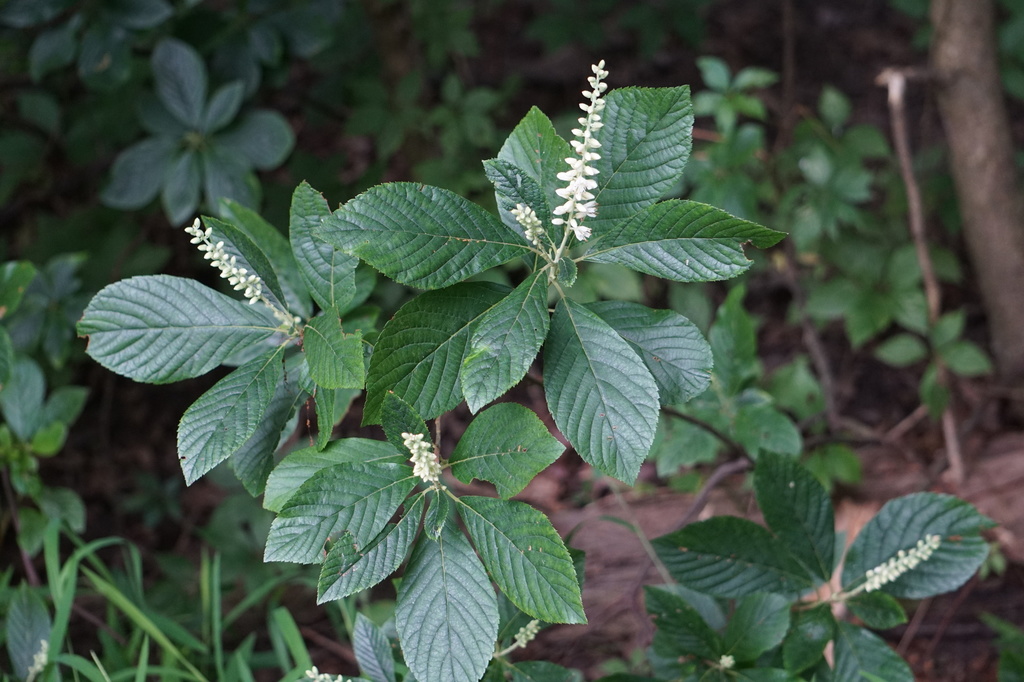
Sweet pepperbush is a lovely deciduous shrub that brings a sweet, spicy fragrance to the garden in midsummer. It thrives in moist, boggy conditions where other plants might struggle. You will love how its bottlebrush flowers attract bees and butterflies.

En un coup d'œil
- Niveau d'entretien
- Facile
- Type de plante
- Deciduous shrub
- Lumière
- Full sun to partial shade
- Lumière en intérieur
- Lumière vive indirecte
- Arrosage
- Tous les 3 à 7 jours
- Taille adulte
- 8 to 10 feet
- Croissance
- Moyenne
- Rusticité
- USDA 3 à 9
- Floraison
- Mid to late summer
Entretien
Keep the soil consistently moist, as this plant naturally grows in wetlands. Mulch around the base to help retain water and keep the roots cool. Watch for wilting, which is a clear sign that the soil has dried out too much.
- Arrosage
- Water deeply whenever the top inch of soil feels dry to the touch.
- Engrais
- Apply a balanced, slow release fertilizer once in early spring before new growth starts.
- Taille
- Prune in late winter or early spring to shape the shrub and remove any dead wood.
- Rempotage
- If growing in a container, move to a slightly larger pot every few years to refresh the soil.
- Sol
- Moist, acidic, organic soil
- pH du sol
- Acidic
- Température
- -30 à 35°C
- Humidité
- 50 à 80%
Sécurité
- Humains
- There are no reports of significant toxicity to humans.
- Enfants
- The small, dry seed capsules are a potential choking hazard for small children if ingested.
- Allergènes de contact
- No notable skin irritation is associated with this shrub.
- Allergènes aéroportés
- The heavy, sweet scent may be overwhelming for those sensitive to strong floral fragrances.
- Comestibilité
- The plant is not considered edible and should not be consumed.
Comment l'identifier
- Fragrant white or pink flower spikes
- Dark green, serrated, oval leaves
- Golden yellow fall foliage color
- Small, dry, brown seed capsules
- Hauteur
- 1,5 à 2,5m
- Envergure
- 1,2 à 2m
- Feuilles
- green, deciduous
- Fleurs
- white, pink, 0,5 à 1cm
- Fruits
- brown, Autumn
Problèmes courants
- Spider mites — Tiny pests that cause stippling on leaves during hot, dry weather.
La cultiver
- Multiplication
- cuttings, seed, division
- Quand planter
- spring, autumn
Group this shrub with other moisture-loving plants to create a low-maintenance rain garden.
Bonnes associations
- Asclépiade des marais — They both thrive in the same moist soil conditions.
- Royal fern — Ferns provide a nice textural contrast beneath the shrub.
Espèces similaires
- Itea virginica — It shares a similar preference for moist sites and provides great fall color.
Science
- Famille
- Clethraceae
- Genre
- Clethra
- Ordre
- Ericales
- Classe
- Magnoliopsida
- Région d'origine
- Eastern North America
- Préservation
- It is not currently listed as endangered or threatened in its native range.
It naturally inhabits swamps, stream banks, and moist thickets where it provides cover and food for local insects.
- Intérêt pour la faune
- nectar source, pollinator magnet
- Pollinisateurs
- abeilles, papillons
- Utilisations
- rain gardens, pollinator borders, fragrant hedges, wetland restoration
Au fil des saisons
Repères écologiques
- Salinité
- 1/9
- Réaction du sol
- 4/9
- Lumière
- 5/9
- Température
- 5/9
- Humidité
- 8/9
- Nutriments
- 5/9
Taxonomie vérifiée avec le GBIF.
Ce qu'on demande souvent
- Does it need wet soil?
- It prefers consistently moist soil but adapts well to average garden conditions.
- Can I prune it?
- Yes, prune it in late winter or early spring to maintain its shape.
D'où vient le nom
The name Clethra comes from the Greek word for alder, referring to the leaf shape, while alnifolia means alder-leaved.
Bon à savoir
- It thrives in wet soils where many other shrubs struggle.
- The flowers are shaped like tiny candles.
- It is one of the few shrubs that bloom reliably in deep shade.
- The autumn foliage turns a lovely shade of yellow or gold.
Ta plante a mauvaise mine ?
Cette page est un guide général. Pocket Botanist diagnostique les problèmes directement à partir d'une photo de ta plante, adapte l'arrosage à sa luminosité et te prévient quand il faut t'en occuper.
Ce guide a été généré par IA et vérifié avec la taxonomie du GBIF. Il s'agit d'informations générales, et non de conseils horticoles ou vétérinaires. Découvre comment nous concevons ces guides.