 Pocket Botanist
Guía de plantas
Puffball mushroom.
Lycoperdon pyriforme
Pronunciación ly-koh-PER-don py-ri-FOR-mee
También se conoce como Stump Puffball
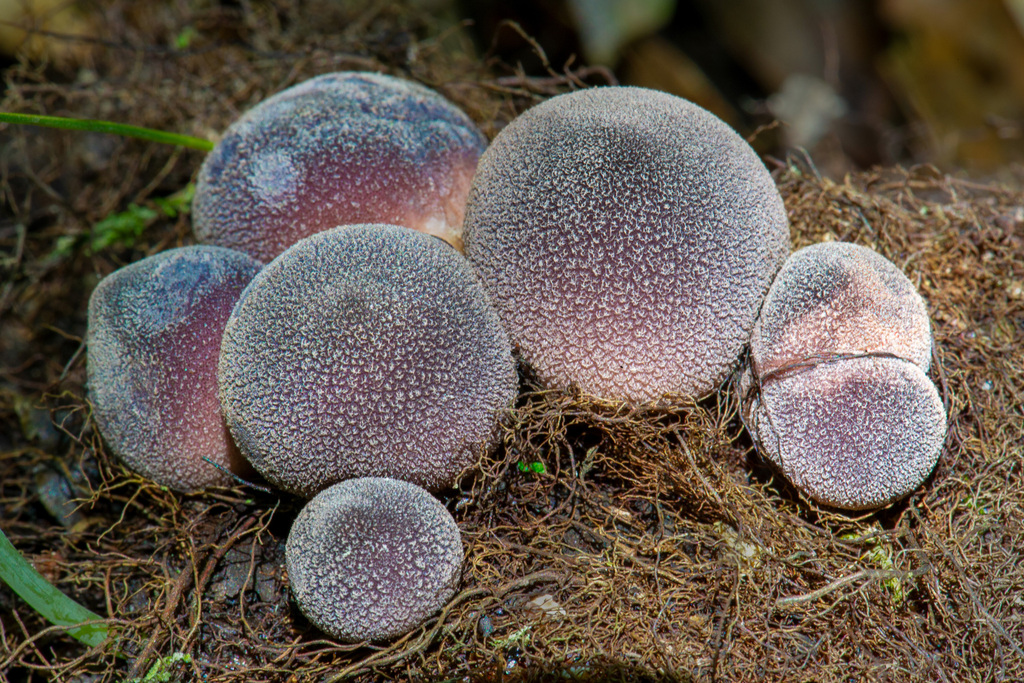
The pear shaped puffball is a common woodland fungus that grows in dense clusters on decaying wood. It is easily recognized by its distinct pear shape and small, wart like bumps on the surface. These mushrooms are edible when young and white inside.
De un vistazo
- Plant type
- fungus
- Light
- shade
- Water
- Every 1 to 3 days
- Mature size
- up to 5 cm tall
- Growth rate
- fast
- Hardiness
- USDA 3 to 9
- Bloom time
- late summer to autumn
Cuidados
This species is a wild mushroom that requires specific decaying wood substrates to thrive. Monitor for the presence of white mycelium on logs to track development. Avoid harvesting if the interior has turned yellow or brown as it is no longer palatable.
- Watering
- Keep the wood substrate consistently moist but not waterlogged.
- Feeding
- Do not fertilize as this fungus derives nutrients from wood decay.
- Pruning
- No pruning required for this fungal species.
- Repotting
- Not applicable for wild fungi.
- Soil
- decaying wood
- Soil pH
- acidic
- Temperature
- 5 to 25°C
- Humidity
- 70 to 95%
Seguridad
- People
- The mushroom is edible when young and white inside, but it must be cooked properly.
- Children
- Keep children away from mature puffballs to prevent them from inhaling or playing with the spore dust.
- Contact allergens
- Handling mature puffballs can release clouds of spores that may irritate sensitive skin.
- Airborne allergens
- Inhaling large quantities of the mature spores can cause respiratory irritation or allergic reactions.
- Edibility
- Do not consume unless you are an expert at identifying fungi, as many lookalikes are deadly.
Cómo identificarla
- Pear shaped fruiting body
- Grows in dense clusters on wood
- Surface covered in tiny warts
- White interior when young
- Brown powdery spores when mature
- Height
- 0.02 to 0.05m
- Spread
- 0.01 to 0.03m
- Flowers
- 0cm
Cómo cultivarla
- Propagation
- spores
- When to plant
- spring
Look for these on damp, rotting hardwood logs in shaded forest areas.
Buenas compañeras
- Oak — It frequently grows on the decaying wood of oak logs.
Especies parecidas
- Common Puffball — It looks similar but grows on the ground rather than on wood.
Ciencia
- Family
- Lycoperdaceae
- Genus
- Apioperdon
- Order
- Agaricales
- Class
- Agaricomycetes
- Native range
- Widely distributed across temperate regions of the Northern Hemisphere.
- Conservation
- This species is common and not of conservation concern.
It functions as a saprotroph, breaking down woody debris in forest ecosystems.
- Value to wildlife
- decomposer, soil nutrient recycler
- Uses
- edible mushroom, ecological decomposer
A lo largo del año
Indicadores ecológicos
- Salinity
- 0/9
- Soil reaction
- 5/9
- Light
- 2/9
- Temperature
- 5/9
- Moisture
- 7/9
- Nutrients
- 5/9
Taxonomía cotejada con GBIF.
Lo que más preguntan
- How do I know if it is safe to eat?
- Only eat it if the interior is pure white and firm, and you have confirmed the identification with an expert.
- Does it need soil to grow?
- No, it specifically grows on decaying logs and stumps.
De dónde viene el nombre
Lycoperdon translates from Greek to wolf fart, referring to the puff of spores released when stepped on. Pyriforme means pear shaped.
Bueno saberlo
- The name pyriforme refers to its pear shape.
- It is the only puffball that grows on wood.
- When mature, the top develops a small hole to release spores.
- Raindrops hitting the mature puffball help puff the spores into the air.
¿Tu puffball mushroom tiene mal aspecto?
Esta página es una guía general. Pocket Botanist diagnostica problemas a partir de una foto de tu propia planta, calcula el riego según tu luz y tus condiciones, y te avisa cuando toca cuidarla.
Esta guía se ha generado con IA y se ha cotejado con la taxonomía de GBIF. Es información general, no asesoramiento botánico ni veterinario. Descubre cómo elaboramos estas guías.