 Pocket Botanist
Pflanzenratgeber
Royal fern.
Osmunda regalis
Aussprache os-MUN-duh ree-GAL-iss
Auch bekannt als European royal fern, Green Fern



The royal fern is a stunning, prehistoric looking plant that loves damp, shady spots in the garden. It features large, elegant fronds that add a lush texture to any woodland setting. You will find it thrives best when kept consistently moist.
Auf einen Blick
- Pflegestufe
- Einfach
- Pflanzenart
- Fern
- Licht
- Partial to full shade
- Licht im Innenraum
- Mittleres Licht
- Gießen
- Alle 2 bis 5 Tage
- Endgröße
- 3 to 6 feet
- Wachstum
- Mittel
- Winterhärte
- USDA 3 bis 9
- Blütezeit
- Does not flower
Pflege
Keep the soil constantly damp, as this fern hates to dry out. Watch for browning frond tips, which often signal that the plant needs more humidity or water. It prefers rich, acidic soil to stay healthy and vibrant.
- Gießen
- Keep the soil consistently moist to the touch at all times.
- Düngen
- Apply a balanced, slow release fertilizer during the active growing season.
- Schneiden
- Trim back dead or damaged fronds in late winter before new growth appears.
- Umtopfen
- Repot only when the root system has completely filled the current container.
- Boden
- Moist, acidic, organic rich soil
- Boden-pH
- Acidic
- Temperatur
- -30 bis 35°C
- Luftfeuchtigkeit
- 60 bis 90%
- Trockenheitstoleranz
- Gering
- Lebensdauer
- Perennial, can live for many decades.
- Wildverbiss-Resistenz
- Hoch
Anzeichen fürs Umtopfen
- roots growing out of the drainage holes
- stunted growth during the active season
- soil drying out too quickly
Sicherheit
- Menschen
- The plant is not considered toxic to humans, but it is not meant for consumption.
- Kinder
- The plant is safe for children, though the fronds can be slightly coarse to the touch.
- Kontaktallergene
- The spores can sometimes cause mild skin irritation in sensitive individuals.
- Allergene in der Luft
- The fine dust from spores may irritate the lungs of those with asthma or severe allergies.
- Essbarkeit
- The fiddleheads of this fern are generally considered inedible and potentially toxic, so avoid consuming them.
So erkennst du die Pflanze
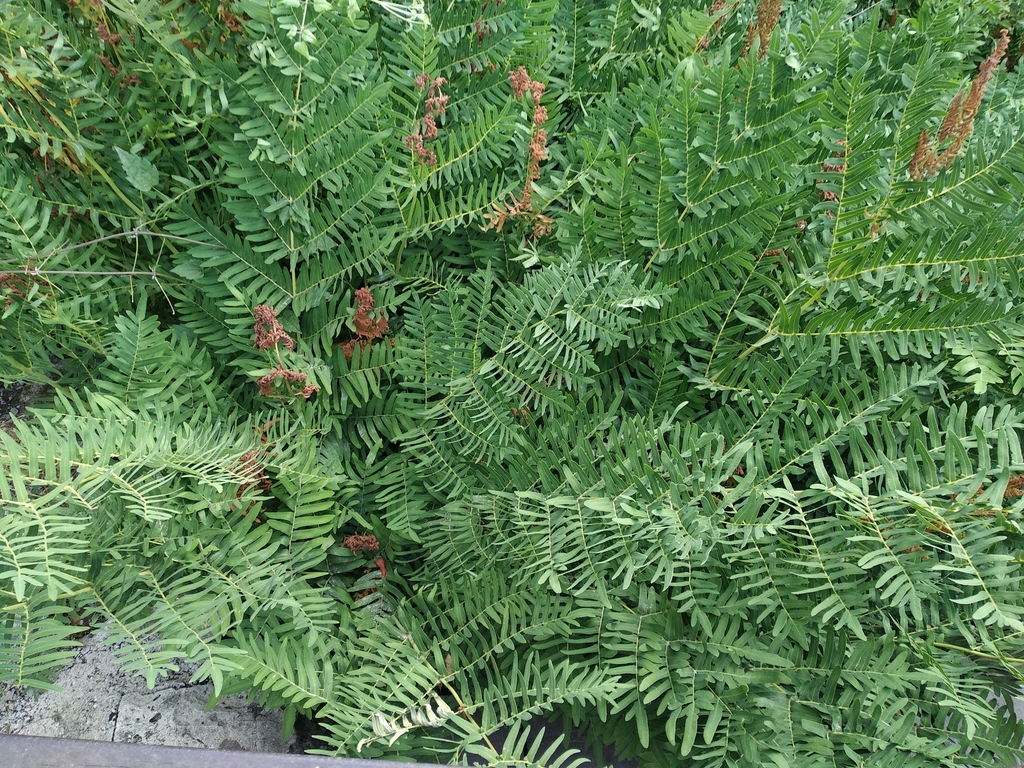
- Large, arching, bipinnate fronds
- Bright green, leathery leaflets
- Distinctive fertile, tassel like tips
- Clump forming growth habit
- Höhe
- 0,6 bis 1,8m
- Breite
- 0,6 bis 1,2m
- Blätter
- bright green, bronze-tinted in spring, deciduous
- Blüten
- 0cm
Häufige Probleme
- Scale — Small insects that attach to the stems and suck plant sap.
Standort und Pflege
- Vermehrung
- division, spores
- Pflanzzeit
- spring, autumn
- Überwinterung
- Cut back the dead fronds in late winter before new growth begins. Mulch the base with organic matter to protect the roots from extreme temperature fluctuations.
- Im Kübel
- It grows well in large containers, provided you use a moisture retentive mix and keep the pot sitting in a shallow tray of water.
Division
- 1. Carefully lift the clump in early spring.
- 2. Use a sharp spade to divide the root mass into smaller sections.
- 3. Replant immediately into moist, acidic soil.
- 4. Water thoroughly until established.
Pair this fern with moisture loving plants that provide a contrasting texture to its large, arching fronds.
Gute Pflanzpartner
- Funkie — They share similar shade and moisture requirements.
- Siberian iris — They thrive in the same damp soil conditions.
Ähnliche Arten
- Matteuccia struthiopteris — It has a similar large, upright growth habit.
Botanisches
- Familie
- Osmundaceae
- Gattung
- Osmunda
- Ordnung
- Osmundales
- Klasse
- Polypodiopsida
- Ursprüngliche Heimat
- Found across Europe, Africa, Asia, and the Americas.
- Artenschutz
- It is protected in some parts of its range due to habitat loss, so always source from reputable nurseries.
It survives in the wild by colonizing wet, acidic soils near streams and marshes where it faces little competition.
- Nutzen für Wildtiere
- provides cover for small amphibians, nesting material for birds
- Verwendung
- bog gardens, woodland borders, pond edges
Im Jahresverlauf
Ökologische Zeigerwerte
- Salzgehalt
- 1/9
- Bodenreaktion
- 3/9
- Licht
- 4/9
- Temperatur
- 5/9
- Feuchtigkeit
- 8/9
- Nährstoffe
- 4/9
Taxonomie abgeglichen mit GBIF.
Häufige Fragen
- Does it need full sun?
- It prefers partial shade but will tolerate full sun if the soil stays consistently wet.
- How often should I water it?
- Keep the soil constantly moist, as this fern does not tolerate drying out.
Woher der Name kommt
The genus name honors Osmunder, a legendary waterman who hid his family in a patch of these ferns. The species name regalis means royal, referring to its impressive stature.
Gut zu wissen
- It is one of the largest ferns in the Northern Hemisphere.
- The plant can live for many decades in ideal conditions.
- It is sometimes called the royal fern because of its majestic size.
- It thrives in waterlogged soils where many other plants would rot.
Auch in
Probleme mit Royal fern?
Diese Seite bietet allgemeine Infos. Pocket Botanist erkennt Probleme anhand eines Fotos deiner echten Pflanze, passt das Gießen an dein Licht und deinen Standort an und erinnert dich an die Pflege.
Dieser Ratgeber wurde mit KI erstellt und mit der GBIF-Taxonomie abgeglichen. Er dient zur allgemeinen Information und ersetzt keine gärtnerische oder tierärztliche Beratung. Hier erfährst du, wie wir diese Ratgeber erstellen.