 Pocket Botanist
Plant guide
New England Aster.
Symphyotrichum novae-angliae
Pronounced sim-fih-oh-TRY-kum no-vee-ANG-lee-ee
Also known as Hairy Michaelmas Daisy, Hairy Michaelmas-daisy, Michaelmas Daisy, New England Aster, New England Daisy, New England Or Michaelmas Daisy, Wild Prairie Aster
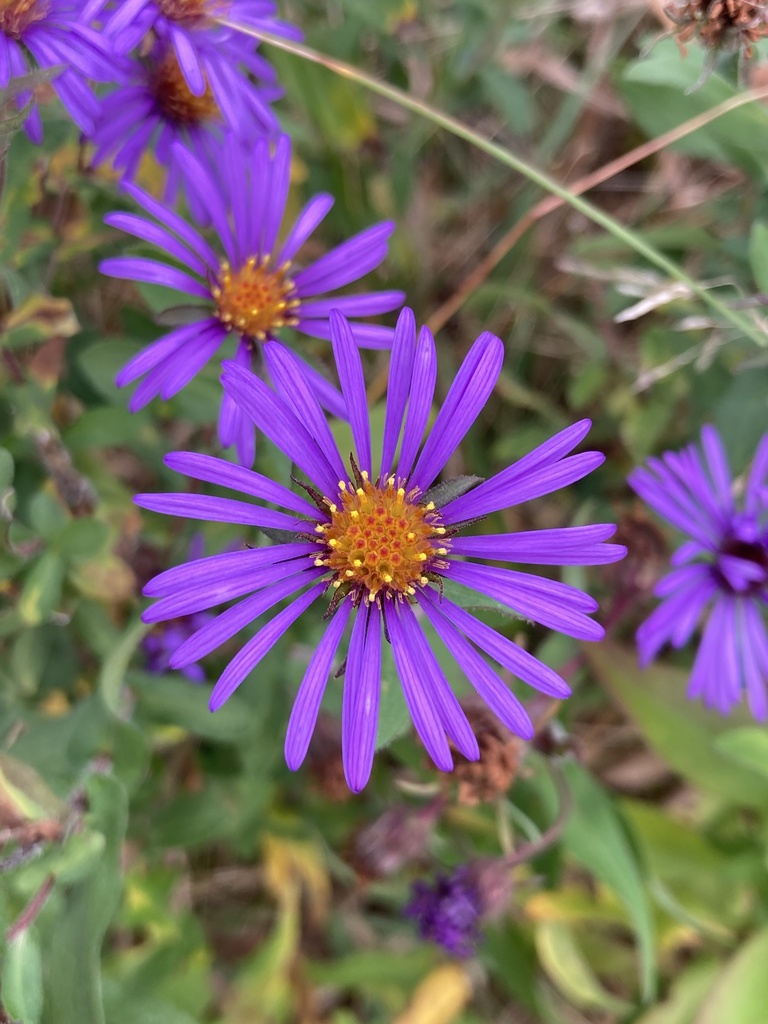
The New England Aster is a cheerful perennial that brings vibrant color to late summer and autumn gardens. It is a favorite among pollinators, especially migrating butterflies, thanks to its nectar rich blooms. This hardy native thrives in sunny spots and adds a lovely wild texture to any landscape.
At a glance
- Care level
- Easy
- Plant type
- Herbaceous perennial
- Light
- Full sun
- Indoor light
- direct
- Water
- Every 3 to 7 days
- Mature size
- 120 to 180 cm
- Growth rate
- fast
- Hardiness
- USDA 4 to 8
- Bloom time
- Late summer to mid autumn
Care
Provide plenty of sunlight to keep stems sturdy and prevent flopping. Pinch back the stems in early summer to encourage a bushier habit and more blooms. Watch for powdery mildew on the foliage if air circulation is poor.
- Watering
- Keep the soil consistently moist but not waterlogged.
- Feeding
- Apply a balanced compost or organic fertilizer in early spring.
- Pruning
- Cut back stems to the ground in late winter or early spring.
- Repotting
- Divide the root clumps every few years to maintain plant vigor.
- Soil
- Loamy, moist, well draining
- Soil pH
- Neutral to slightly acidic
- Temperature
- -35 to 30°C
- Humidity
- 40 to 60%
- Drought tolerance
- moderate
- Lifespan
- Perennial, typically 5 to 10 years
- Deer and rabbits
- moderate
Signs it needs repotting
- Roots growing out of the drainage holes.
- Water running straight through the pot without soaking in.
- Stunted growth despite regular feeding.
Safety
- People
- The plant is generally considered non toxic to humans.
- Pets
- This plant is considered non toxic to cats and dogs.
- Children
- The hairy stems can be slightly irritating to sensitive skin, but there is no significant ingestion risk for children.
- Contact allergens
- Some individuals may experience mild skin irritation from handling the hairy stems.
- Airborne allergens
- The pollen can trigger seasonal allergies in sensitive individuals during late summer and autumn.
- Edibility
- While not considered toxic, this plant is not typically consumed and may cause gastrointestinal upset if ingested in large quantities.
How to identify it
- Hairy, lance shaped leaves
- Clasping leaf bases
- Daisy like purple flower heads
- Yellow centers turning reddish
- Tall, sturdy branching stems
- Height
- 0.9 to 1.8m
- Spread
- 0.6 to 0.9m
- Leaves
- green, deciduous
- Flowers
- purple, pink, blue, 3 to 5cm
Common problems
- Powdery mildew — A white fungal growth on leaves often caused by poor air circulation or humidity.
- Rust — Small orange or brown spots appearing on the undersides of leaves.
Growing it
- Propagation
- division, seed, cuttings
- When to plant
- spring, autumn
- Overwintering
- Cut the stems back to a few inches above the ground after the first hard frost. Leave the debris if you want to provide habitat for overwintering insects.
- In containers
- It can grow in large containers of at least 3 gallons, but it will require frequent watering and staking.
Division
- Dig up the clump in early spring as new growth appears.
- Use a sharp spade to divide the root mass into smaller sections.
- Replant the divisions immediately at the same depth as before.
Planting with tall grasses helps support the stems and prevents the aster from leaning over.
Grows well with
- Goldenrod — They bloom at the same time and create a classic color contrast.
- Joe Pye Weed — It provides a beautiful height contrast and shares similar moisture needs.
- Switchgrass — The grass provides structural support and a nice texture backdrop.
Keep away from
Similar species
- Smooth Blue Aster — It has similar flowers but smoother leaves and a more upright habit.
- Aromatic Aster — It is shorter and more drought tolerant than the New England Aster.
Science
- Family
- Asteraceae
- Genus
- Symphyotrichum
- Order
- Asterales
- Class
- Magnoliopsida
- Native range
- Central and eastern North America.
- Conservation
- It is widely distributed and not of conservation concern, though wild collection should be avoided to protect local populations.
It thrives in moist meadows and prairies, utilizing its deep root system to access water during late summer dry spells.
- Value to wildlife
- late season nectar source, larval host plant
- Pollinators
- bees, butterflies, moths
- Uses
- pollinator garden, meadow planting, cut flower
Through the year
Ecological indicators
- Salinity
- 2/9
- Soil reaction
- 6/9
- Light
- 7/9
- Temperature
- 5/9
- Moisture
- 6/9
- Nutrients
- 5/9
Taxonomy resolved against GBIF.
Questions people ask
- Does it need staking?
- Yes, it can get quite tall and may flop over without support or pinching back in early summer.
- How do I keep it from getting powdery mildew?
- Ensure good air circulation and avoid overhead watering to keep foliage dry.
Where the name comes from
The name Symphyotrichum comes from Greek words meaning joined hair, while novae-angliae refers to its native New England region.
Good to know
- It blooms when many other garden plants have finished for the year.
- The flowers are known for their intense, deep purple color.
- It was formerly classified in the genus Aster.
Is your new england aster looking unwell?
This page is a general guide. Pocket Botanist diagnoses problems from a photo of your actual plant, works out watering for your light and conditions, and reminds you when care is due.
This guide was generated with AI and checked against GBIF taxonomy. It is general information, not horticultural or veterinary advice. Read about how we build these guides.